Building the Foundation for Success
A Small-City Culture, a Downtown Vision, and a Foundation Built for the Future
In mid-Michigan, the City of Swartz Creek has long been defined by something that can’t be engineered by ordinance or imported through development: community. With a small-town identity and a reputation as a close-knit “bedroom community,” Swartz Creek’s tagline—Where Friendships Last Forever—reflects what residents experience day to day: neighbors who know each other, organizations that show up, and civic leadership that is planning carefully for what comes next.
Mayor Nate Henry describes Swartz Creek as the kind of place where people put down roots—and stay. It is that stability, paired with an emerging focus on quality of life and downtown placemaking, that is shaping the city’s priorities as it prepares for a future that could bring meaningful regional change.
Downtown as the Community’s Living Room
For City Manager Adam Zettel, revitalizing Swartz Creek’s downtown core is about more than storefronts and façade improvements. The goal is to build a walkable center of recreation, hospitality, and culture—an “experience economy” destination where residents gather for concerts, markets, car shows, and community celebrations.
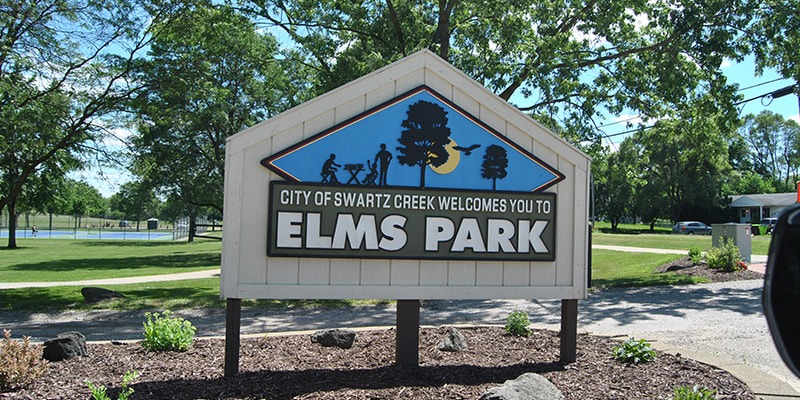
Swartz Creek is investing in places that encourage people to spend time together. Existing assets—such as the city’s amphitheater and event programming—are being strengthened. Holland Square is set for improvements in 2026, with the intent of expanding its capacity to host larger and more frequent events.
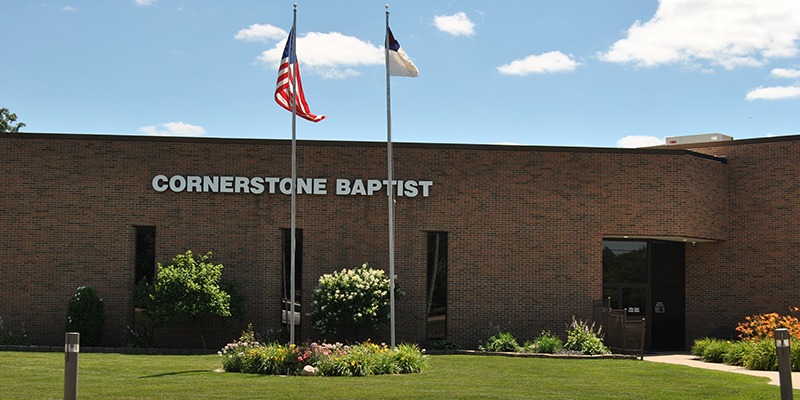
Alongside these public investments, the city is also exploring redevelopment opportunities, including the repurposing of a historic church property owned by the Downtown Development Authority (DDA), with hopes of partnering with the private sector to convert it into a cultural or hospitality destination.
The broader vision is clear: a downtown that is inviting, functional, and able to serve as the community’s “living room,” supported by improvements that make walkability real—trees, benches, directional signage, bike racks, and streetscapes that encourage people to slow down and stay awhile.
Supporting Local Business with a Deep Incentive Toolkit
Swartz Creek’s approach to business support is both proactive and unusually practical. Zettel describes a wide range of incentives and tools designed to reduce the friction that often stops small business owners and property owners from taking the first step toward redevelopment.
On the straightforward end, the city offers cash assistance for façade and interior improvements.
For larger renovations, Tax Increment Financing (TIF) can create an income stream to help offset investment costs. In certain cases, the city can also offer abatements or partial/full waivers of connection fees for utilities such as water and sewer.
But one of the most impactful forms of support, Zettel notes, comes through “soft cost” assistance—particularly via Michigan’s Redevelopment Ready Communities (RRC) program.
This allows Swartz Creek and its partners to help fund early-stage planning work such as architectural concepts, feasibility studies, industrial hygiene assessments, and engineering analysis. That matters because in many cases, it’s not the million-dollar renovation that stops a project—it’s the first $10,000 to $20,000 needed to determine whether a renovation is even feasible.
By lowering that barrier, Swartz Creek is helping property owners move from “what if” to “here’s how.”
Building the Right Mix: Recreation, Hospitality, and Culture
When asked what types of businesses Swartz Creek hopes to attract, the answer is consistent with the downtown strategy: experiences people can’t order online. The city is seeing encouraging movement already, including interest in concepts like a café-bookstore model pursuing a liquor license to offer something more innovative and community-driven.
Outside the downtown core, private enterprise is also building on public investment—particularly along the regional trailway system. A new café, for example, has expressed enthusiasm for its proximity to the trail and the built-in foot (and bike) traffic that comes with it. For Swartz Creek, that relationship between public realm investment and private sector opportunity is central: the city improves the place, and businesses thrive because the place becomes worth visiting.
Regional Development and the “Holding Pattern” Reality
Like many communities positioned near major corridors, Swartz Creek is also watching broader regional development activity that could significantly influence its trajectory. Zettel points to the former Swartz Creek Raceway property—over 100 acres adjacent to the highway interchange—as a key redevelopment opportunity. With a new owner preparing the site for future use, interest is strong, but timing remains uncertain.
That uncertainty is compounded by a larger advanced manufacturing initiative being pursued in the region, described as potentially requiring billions in investment and bringing thousands of jobs. The impact—if it materializes—could be transformative. But it also introduces complexity: landowners and developers sometimes pause current plans to wait for greater certainty and potentially higher valuations tied to future demand.
As a result, the city finds itself balancing preparation with realism. Infrastructure capacity, traffic pressures, housing demand, and service needs may all change dramatically—but much depends on the “when” and the “who.”
Housing and Infrastructure: Planning for Demand Before It Arrives
Swartz Creek has housing activity already underway, including downtown units under construction that may be supported through incentive programs to improve project viability. The city also has planned neighborhoods that have not yet been built, meaning there is capacity to expand when market demand increases.
On infrastructure, leadership emphasizes proactive planning rather than reactive response. Mayor Henry points to strong asset management as one of the city’s defining strengths—particularly in a region acutely aware of the consequences of deferred water infrastructure. Swartz Creek maintains a 20-year street plan, supported by a street millage, and has prioritized maintaining water and sewer systems responsibly while keeping rates competitive with neighboring municipalities.
Zettel describes this as “taking care of the kitchen before you open the restaurant.” In practical terms, that means strengthening financial solvency, improving administrative best practices, creating sustainable asset management plans, and ensuring core municipal functions are stable before accelerating investments in amenities and downtown expansion.
Fiscal Discipline as a Platform for Quality of Life
From the city leadership’s perspective, fiscal responsibility is not only about balanced budgets—it is what enables long-term investment. Swartz Creek has worked to build healthier fund balances, improve pension funding, and implement policy frameworks that support predictable governance. The city has also established a Capital Improvement Fund for miscellaneous and unanticipated needs—another tool that strengthens resilience and allows for proactive action.
That foundation has been recognized at the state level as well, with Zettel earning a statewide award for transportation asset management—further reinforcing the city’s emphasis on infrastructure discipline and long-range planning.
The Power of Nonprofits and Community-Led Events
One of Swartz Creek’s greatest strengths is how much of its community life is driven by local organizations. Instead of placing the burden of every event and initiative on city staff, Swartz Creek benefits from nonprofits and service clubs that plan, fundraise, volunteer, and execute programming that activates public spaces and builds civic pride.
Signature efforts include Swartz Creek Hometown Days, Jeepers Creekers’ Halloween programming, Kiwanis-led Art in the Park, the Swartz Creek Area Historical Society’s preservation work downtown, Swartz Creek Fine Arts’ concerts in the park, and the Firefighters Association’s Christmas Parade. Additional groups—including the Swartz Creek Chapter of the Greater Federation of Women’s Clubs, and other civic organizations—contribute to beautification efforts and community enhancements, from flower planting to park improvements.
These organizations create a multiplier effect: more events, more activation, and more identity—without overextending municipal capacity.
Priorities for 2026 and Beyond
As Swartz Creek enters 2026, leadership is shifting focus. After years of intensive road work and large infrastructure projects, the city sees an opportunity to lean more fully into quality-of-life investments.
Two major priorities are already on the calendar. Otterburn Park improvements are expected to move forward, supported by a blend of congressionally designated spending, a Michigan DNR Trust Fund grant, and private donations. Holland Square is also slated for new investment, including the construction of a structure designed to increase the utility and programming potential of the downtown space.
For Mayor Henry, the direction is straightforward: “Making it better to live, work, and play in Swartz Creek.”
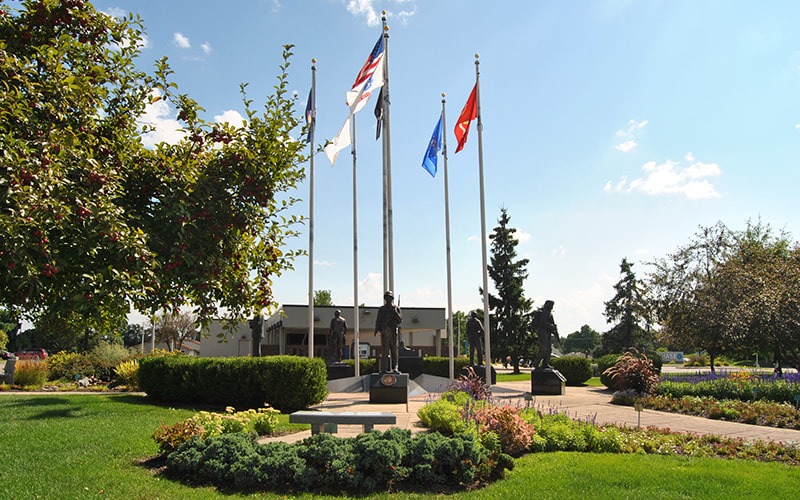
In a landscape where growth can be both opportunity and threat, Swartz Creek is approaching its future with a level head and a clear compass. By focusing on controlled change—not growth for growth’s sake—and channeling investment into long-term quality of life, the city is positioning itself to remain what residents value most: a community where friendships last forever, and where the future is shaped thoughtfully, not accidentally.
Click The Cover To View Or Download The Brochure
AT A GLANCE
Who: Swartz Creek, MI
What: A small city with amenities to rival much larger municipalities, dedicated to its residents
Where: Genesee County, Michigan
Website: www.cityofswartzcreekmi.gov
PREFERRED VENDORS/PARTNERS

DLZ, Inc.: www.dlz.com
DLZ is an award-winning architecture, engineering, surveying, and construction services firm. We are a trusted resource with over 100 years of experience. We are your neighbors invested in the communities we serve. Our vision is simple: Create successful partnerships with our clients that facilitate trust, commitment, and communication.
Glaeser Dawes: Tel: 810-487-1560
Glaeser Dawes Corp. is a trusted construction firm with 30 years experience specializing in civil and municipal infrastructure, including water mains, storm and sanitary sewers, and road construction. Known for quality workmanship and reliability, the company delivers essential projects that strengthen communities and support sustainable urban development.