Building Safe, Purposeful Places to Play
Focused on Productive Manufacturing, Top Tier Playground Design, and the Highest Industry Standards
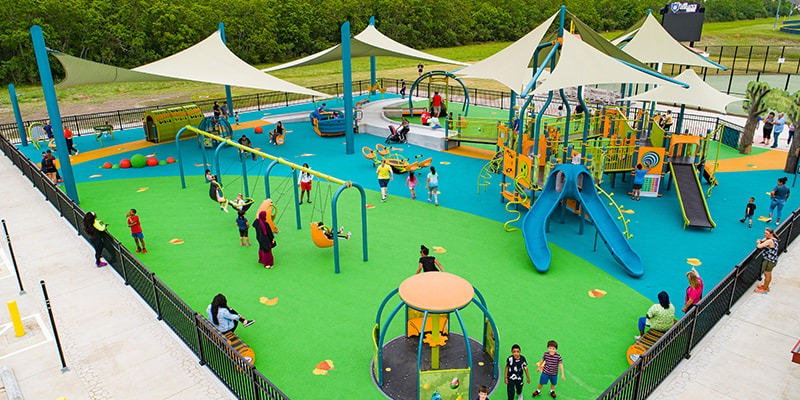
Playgrounds are often viewed as simple spaces for fun, but behind every slide, swing, and safety surface is a complex ecosystem of standards, advocacy, and responsibility. At the center of that ecosystem is the International Playground Equipment Manufacturers Association (IPEMA), an international trade association dedicated to advancing safety, quality, and accountability across the play and recreation industry.
Through its certification programs, industry collaboration, and commitment to education, IPEMA plays a critical role in shaping how playgrounds are designed, manufactured, and maintained worldwide.
A Collective Voice for Play
IPEMA represents manufacturers of playground equipment and surfacing materials, as well as associate members with a vested interest in the play and recreation space. Its reach extends internationally, reflecting the global nature of playground standards and manufacturing.
“IPEMA is an international trade association representing manufacturers of play and recreation equipment and surfacing materials,” says Denise Calabrese, CAE, Executive Director of IPEMA. “We also have an associate membership for organizations that support or work alongside this industry.”
While advocacy and networking are important components of the association’s work, Calabrese explains that IPEMA’s role extends far beyond representation.
“We work to represent our members with other organizations and with government entities that impact the industry,” she says. “At the same time, we provide members with information on issues that affect their businesses and offer opportunities for collaboration and networking.”
At the core of IPEMA’s value proposition is its certification program, widely regarded as the industry’s gold standard.
“The biggest product we offer is our certification program,” Calabrese notes. “It is available not only to our members, but also to non-members and to end users who want to verify that products meet established standards.”
Turning Technical Standards into Trusted Compliance
Playground safety is governed largely by voluntary technical standards. However, as Calabrese explains, those voluntary standards often become mandatory once adopted by municipalities, school districts, or state authorities.
“In the United States, ASTM provides the technical standards that guide our industry,” she explains. “While they are voluntary standards, once a jurisdiction requires compliance, they are no longer optional.”
IPEMA certifies playground equipment and surfacing materials to ASTM standards and applicable Canadian standards. While European EN standards closely mirror ASTM requirements, IPEMA does not currently certify directly to those standards.
What makes IPEMA’s program unique is that it goes beyond product testing alone.
“Our certification program includes compliance with ASTM standards, but it also expands beyond them,” Calabrese says. “We require documented office operations, complaint procedures, and other accountability measures that are not part of the technical standards themselves.”
This additional layer of oversight ensures transparency and integrity across the certification process.
“The standards are set by independent committees through ASTM,” she explains. “IPEMA’s role is to require compliance with those standards and to verify that certified products truly meet them.”
Keeping Pace with Evolving Safety Standards
ASTM standards are not static. They are continually reviewed and updated through committees that include a wide range of stakeholders.
“These committees include manufacturers, playground inspectors, child advocates, and other interested parties,” Calabrese notes. “It is a very well-balanced process with diverse representation.”
IPEMA remains actively engaged in these discussions, ensuring its members are informed and prepared for changes that could affect product design, testing, or compliance.
“We track emerging standards and communicate those developments to our members,” she adds. “Our goal is to help them understand what is coming and how it may impact their products.”
Where Certification Ends Responsibility Begins
One of the most important distinctions IPEMA emphasizes is the difference between certified products and long-term playground safety. Certification confirms that a product meets standards at the time of manufacture and installation. Ongoing safety depends on what happens next.
“When a manufacturer has certified products, we can say those products are safe when installed properly,” Calabrese says. “Once the playground is in use, responsibility shifts to the owner or operator.”
Maintenance, supervision, and routine inspections play a decisive role in preventing injuries and equipment failure.
“If equipment or surfacing is not properly maintained, it will eventually fail,” she explains. “That is where we see challenges arise.”
Calabrese underscores the importance of parental and adult supervision, particularly for younger children.
“We understand how difficult supervision can be,” she says. “But active supervision is critical, especially for younger age groups.”
Foundations for Child Development
Beyond safety, IPEMA views playgrounds as essential environments for child development. Research consistently shows that free play supports physical, emotional, social, and cognitive growth.
“Free play has a profound impact on children’s overall development,” Calabrese explains. “It helps them build negotiating skills, learn cooperation, and develop emotional resilience.”
She expresses concern over trends that reduce or eliminate recess and outdoor playtime in schools.
“Seeing recess removed from the curriculum is disturbing,” she says. “Children need unstructured play and fresh air. These experiences are not optional extras. They are foundational.”
IPEMA’s work, therefore, supports not only manufacturers but also educators, parents, and communities seeking to preserve safe spaces for meaningful play.
Passing Knowledge Forward
While workforce shortages have impacted many industries, the playground manufacturing sector has shown resilience.
“People in this industry tend to stay for a long time,” Calabrese notes. “They may move between companies, but they often remain within the industry.”
That continuity brings valuable institutional knowledge and strengthens product quality and safety culture.
“There is a strong sense of mentorship when newer professionals enter the field,” she adds. “You see experienced members guiding younger participants at meetings and industry events.”
Although workforce development has not yet emerged as a strategic priority for IPEMA, leadership continues to monitor demographic trends and industry needs.
Technology and Innovation in Play
IPEMA does not dictate manufacturing methods or materials, leaving innovation decisions to individual companies. However, the association ensures that innovation aligns with safety standards.
“We do not get involved in how products are manufactured,” Calabrese explains. “Our role is to ensure products meet the required standards through testing and certification.”
From smart design features to advancements in materials and surfacing systems, innovation continues to shape modern playgrounds. As technology evolves, IPEMA remains focused on maintaining safety benchmarks without stifling creativity.
Sustainability Through Product Lifecycles
Sustainability discussions are becoming more prominent across the recreation industry, particularly around product durability and lifecycle planning.
“Most playground surfacing materials have a defined lifespan,” Calabrese says. “That information is shared with owner operators so they can plan maintenance and replacement appropriately.”
While IPEMA does not mandate sustainability practices, transparency around product lifespan supports responsible decision-making and long-term planning.
Brining the Industry Together
IPEMA’s educational and networking initiatives help unify the industry and reinforce best practices.
“We host an annual membership meeting where manufacturers come together to network and collaborate,” Calabrese explains. “ASTM also meets twice a year, and many of our members participate in those sessions.”
The association regularly hosts webinars on emerging issues, regulatory updates, and standards changes, with recordings available for later viewing.
“We want to make information accessible,” she adds. “Not everyone can attend live, so having recorded resources is important.”
IPEMA also collaborates with related organizations, including the National Recreation and Park Association and the American Society of Landscape Architects.
“We exhibit at major industry conferences and engage with allied professions,” Calabrese notes. “Collaboration helps elevate awareness of safety and standards across all sectors involved in play environments.”
Adapting in a Post-Pandemic World
Like many associations, IPEMA accelerated its use of digital tools during the pandemic.
“We are meeting far more through online platforms than ever before,” Calabrese says. “Email communication has increased significantly, and we rely much less on printed materials.”
These changes have improved efficiency and expanded access, allowing IPEMA to reach members more effectively.
Leading with Compliance, Education, and Foresight
IPEMA’s strategic focus remains firmly anchored in certification integrity and education.
“Every year, our top priority is ensuring legal compliance within our certification programs,” says Mike Sutton, President of IPEMA. “If an organization falsely claims certification, we take action to protect the public and the credibility of the program.”
Sutton emphasizes the importance of preventing misinformation.
“We do not allow misleading claims that could put children at risk,” he adds.
Looking ahead, IPEMA is also updating key resources, including guidance on ADA-compliant surfacing materials, and monitoring the development of new standards such as those related to turf systems.
“We are part of the conversation as new standards emerge,” Sutton notes. “Our role is to understand how those changes affect our members and help them navigate compliance.”
The association is also exploring the potential expansion of its certification offerings.
“We are considering adding a certification program for equipment designed for children aged six to twenty-three months,” Sutton explains. “This would complement our existing programs and address an important age group.”
Setting the Stage for Safe Play
Ultimately, IPEMA’s role is to set the stage for safe, enriching play experiences.
“We can certify products and ensure standards are met,” Calabrese reflects. “What happens next depends on maintenance, supervision, and continued investment in play spaces.”
With a clear mission, strong industry partnerships, and an unwavering commitment to safety, IPEMA continues to shape the environments where children learn, grow, and play.
In doing so, the association reinforces a simple but powerful truth. Play is not just recreation. It is a vital part of childhood, community health, and the future.
AT A GLANCE
Who: International Playground Equipment Manufacturers Association (IPEMA)
What: An international trade association that represents playground equipment and surfacing manufacturers
Where: Harrisburg, Pennsylvania
Website: www.ipema.org
PREFERRED VENDORS/PARTNERS

Play Surface Specialties: www.playsurfacespecialties.com
Play Surface Specialties is a leading provider of professional rubber surfacing solutions specializing in poured-in-place rubber, and surface maintenance coatings. Serving schools, parks, athletic facilities, and commercial properties, the company focuses on creating safe, durable, and visually appealing environments. In addition to new installations, the team also provides expert resealing and maintenance services designed to extend the life and performance of existing rubber surfaces.