Students First
Building the “Skeleton Key” for Student Success Through Culture, Career Pathways, and Relentless Support
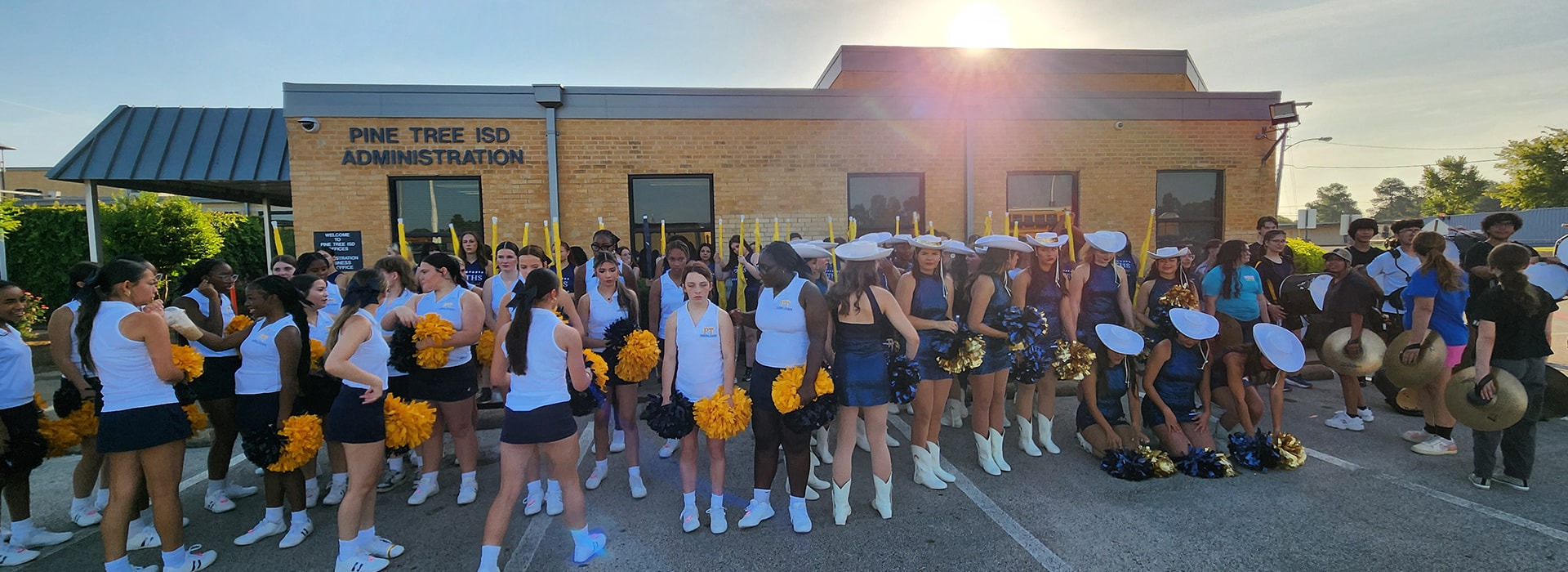
At Pine Tree ISD, Superintendent Steve Clugston and Deputy Superintendent Jonathan Eggerman are not shy about the premise that drives their work: schools are the backbone of communities, and that reality carries an obligation far beyond test scores.
For Clugston, the district’s mission begins with belief—belief that students can become a positive force in their community, and that when families and community members feel that impact, they respond with time, energy, resources, and trust. In his words, Pine Tree’s mission is to “instill the habits and values” in both students and staff so the greater community experiences that positive influence firsthand. When that happens, it becomes a sustainability loop: the community supports the schools, the schools strengthen the community, and the cycle accelerates.
That mindset shapes how Pine Tree defines success. Rather than anchoring its identity primarily to academic metrics, the district prioritizes the development of skills and habits that prepare students for an unknown future—one where many of the jobs they will hold have not yet been invented. Academics matter, but they are not treated as the only outcome. The deeper focus is on creating learners who are dependable, resilient, and equipped to function effectively in a working society.
Culture First: The Outcomes That Matter Most
Clugston lays out Pine Tree’s cultural outcomes in direct terms. Students must learn to be dependable, follow rules, get along with others, develop a strong work ethic, solve problems independently, and refuse to quit when things get hard. Pine Tree’s leadership believes that when these habits take root, academic success follows more naturally—and classrooms become places where teaching and learning can thrive.
The district’s philosophy is shaped by a reality many school systems face: for a growing number of students, schools have become the primary place where essential life skills are taught. Employers, Eggerman notes, rarely tell districts that graduates need more algebra. What they hear is far more practical—students who struggle with punctuality, phone dependence, interpersonal drama, and basic professional habits. Pine Tree’s response is to make those expectations explicit and consistent in every environment, not just in a single “life skills” lesson.
Leadership Retreats and Multiplying Influence
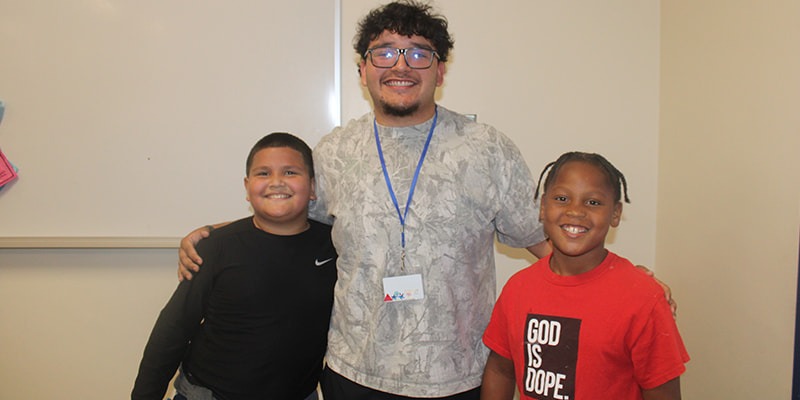
Because culture cannot easily be sustained by two administrators, Pine Tree invests in multiplying leadership. Clugston describes the approach as identifying influential people across the district—whether they hold formal leadership roles or simply have credibility and influence—and bringing them together to build capacity as culture defenders.
The goal is not only to inspire, but to equip: these are the staff members who will shape daily conversations, reinforce expectations, and protect the standards when leadership is not in the room. Teachers and staff are granted significant freedom, but with one non-negotiable: the culture must be aligned with the outcomes Pine Tree is trying to instill in students.
For staff who have been overwhelmed by mandates and top-down directives, that approach changes the equation. Pine Tree’s leadership frames it as a trade: the district will support and empower educators, but the work must remain anchored in developing students who can succeed in the real world.
Support Services Through Presence, Access, and Fast Solutions
One of Pine Tree’s most unusual practices is how leadership shows up. Eggerman says he and Clugston are on campuses every single day. Most staff see at least one of them daily, and often both. This consistent visibility means issues do not sit and fester—whether it’s a student behavior problem, a parent issue, or a staff challenge. Problems are addressed where they happen, not after they’ve escalated.
Twice each year, Pine Tree also meets with every employee in a structured but practical way. Leadership visits campuses with a cross-functional team—finance, technology, maintenance, and curriculum—and teachers can bring concerns during their planning periods. The difference is that the people who can actually solve the problem are present in the room, in real time.
The message is simple: ask for help when you need it. Struggling in silence is not acceptable—because it undermines the culture and the student experience.
Clugston contrasts this hands-on model with what he sees elsewhere: systems that bury teachers in paperwork and impose solutions from a distance. Pine Tree’s approach, in his view, is the opposite—hire good people, trust them, support them, and address issues at the source.
Adapting to Demographic Change and Stabilizing the Workforce
Pine Tree’s leadership also speaks candidly about the community’s evolution. Once a largely upper-middle-class district, Pine Tree saw rapid demographic change over roughly a decade, with economic disadvantage rising significantly and student needs shifting accordingly. In that transition, the district experienced instability—Clugston recalls arriving when roughly 25% of staff were first-year teachers.
Today, the district has dramatically reduced that churn. First-year teachers make up a small fraction of staff, and the district intentionally surrounds new educators with experienced colleagues who can support them and accelerate growth. For Pine Tree, that stability is not accidental—it is a product of culture, presence, and a district-wide expectation that adults must model the functional, structured environment many students may not consistently experience outside of school.
Career and Technical Education with a Clear North Star
Pine Tree’s CTE strategy is anchored to a guiding idea: become “industry’s first call.” That means building programs based on direct input from industrial and commercial partners in Longview and across East Texas—then aligning instruction to what employers actually need.
Leadership points to health science as one of the district’s strongest growth areas, particularly because it offers immediate employment pathways while also creating room for long-term advancement. Programs include nurse assistant training, phlebotomy, and pharmacy technician preparation—built around real-world practice and the professional expectations students will face beyond graduation.
Culinary arts is another standout, supported by a commercial kitchen and a front-of-house bistro model that trains students not only in cooking but in service, management, marketing, and operational flow. The program begins with roughly 100 students at entry levels and sustains strong participation through advanced levels, supported by multiple instructors.
HVAC is a newer but rapidly expanding focus, launched in response to clear regional demand and a shrinking pipeline of younger workers entering the trade. Pine Tree redesigned an existing program, brought in an HVAC instructor, and built the pathway in alignment with construction trades. Students have already begun internships with the district and other organizations, and leadership expects multiple certifications to be earned by advanced students—creating immediate workforce value and deeper apprenticeship-style opportunities.
Construction remains one of Pine Tree’s flagship pathways, and it is also a major driver behind the district’s investment in a new career and technical education building. For Pine Tree, construction is not just a class—it is a program run with the intensity and structure of athletics or fine arts. Students train beyond the bell schedule, participate in competitions, and develop the discipline and teamwork that employers demand.
One example illustrates the difference: Pine Tree construction students travel to a Dallas “build-off,” where teams receive blueprints and must build within strict time, safety, and code requirements. Students appoint safety officers, work as a coordinated unit, and perform under real constraints. Similar competitive experiences exist across multiple programs—from welding to automotive to business and marketing—because Pine Tree believes students grow fastest when they are challenged and can measure their performance against high standards.
The philosophy is blunt: being able to do something is not enough—students must be able to do it at a high level.
Capital Infrastructure Built on Stewardship
Pine Tree’s facilities strategy reflects an “aging district” reality many communities recognize. The district is largely built out and focused on reinvestment rather than expansion. That requires careful stewardship of taxpayer dollars and a long-term view of how to extend building life cycles without overleveraging budgets.
Clugston describes a comprehensive facilities study that helped identify which buildings could be renovated for decades of additional use and which would eventually require replacement. The district has developed a multi-year plan—spanning roughly 10 to 15 years—aligned to bond cycles, payoffs, and strategic upgrades.
Recent investments include significant renovations at the junior high, including expanded band facilities, repurposing of old space to support growing athletics needs, and modernization work that allows a well-built structure to remain viable for another generation. At the high school, a new CTE building is being developed to address space constraints and avoid the cost and complexity of bringing older areas fully up to code through piecemeal additions.
Future phases include plans to renovate older spaces into new labs—health science and robotics among them—so that as programs expand, facilities keep pace.
What Drives the Work
When asked what he values most about his role, Clugston’s answer is direct: “the kid part.” He frames leadership as being in the student business—not the office business—which is why he and Eggerman spend so much time on campuses.
Clugston also ties his leadership philosophy to a broader cultural shift: students are growing up in an environment where information is constant, but wisdom is scarce. Helping students understand what credible sources look like, how to evaluate information, and how to develop a stable internal compass has become, in his view, one of the most important jobs schools now carry.
For Pine Tree, that work cannot be done through the curriculum alone. It is modeled through relationships, consistency, and a district culture that refuses to accept dysfunction as normal—whether from students or adults.
Looking Ahead: From Building to Sustaining
As Pine Tree looks to the next 18 to 24 months, leadership describes a shift from building momentum to sustaining it. The district has seen measurable academic improvement, including significant movement in state comparative performance metrics and a substantial rise in reading proficiency. But the next phase is about ensuring that success is not cyclical—ensuring Pine Tree’s culture, leadership capacity, and program strength outlive any one administration.
That includes developing the next generation of leaders, strengthening pipelines into education itself, and continuing to expand programs that produce visible wins for students—because Pine Tree believes success breeds success. Whether it’s academics, athletics, fine arts, or career skills, the district wants students to experience achievement, repeat it, and carry those habits into adulthood.
One description offered to district leadership captures the philosophy best: Pine Tree aims to give every student “the skeleton key to the city”—a set of habits and skills that can unlock any door they need to open.
In Pine Tree ISD, that key is being built through culture, real-world preparation, consistent support, and a commitment to winning—not for the sake of trophies, but because students who learn to win the right way carry that advantage for life.
Click The Cover To View Or Download The Brochure

AT A GLANCE
Who: Pine Tree Independent School District
What: A leading school district focused on career-readiness, inclusiveness, and the holistic education of its students
Where: Longview, Texas
Website: www.ptisd.org
PREFERRED VENDORS/PARTNERS

East Texas Professional Credit Union: www.etpcu.org
East Texas Professional Credit Union was established in 1953 when thirteen teachers shared a vision for providing trusted financial services to local educators. Today, we are one of East Texas’ most trusted institutions. We remain committed to providing personalized service and lending expertise, ensuring members and communities grow stronger together.

Kilgore College: www.kilgore.edu
Nestled in the heart of East Texas, Kilgore College is a premier community college renowned for its academic excellence and vibrant traditions. Home to the world-famous Rangerettes, KC offers diverse technical and academic programs, and four athletic programs. It remains a vital community hub, empowering students through affordable, high-quality education.