The Voice for Franchisees
Peer-to-Peer Power, Advocacy, and Practical Support for Franchisee Success
In franchising, the opportunity is often described as “owning a business for yourself, but not by yourself.” For the American Association of Franchisees and Dealers (AAFD), that idea isn’t a slogan—it’s the foundation of the organization’s mission and the value it delivers every day.
Rich E. Stroiney, Chief Executive Officer, explains that AAFD’s purpose is to support what the association calls “total quality franchising.” In practice, that means promoting fair and equitable franchising and dealer practices across the industry, with a primary focus on franchisees—who often find themselves navigating complex operational realities inside a system they did not design.
While franchisors have their own support environments, AAFD’s structure is built around franchisee-led, franchisee-managed chapters, providing members with a trusted space to strengthen their businesses, share best practices, and address challenges in a way that is difficult to replicate in franchisor-managed settings.
For AAFD, growth of the association itself is secondary. Rich sees success first through the lens of franchisee outcomes and the broader health of franchising as a business model. If franchisees thrive and the industry becomes stronger and more sustainable, membership growth follows naturally.
The Core Value: A Space Where Franchisees Can Speak Freely
AAFD’s strongest differentiator is the environment it creates for peer-to-peer sharing.
Within AAFD chapters, franchisees can compare notes about what is working, what is not, and what improvements could help the business—not only for the franchisees, but for the franchisor as well. Rich emphasizes that this isn’t inherently adversarial. It’s about context. Franchisees often communicate differently with peers than they do with corporate leadership, and that candid dialogue can surface operational insights that might otherwise remain invisible.
The result is an empowered franchisee community that can operate as a constructive feedback engine for franchise brands, supporting improvements in everything from operations to product development, while also strengthening local execution and profitability at the unit level.
Workforce Shortage: An Indirect Role with Real Influence
Labor availability remains one of the most persistent pressures on franchise operations. AAFD’s role in this area is not typically direct recruiting, but the association still exerts meaningful influence in two ways.
First, franchisee-to-franchisee sharing helps members learn what is actually working in the real world. If one franchisee has found success partnering with a community college, engaging local high schools, or attracting second-chance workers through targeted outreach, that strategy can be shared and adopted by others in the system.
Second, AAFD supports franchisees through legislative and legal advocacy. Rich notes that workforce enablement and workforce empowerment were key topics at a recent summit in Washington, D.C., including conversations around alternative workforce pipelines and the impacts of policy decisions on franchisee operations.
For AAFD, advocacy is about ensuring that legislators understand how franchisee economics work and how certain regulations—however well-intentioned—can affect cost structures, pricing flexibility, and long-term sustainability for small business owners operating within brand systems.
Practical Business Support Through Trusted Partners
Rich points out that running a franchise involves far more than executing the brand playbook. Franchisees must navigate insurance, benefits, HR compliance, payroll, retirement planning, merchant services, and financial management—often while operating in states where employment rules vary widely.
One of AAFD’s major benefits is access to supplier and partner relationships that can reduce friction in those areas. Rich highlights examples such as healthcare coverage solutions that can work even for very small teams, HR providers who can support state-specific compliance requirements, and broader support systems that franchisees historically struggled to access affordably.
AAFD also connects franchisees with franchisee-focused legal resources. Beyond the advocacy work, franchisee-specific attorneys play an important role in helping members interpret franchise documents, negotiate issues, and understand risk. AAFD events create an environment where franchisees can engage those attorneys without the immediate pressure of hourly billing—an opportunity that can help owners make better decisions before problems escalate.
Events and Education as Ongoing Engagement
AAFD chapters are encouraged to operate with a consistent rhythm: a structured board environment and monthly meetings that support both leadership alignment and general member engagement. These meetings create continuity and allow franchisees to build trust over time—one of the key elements that makes peer-to-peer sharing useful.
Beyond individual chapters, AAFD hosts broader calls and sessions across chapters, allowing cross-system learning and collaboration. Rich notes that one valuable outcome of these interactions is local business support, where franchisees can identify ways to cooperate in the market—whether through referrals, shared customer bases, or operational learning borrowed from adjacent industries.
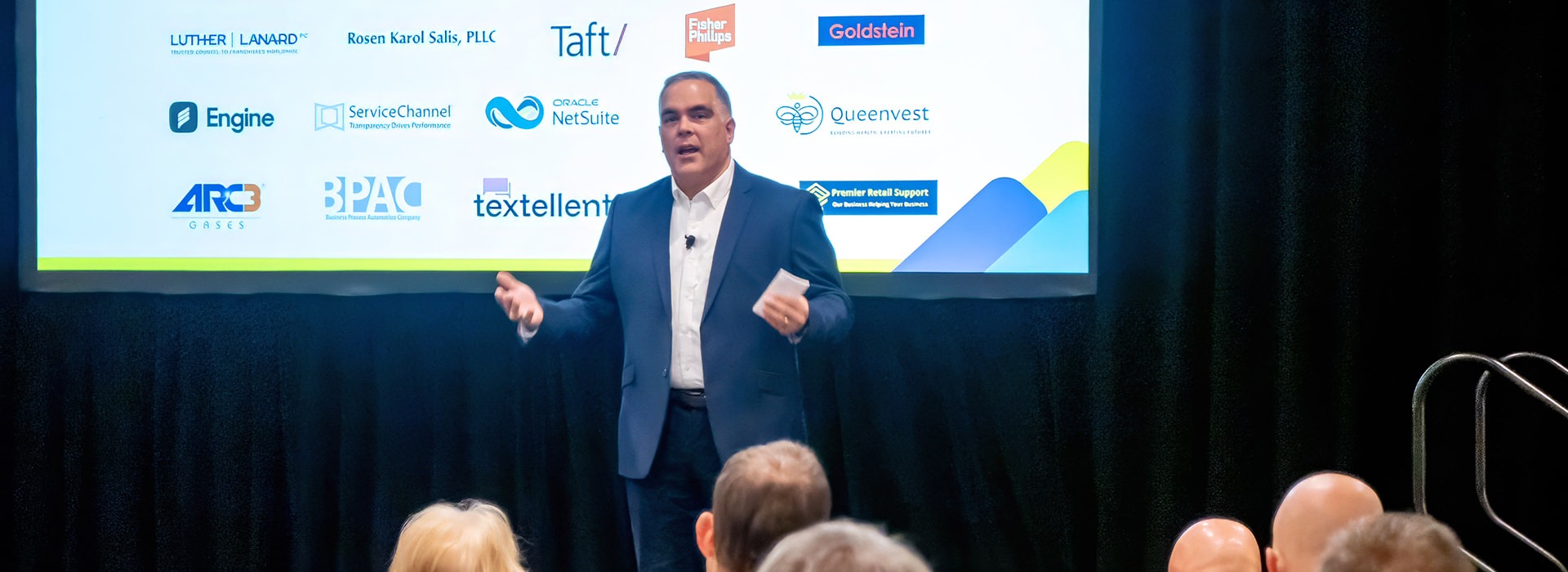
The association’s annual gathering in Washington, D.C. adds another layer. AAFD partnered with the CFA to combine forces in advocacy efforts, creating opportunities for knowledge sharing across large and small franchise systems, and giving franchisees direct access to policymakers in an organized legislative day format. Rich sees this kind of collaboration as critical—because franchising advocacy is stronger when the industry speaks with more unity and a broader understanding of how different systems operate.
Technology and AI: Promising Tools, Best Delivered Through Specialists
Rich describes AI and technology as emerging tools that will increasingly shape franchising—but notes that AAFD does not attempt to position itself as the expert in every technology domain. Instead, the association leans on specialist partners who can bring proven solutions to franchisees.
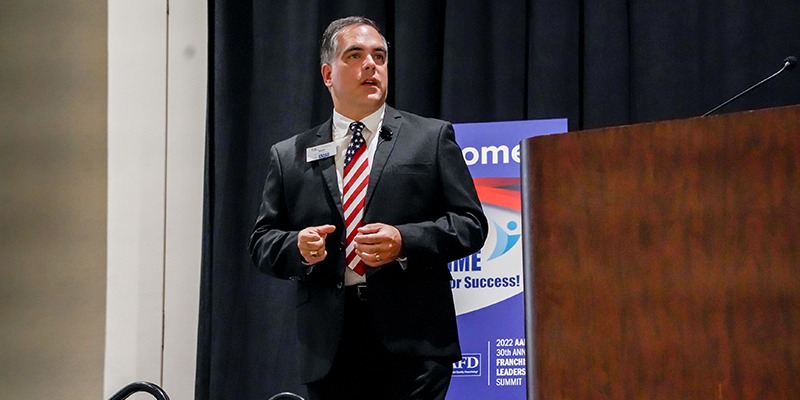
At a high level, Rich sees clear value in AI as a screening and efficiency tool. Early-stage candidate engagement, pre-qualification, and repetitive workflow tasks can be streamlined through AI, saving time and reducing the “cumbersomeness” of unnecessary calls and follow-ups. He also noted that recent sessions included discussion of AI’s potential role in financial management support, though AAFD’s focus remains more on connecting franchisees to partners who can deliver those tools effectively rather than building in-house solutions.
The key, in Rich’s view, is balance: use technology to remove friction, but don’t lose the human elements of franchising that make systems resilient—relationships, communication, and operational execution.
The Franchise Outlook: Growth and New Concepts
From Rich’s vantage point, franchising continues to expand, and franchisees are increasingly recognizing the value of organized association communities. He points to an uptick in new concepts entering the marketplace—some traditional, others highly niche—such as pet services and mobile personal care models. These newer concepts reflect shifting consumer behavior and the demand for convenience-based service delivery.
AAFD is also seeing a rise in franchise brands proactively seeking association engagement, recognizing that a committed franchisee community can strengthen brand feedback loops and operational improvement processes.
Priorities for 2026 and Early 2027
Looking ahead, Rich identifies several strategic priorities for AAFD.
One major initiative is strengthening internal systems and modernization—improving member experience through a more robust membership platform that enhances connectivity, flexibility, and engagement across the organization.
Another priority is a deeper and more structured engagement with franchisors. While AAFD has historically focused heavily on the franchisee side, Rich sees opportunity in aligning franchisor engagement to demonstrate how chapters can be leveraged as valuable assets for brands—supporting ideation, testing, field feedback, and continuous improvement in ways that reduce burden on corporate teams while improving system performance.
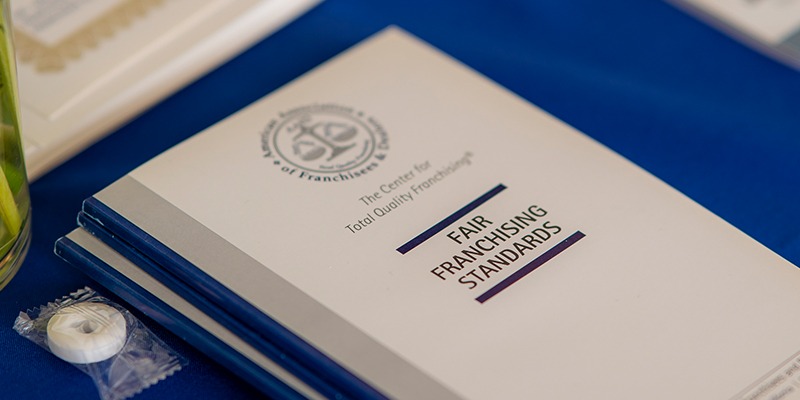
Rich also points to the potential for AI-enabled support in the future, particularly in reviewing and comparing franchise disclosure documents against standards to identify gaps or risks more efficiently. The goal is not automation for its own sake, but smarter tools that help AAFD deliver value faster and more consistently.
Underlying all of these priorities is a clear belief: franchisee associations are not simply places to vent or compare complaints. When run well, they become strategic engines—strengthening franchisee outcomes, improving brand systems, and raising the overall quality of franchising as a business model.
Click The Cover To View Or Download The Brochure
AT A GLANCE
Who: American Association of Franchisees and Dealers (AAFD)
What: The voice and advocacy body for fair practices for franchises across the country
Where: Enfield, Connecticut
Website: www.aafd.org