The Trifecta Advantage
Healthcare, Recreation, and Education Leading the Way in This Dynamic Municipality
Along the banks of the Rock River in northern Illinois, the City of Sterling is writing a new chapter in its history. With a population of approximately 15,000 residents, Sterling may be modest in size, but its infrastructure, civic amenities, and forward-thinking redevelopment strategy rival those of many communities many times larger. Once defined primarily by heavy industry and manufacturing along its riverfront, the city is now repositioning itself through adaptive reuse, strategic partnerships, and long-term planning that blends heritage with innovation.
“We really see Sterling as a standalone community that offers the benefits of a larger city while maintaining a small-town feel,” says Scott Shumard, City Manager of Sterling, Illinois. “We have healthcare, recreation, and job opportunities that rival much larger places, but with close neighborhoods, easy commute times, and a high level of familiarity throughout the community.”
That balance between opportunity and approachability is foundational to Sterling’s appeal. Residents benefit from short commute times, strong personal connections, and accessible local leadership, while enjoying services that many similarly sized cities cannot provide.
“Between our healthcare system, schools, and parks, we often say we have the trifecta,” Shumard notes. “It really is the best of both worlds.”
Coming Home Again
Sterling’s quality of life has become even more pronounced in recent years. Like many communities across the country, it experienced subtle demographic shifts during and after the pandemic as remote work allowed professionals to reconsider where they wanted to live. For many former residents, that reconsideration led them back home.
“We do see a fair number of young adults who left for school or larger cities and are now coming back,” explains Jana Groharing, Executive Director of Sterling Main Street. “They’re starting families, they want to be closer to relatives, and they’re looking for a place that feels familiar but still offers opportunity.”
The ability to combine career flexibility with family proximity and affordability has strengthened Sterling’s residential base. Unlike major metropolitan areas, Sterling offers affordable housing, accessible recreation, and a strong sense of community. These lifestyle advantages form the foundation upon which the city’s economic development strategy is built.
Adaptive Reuse in Action
Sterling’s downtown tells a story of reinvention. Streetscape improvements completed in previous decades created a welcoming physical environment. Today, the focus has shifted to evolving the business mix and the adaptive reuse of legacy buildings.
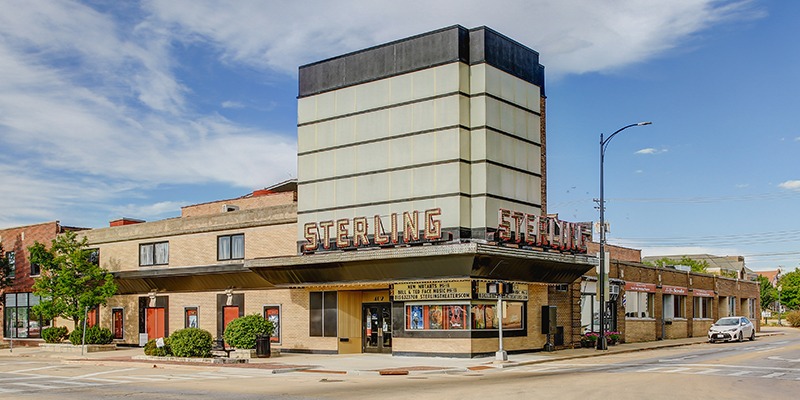
“The streetscape itself was largely completed before I even stepped into this role,” Groharing says. “Now the work is about responding to changes in the business landscape, especially the loss of large department-style stores that simply don’t fit today’s retail model.”
Rather than waiting for traditional anchor stores to return, Sterling has embraced creative solutions. Vacant large-format buildings are being reimagined as flexible, shared, and mixed-use spaces.
“Our office is a great example,” Groharing explains. “It used to be a Walgreens in the heart of downtown. When Walgreens moved out, it became a law firm, and now it’s been repurposed into a shared coworking space with multiple professionals operating under one roof.”
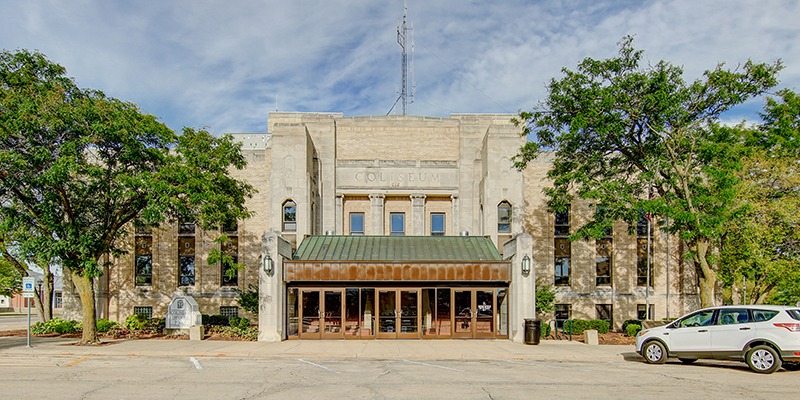
A former courthouse building illustrates this strategy. Upper floors that sat vacant for decades have been transformed into 20 downtown apartment units, bringing new residential energy to the core.
“That project was completed just before COVID,” Groharing recalls. “Those upper floors had been empty since the 1970s, and now they’re fully occupied. It’s been a great influx of residential living downtown.”
Shumard emphasizes that this preservation-focused approach marks a clear shift from earlier redevelopment eras.
“In the past, there was more of a knock it down mentality,” Shumard says. “Now we’re focused on preservation, reuse, and honoring what makes these buildings, and this community, unique.”
Repositioning the Retail Landscape
Beyond downtown, Sterling has applied similar redevelopment tools to its broader commercial corridors. Through the use of Tax Increment Financing and redevelopment agreements, former big box properties have been successfully repositioned.
“We’ve successfully converted old, empty box stores into new retail uses,” Shumard explains. “Former Walmart and Kmart buildings have become homes to stores like Marshalls and Old Navy.”
The Northland Mall remains an active redevelopment opportunity. Like many malls built in the 1970s, it has struggled amid changing consumer patterns and the growth of online retail. However, a new owner is exploring alternative concepts for the property.
“There’s a new owner who’s trying to find innovative ways to repurpose the space,” Shumard says. “That may mean moving away from a traditional mall format entirely and transitioning toward standalone uses.”
While some proposals have generated excitement without advancing, city leadership maintains a disciplined approach.
“Sometimes ideas get ahead of the numbers,” Shumard notes. “Our job is to make sure projects are feasible, sustainable, and aligned with the community’s long-term goals.”
Reclaiming the Rock River
Perhaps the most transformational initiative underway is Sterling’s riverfront redevelopment. For generations, heavy industry dominated the shoreline. Facilities such as Northwestern Steel and Wire, National Manufacturing, and Lawrence Brothers fueled economic prosperity but effectively cut residents off from the river itself.
“The industry that built Sterling also kept people away from the river,” Shumard explains. “For decades, the riverfront was inaccessible, polluted, and largely forgotten.”
Community-driven planning efforts beginning in 2011 established a new vision. Residents expressed a clear desire to reconnect with the Rock River and transform former industrial land into mixed-use space that supports recreation, housing, and commerce.
“Through workshops and public meetings, there was a clear desire to reclaim the riverfront,” Shumard says. “The vision was always mixed-use, recreation, living, and commercial space.”
Years of environmental remediation, supported by grants and local investment, have prepared the ground for visible transformation. A destination scale park is now under construction, featuring playground equipment, a splash pad, an ice ribbon, a warming shelter that doubles as a restaurant and stage, and an amphitheater set within a restored prairie landscape.
Adjacent historic industrial structures are being positioned for adaptive reuse rather than demolition.
“These buildings are incredibly unique,” Shumard says. “Some literally serve as the seawall for the river. You can’t replicate that architecture, and you lose something important if you tear it down.”
Sterling’s River Edge designation unlocks historic tax credits of up to 45 percent, providing a powerful incentive for developers to invest in boutique hospitality, residential units, and commercial reuse along the riverfront.
Bridging the Affordability Gap
Housing remains one of Sterling’s most pressing issues. A recent housing study confirmed that demand exists, but barriers persist.
“We know housing is a nationwide issue,” Shumard says. “But in smaller communities, the lack of builders is a significant hurdle.”
Construction costs often outpace what the local market can reasonably support, creating a gap between affordability and feasibility.
“While the price of homes is affordable in our area, the price of constructing homes may not necessarily match the price points of homes selling,” Groharing explains.
Riverfront and downtown residential development offers diversification beyond traditional single-family neighborhoods. Young professionals, retirees, and remote workers represent potential demand segments seeking walkable, distinctive housing options.
Capacity Ahead of Demand
Behind Sterling’s visible transformation is an infrastructure system built for expansion. The city has partnered with Surf Broadband to extend fiber access throughout the community.
“We’re nearing full build out,” Shumard says.
Legacy industrial infrastructure also provides excess utility capacity, positioning Sterling favorably for future development.
“All of that manufacturing built infrastructure for a much higher level of demand,” Shumard explains. “That’s incredibly favorable for future development.”
Long-term planning for a new wastewater treatment facility further ensures sustainability without placing undue burden on ratepayers.
Infrastructure for Living Well
For a city of roughly 15,000 residents, Sterling’s recreational amenities are striking. Its independent park district operates indoor pools, diving wells, gymnastics facilities, an indoor track and field, tennis courts, basketball courts, a wellness center, performance labs, a marina, a golf course, dog parks, and both indoor and outdoor pickleball courts.
“For a city of about 15,000 people, our park district is extraordinary,” Shumard says.
Healthcare stands as another foundation asset. Sterling’s hospital remains municipally owned and independently operated, preserving local service control amid consolidation.
“Our hospital has remained independent while many others have been absorbed into large systems,” Shumard explains. “That allows us to retain services locally.”
With more than 130 physicians and advanced capabilities, including cardiac care and robotics, the facility provides comprehensive services rarely found in communities of this size.
The Next Chapter Begins
Looking ahead, Sterling’s leadership remains focused on maintaining momentum.
“I want to see the riverfront redevelopment continue at its current pace,” Groharing says. “Those adaptive reuse projects, especially in hospitality and housing, are critical for long-term success.”
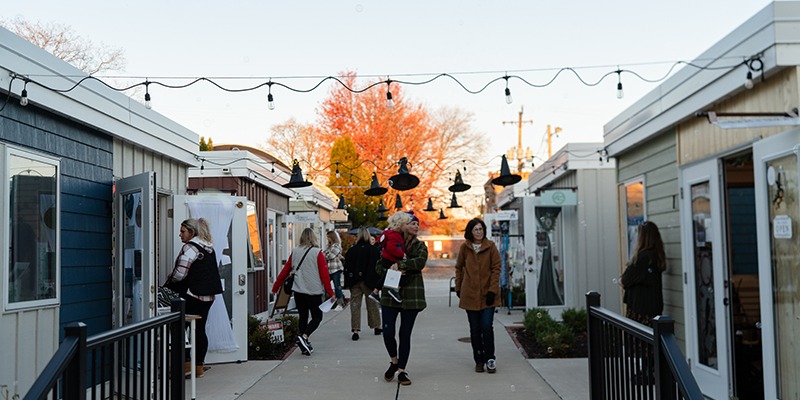
She also highlights the city’s entrepreneurial ecosystem, including a year-round indoor farmers market celebrating its 20th anniversary, retail and kitchen incubator spaces, and support from the Small Business Development Center.
“We’ve been very successful at growing our own,” Groharing adds. “That’s something we want to keep building on.”
Shumard underscores the importance of collaboration. “Our next chapter depends on our partners helping us cross the finish line on these transformational projects,” he says. “Once complete, the riverfront will redefine our front door and reaffirm who we are.”
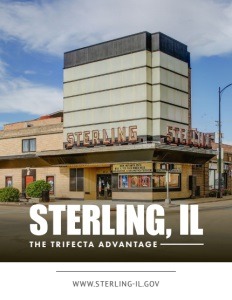
Click The Cover To View Or Download The Brochure
AT A GLANCE
Who: Sterling, IL
What: A riverfront city of 15,000 offering big-city amenities with small-town character.
Where: Northwestern Illinois along the Rock River, approximately 110 miles west of Chicago and 30 miles east of the Mississippi River.
Website: www.sterling-il.gov
PREFERRED VENDORS/PARTNERS

Republic Services: www.republicservices.com
Republic Services is an industry-leading provider of environmental services in the United States, delivering sustainable recycling and waste solutions for residential, commercial, and industrial customers. Through innovative technology, responsible resource management, and a commitment to environmental stewardship, the company helps communities achieve cleaner, safer, and more sustainable futures.

Willett, Hofmann & Associates, Inc.: www.willetthofmann.com
With a history that dates back to 1935, Willett, Hofmann & Associates, Inc. (WHA) is a professional, award winning, multi-discipline organization, licensed to provide professional civil engineering, structural engineering, architectural design, and professional land surveying services. WHA has been providing professional services to municipalities, townships, counties, state agencies and private enterprises since our inception.

Gorman & Company: www.gormanusa.com
Gorman & Company is a nationally recognized leader in community revitalization, specializing in affordable, workforce, public, and senior housing. With over 40 years of experience, they collaborate with partners to build inclusive neighborhoods, earning repeated honors from Affordable Housing Finance magazine. Learn more on their website.