In ‘Line’ for Growth
Precision-Built Road Marking Innovation, Powered by Partnership and Production Efficiency
In an industry where reliability is non-negotiable and downtime can derail an entire project schedule, Mark Rite Lines Equipment Co. (MRL) has earned its position as a market leader by doing one thing exceptionally well: building high-performance road marking and removal equipment that contractors can trust when it matters most.
Today headquartered in Billings, Montana, MRL’s reputation has been shaped by decades of real-world striping experience translated into engineering, manufacturing, and service practices that stay tightly aligned to what customers need in the field.
As Boyd Montgomery, General Manager, explains, the company’s long-standing mindset is rooted in the simple reality that these machines are not accessories—they are the backbone of how work gets done on roads across North America.
From Striping Experience to a Manufacturing Platform
MRL’s story begins in the road striping world, where owners and operators understand firsthand how equipment performance directly impacts productivity and profitability. While the company’s earliest roots trace back to the 1960s with John Gonitzke, the pivotal growth milestone arrived in 1989, when Gonitzke and Jim Spielman aligned their experience and built what would become the modern MRL.
That merger set the stage for a defining philosophy—“designed by stripers, for stripers.” In practice, that meant building equipment with an operator’s realities in mind: reliability, serviceability, precision, and the ability to keep crews moving through demanding windows that often occur at night and under tight traffic constraints.
Over the following decades, MRL scaled rapidly by continuing to refine performance, expand product capability, and grow its footprint beyond local markets. In 2019—after roughly 30 years of sustained innovation and growth—Federal Signal acquired the company, positioning MRL to continue leading as a major player within a larger platform. Since then, MRL has remained focused on advancing the industry through product development, manufacturing efficiency, and strong customer relationships.
MRL’s broader family of operations also includes HighMark, a line striping contractor and road marking organization operating primarily in Montana. The strength of that operation was recently underscored when a longtime employee, Brad Meyer, was honored by ATSSA (the American Traffic Safety Services Association) with a Lifetime Achievement Award—recognition that speaks to the depth of talent and pride tied to the organization’s presence in the industry.
Innovation That Starts with the Road—and Ends with Measurable Results
Road marking equipment has always been mechanical at its core, but Boyd describes a clear shift in how machines are expected to perform today. It is no longer enough to simply “put a line down.” Customers increasingly need the ability to monitor, control, and verify performance—especially as standards and expectations rise around retroreflectivity, consistency, and safety in all conditions.
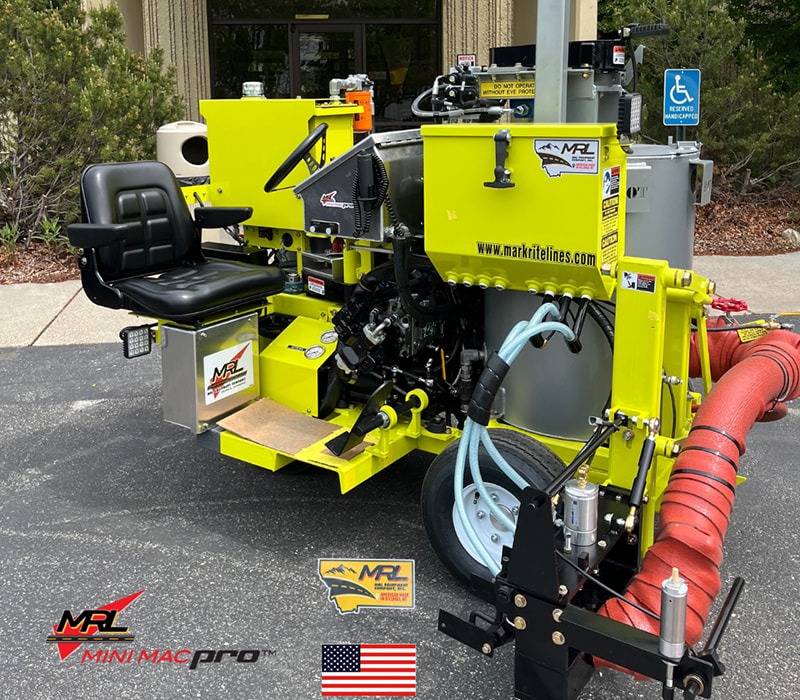
One major evolution has been the move from traditional switch-box and manual valve control systems to digital, touchscreen-based operational platforms. MRL’s dynamic touchscreen systems allow operators to set parameters, manage performance more precisely, and control machine functions through modern interfaces designed to improve consistency and reduce variability.
That technology is directly tied to what roadway owners and DOTs care about most: performance on the pavement. One area of increasing emphasis is wet retroreflectivity—the visibility of road lines at night in the rain, when driving conditions are most dangerous, and line performance matters most. Achieving that performance reliably is not simply about paint application. It involves ensuring the correct amount of beads is applied, at the right rate and density, to deliver reflectiveness that improves safety for the driving public.
MRL’s ongoing innovation reflects that reality: measuring and controlling application thickness, monitoring output, improving bead delivery accuracy, and integrating tools that help contractors understand—rather than guess—what their equipment is producing.
Navigating Supply Chain Reality and a Changing Cost Environment
Like most manufacturers, MRL experienced supply chain disruptions coming out of the COVID era, particularly around component lead times. Boyd notes that many of the most challenging delays have subsided, but new pressures have emerged—particularly around tariffs and the ripple effect they can have on sourcing.
Certain components remain available only through overseas suppliers, which introduces unavoidable complexity. At the same time, some manufacturing partners have been forced to rethink their own production footprints. Montgomery describes a chassis-related example where a supplier shifted production from Mexico back into the U.S., a move aligned to tariff realities but not one that can happen overnight. Transitions like that can temporarily disrupt availability even if they ultimately strengthen domestic capacity.
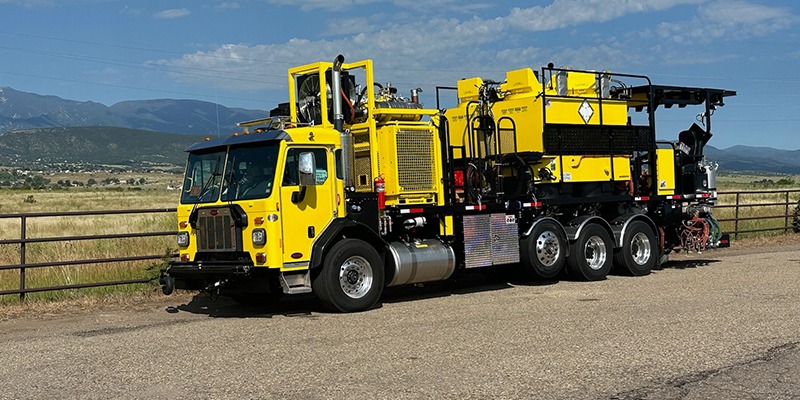
To manage risk, MRL leans heavily on production visibility and forecasting. The company builds a broad portfolio of equipment—thermo, epoxy, paint, removal systems, rumble-capable equipment, grinder trucks, and more—meaning demand can shift year to year depending on DOT requirements and regional market trends. Some states may transition toward more epoxy, for instance, shifting production needs accordingly.
The key is adaptability: building strong forecasting capability, hedging against long-lead components where possible, and staying ready to pivot as market direction changes.
A Relationship-Driven Model in a High-Stakes Customer Environment
When it comes to customer and supplier relationships, Montgomery is clear that MRL operates far more on the relationship side of the pendulum than the transactional side.
For customers, the reason is straightforward: these are high-cost assets, and buyers need confidence that the manufacturer will stand behind the product after delivery. Road marking and removal work happens under pressure, and equipment is often operating nights and weekends. When a machine goes down, the contractor needs responsiveness, not a ticket number.
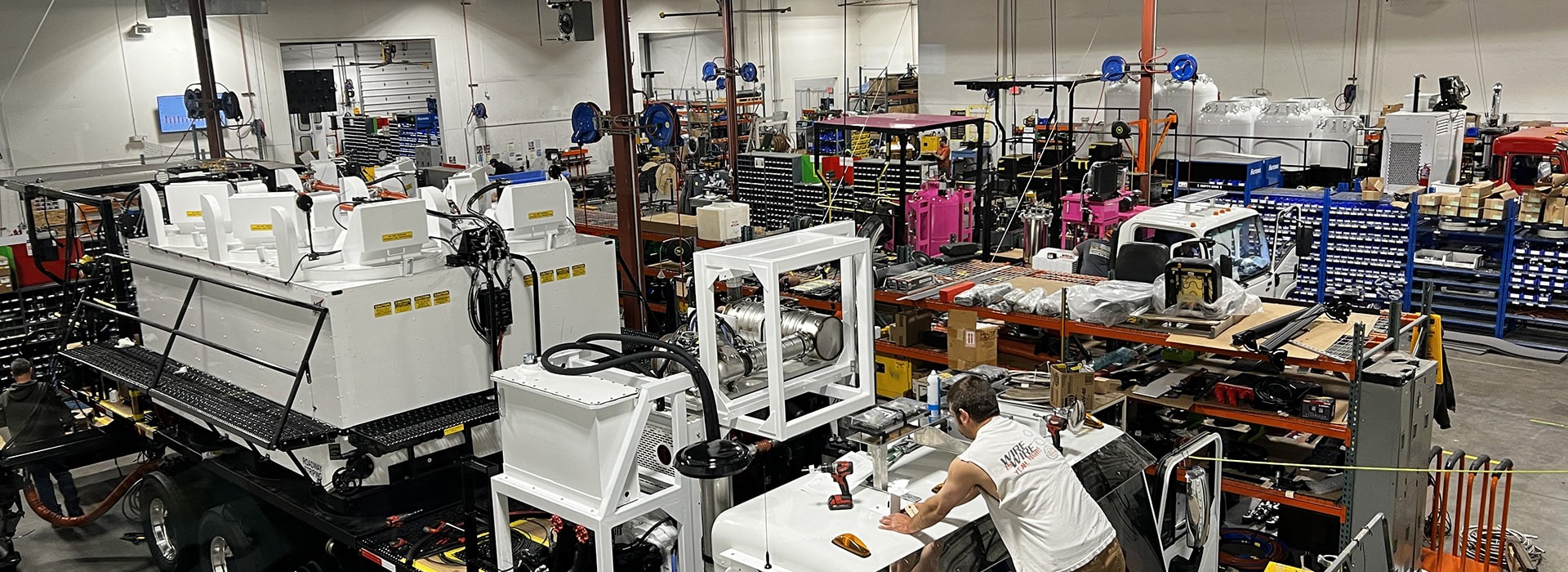
That same relationship approach extends to suppliers. As MRL modernized its manufacturing flow and shifted from a bay-build operation to a line-build system, vendor reliability became even more critical. When a truck enters a production line, there is no easy way to “pull it aside” if a key component is missing.
That reality has heightened the importance of strong supplier partnerships—built on transparency, shared planning, and consistent communication.
MRL hosts suppliers on-site, walking them through how the production system functions so they understand the operational impact of delays. Montgomery notes that when suppliers see the manufacturing model firsthand, the lightbulb often goes on. The result is improved coordination and a higher-performing supply network.
Company Culture, Safety, and Retention in a Tight Labor Market
MRL’s location is also part of its operational reality. Billings does not offer the same labor pool depth as major metro areas, and competition is strong—especially with mining and oil field activity attracting skilled workers.
Against that backdrop, MRL’s culture strategy is built around teamwork, a strong safety focus, and a workplace environment where employees can build a long-term career. Montgomery emphasizes that safety is not treated as a poster on the wall—it is a priority tied to a basic promise: employees should come to work, do their job, and return home safely to their families every day.
At the same time, MRL recognizes that recruitment cannot be passive in a constrained market. The company has increased its outreach and is working more directly with post-secondary and technical programs that align with core manufacturing needs—welding, mechanical skill sets, and hands-on technical capabilities. That effort has been strengthened through renewed HR leadership focused on making sure the business is visible in the region and attractive as an employer.
The broader strategy is simple: bring in people who are passionate about the work, hire them at the ground level, and create the conditions for them to grow with the company.
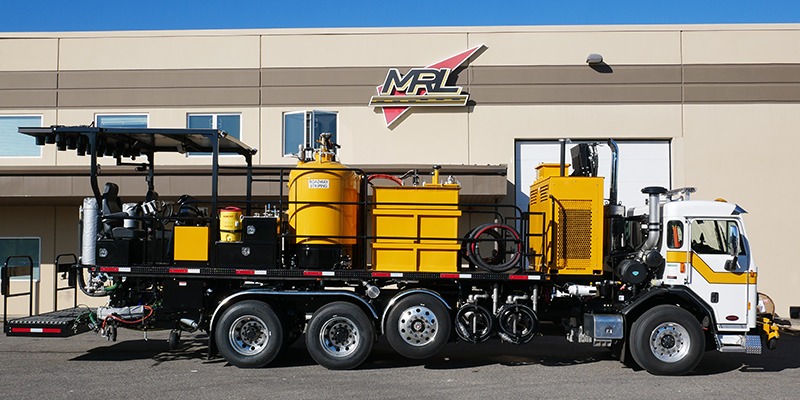
Vendor Partnerships That Protect Uptime
When asked about key partnerships, Montgomery highlights one relationship that stands out for both operational and customer impact: MRL’s connection to its chassis supplier network through the Jackson Group and its Peterbilt distribution platform.
MRL builds on multiple chassis platforms depending on customer preference, but much of its production is tied to Peterbilt. The advantage, Montgomery says, is not just product alignment—it is service reach. MRL equipment operates throughout the U.S. and Canada, and when a customer in Florida or Texas has a chassis issue, the ability to access a Peterbilt dealer network and get support quickly is a major competitive advantage.
Equally important is responsiveness. Montgomery describes the type of partnership MRL values: when there is an issue, the partner picks up the phone, provides answers, and helps solve the problem—even outside normal hours, because the industry often works outside normal hours.
He also notes strong supplier alignment in key component areas such as air compressors, where close vendor relationships help ensure products are well-matched to MRL equipment and can be supported effectively over time.
Capital Investment Focused on Efficiency and Throughput
Innovation at MRL is not limited to the product line—it also shows up in the factory.
Montgomery points to major manufacturing investments over the past year that have already delivered significant production gains. MRL has upgraded key machining equipment, including new lathes that replace older systems with improved precision and efficiency.
The company also installed a tube laser, a piece of technology that has dramatically reduced production time on certain components—from roughly 15 hours of combined machining and fabrication work down to about 15 minutes in some cases.
A prior table laser investment similarly improved steel cutting efficiency and reduced waste by maximizing sheet utilization and optimizing cut patterns.
The intent behind these investments is consistent: increase throughput, improve quality, reduce manual bottlenecks, and create a more scalable production system capable of meeting market demand without sacrificing performance standards.
Moving Forward
As MRL looks ahead through 2026 and beyond, the focus remains clear: continue raising the technology standard in road marking and removal equipment, protect supply chain resilience through stronger vendor partnerships, and invest in production tools that increase efficiency while improving product consistency.
At its core, Mark Rite Lines is building more than machines. It is building a model—one where operator-driven design, relationship-based service, and disciplined manufacturing investment combine to create equipment that contractors can rely on.
Click The Cover To View Or Download The Brochure
AT A GLANCE
Who: Mark Rite Lines
What: leading builder of industry-exacting machines, road services, and engineering expertise
Where: Billings, Montana
Website: www.markritelines.com
PREFERRED VENDORS/PARTNERS

Boss: www.bossair.com
Established in 1988 by brothers Patrick and Paul Wilkins, BOSS Industries, Inc is an industry leader. BOSS Industries is a supplier of innovative engineered solutions for truck mounted air compressors and generator systems for the demanding vocational work truck market. Based in LaPorte Indiana, BOSS Industries has remained loyal to the surrounding community to ensure a quality, midwestern built American product