The Voice of the Manufacturing Sector
Delivering “Blocking and Tackling” Through Policy, Workforce Solutions, and Member-Driven Services
For more than a century, Michigan’s manufacturers have relied on an organization built for the work that rarely makes headlines but consistently shapes outcomes: the steady, day-in and day-out “blocking and tackling” that helps businesses compete, hire, invest, and grow.
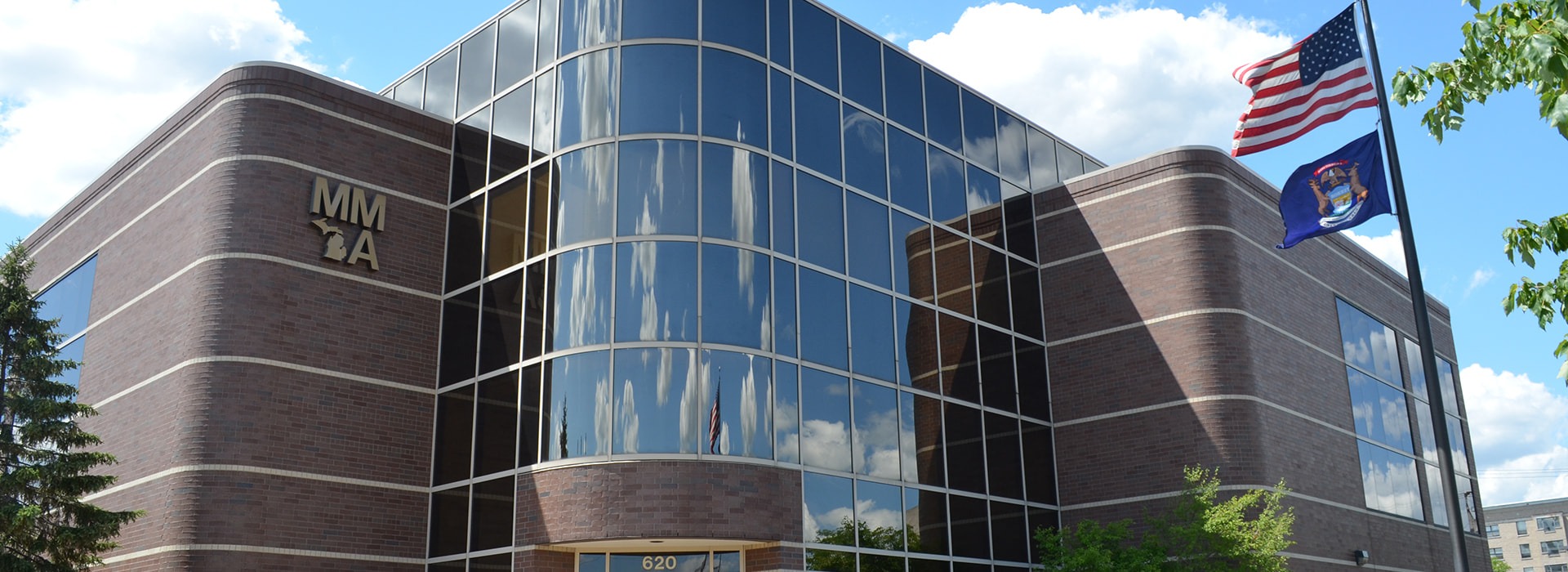
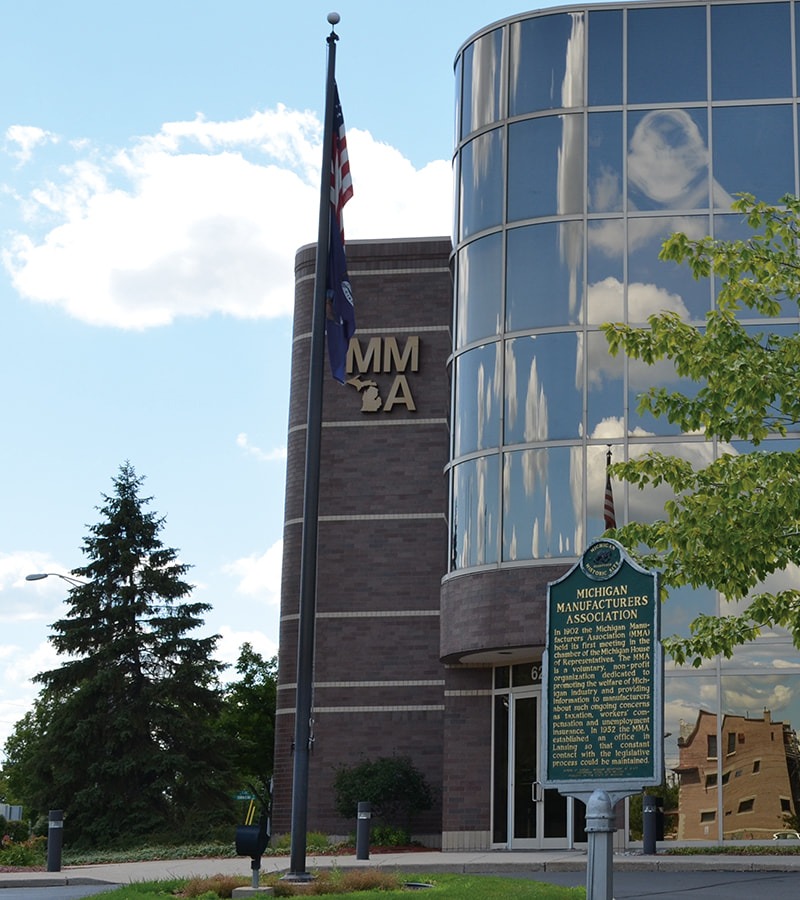
Formed in 1902, the Michigan Manufacturers Association (MMA) has spent nearly 125 years representing the manufacturing industry—initially through state-level advocacy, and over time by expanding into a broader support model that now includes workforce development, member services, and industry promotion. With roughly 1,700 member companies spanning automotive and a wide range of adjacent sectors, its focus is clear: make it easier for Michigan manufacturers to succeed.
“Our lead is advocacy at the state level,” President & CEO John Walsh explains. “But over the years we’ve added services and workforce solutions, and we also spend a lot of time promoting the industry to elected officials, community leaders, and students and parents.”
A Four-Pillar Model Built Around Member Needs
While advocacy remains the foundation, the association describes its work today as a four-part structure.
The first pillar is policy and regulatory advocacy—direct engagement with elected officials, regulators, and state agencies to support competitiveness, reduce friction, and protect growth.
The second is member services, with particular value for small and mid-sized manufacturers that want to offer competitive benefits packages. These services include programs such as insurance and health-related options that help smaller employers compete for talent.
The third pillar has become increasingly central: workforce solutions. The association has invested heavily in building the staff and partnerships needed to help address the skilled labor challenge that continues to constrain manufacturers in Michigan and nationwide.
The fourth is broader industry promotion—helping stakeholders understand the strength, stability, and opportunity within modern manufacturing, beyond the policy arena alone.
Advocacy Priorities: Workforce Funding and a Competitive Tax Environment
On the legislative front, two themes are driving much of the MMA’s current agenda: workforce training investment and tax policy.
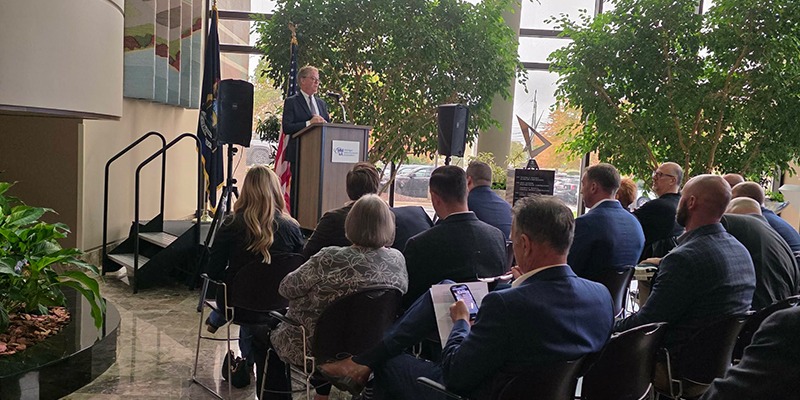
John J. Walsh opening remarks at the 2025
Manufacturing Excellence Awards press conference, held at the MMA Headquarters in Lansing.
Workforce funding has been a sustained emphasis, particularly around Michigan’s Going PRO Talent Fund program—skilled trades training for new and existing workers employed in the industry. The program helps employers upskill teams as technology evolves and job requirements change, supporting both individual career growth and company productivity.
The association has been pushing aggressively to secure consistent funding for Going PRO, and leadership is concerned by a recent shift from ongoing funding to one-time allocations during budget negotiations. While the funding remains in place, it was reduced—from a prior benchmark of $55 million to $33 million—and the MMA is working with bipartisan supporters to restore longer-term stability in the next budget cycle.
Tax competitiveness is the other major advocacy priority. Michigan manufacturers have watched closely as state leaders weighed ways to fund road improvements and other budget needs. The association successfully opposed a proposal to raise the corporate income tax dramatically, but it now faces a new challenge tied to how state tax policy aligns—or fails to align—with federal incentives.
In particular, MMA points to Michigan’s decision to decouple from elements of the federal Internal Revenue Code. In practice, leadership warns, this can reduce or delay the ability of manufacturers to take full advantage of federal incentives related to investment, equipment purchases, and R&D—ultimately impacting the attractiveness of Michigan as a place to expand capacity.
From the association’s standpoint, the risk is straightforward: when incentives are weakened or deferred, companies may choose to build or expand elsewhere.
Workforce Solutions: Rebuilding the Skilled Trades Pipeline
If there is one theme that runs consistently through the MMA’s work today, it’s the workforce.
Michigan’s manufacturers continue to face a shortage of skilled talent, and leadership sees the solution as both cultural and structural: shifting perceptions, improving funding parity, and expanding high-quality training pathways that put students on a direct track to production-floor readiness.
The association is pursuing this goal in two ways. The first is legislative: working with policymakers to elevate skilled trades within public education systems so the trades are viewed with equivalent respect, resourcing, and long-term support.
The second is practical and immediate: building partnerships that place skills-based training programs directly into high schools across the state.
A key initiative is the association’s work with the SME Foundation (Society of Manufacturing Engineers) on a high school program called SME PRIME(R). With state funding support, this effort has expanded to roughly 50+ schools across Michigan, equipping classrooms and building hands-on training environments that prepare students for manufacturing careers right out of high school.
The association has also partnered with LIFT, a NIST-affiliated organization that began with defense-focused manufacturing and has expanded into broader industry training. That collaboration is newer for the association, but growing, with two programs already in place and additional sites planned in the next academic year.
For members, the value is immediate: a stronger pipeline, better-prepared entrants, and a clearer path toward modern manufacturing careers—without diminishing the college route, but creating parity for students who want a different option.
Events and Education: Webinars, Conferences, and Legislative Day
Beyond policy and workforce programs, the association maintains a full calendar of education and engagement opportunities designed to support member operations and create peer-to-peer value.
Each year, it delivers close to 40 webinars, spanning legislative updates, regulatory developments, and practical operational topics such as HR and compliance. These sessions often include legislators, members of the governor’s staff, or trusted associate partners who can translate complex issues into actionable business insight.
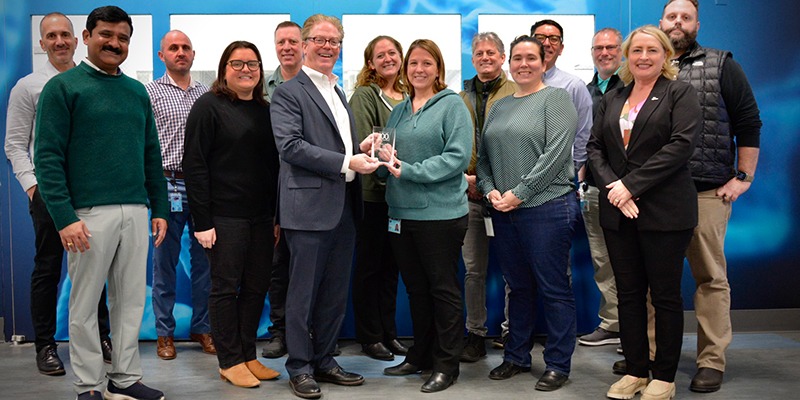
John J. Walsh presenting a 100-year anniversary plaque to Pfizer’s Kalamazoo leadership team.
In-person events remain a major platform for networking and industry promotion. Among the most notable is the association’s flagship Manufacturing Excellence Awards event, which draws roughly 300 attendees to celebrate manufacturers and leaders across categories such as Manufacturer of the Year, emerging leadership, and sustainability.
A public-facing highlight is the “Coolest Thing Made in Michigan” program, which invites the public to vote through a bracket-style progression leading to a winner announcement in November—an initiative designed not only to create engagement, but to elevate positive manufacturing visibility statewide.
The MMA also hosts an Operations Conference, typically drawing around 200 participants, focused on practical production and manufacturing leadership issues—where “the rubber meets the road,” and members learn directly from one another.
And for advocacy, few events are as impactful as Legislative Day, which brings in members to meet directly with lawmakers, hear from state leadership, and advance the industry’s priorities through coordinated, on-the-ground engagement.
The Michigan Context: Diverse Sectors and Complex Regulations
While automotive remains a dominant share of Michigan manufacturing, association leadership emphasizes that the industry base is broader than most people realize. Membership spans food production, agriculture equipment, defense and aerospace, mining, and more—each with distinct regulatory dynamics.
That diversity shapes the association’s advocacy and support work. Sometimes it’s about legislation. Other times, it’s about helping a member navigate an agency issue, clarify interpretation, or elevate a problem to a level where it can be resolved without escalating into legal action.
Environmental regulations, licensing requirements, and permitting processes often play out differently by subsector—and the association prides itself on serving as a practical bridge between businesses and state agencies, helping both sides reach workable outcomes.
Tariffs and Uncertainty: A Real-Time Business Disruptor
One issue cutting across sectors is tariffs—less because of any single policy goal, and more because of volatility and uncertainty.
Members may support the objective of expanding U.S. manufacturing and increasing market access, but constant changes in tariff structures can create rapid sourcing disruption. Leadership cited examples of companies shifting suppliers to adapt, only to see tariff conditions change again days later—whiplash that makes planning difficult, especially for supply chains that depend on cross-border movement.
The association is particularly concerned about Canada, given Michigan’s deeply integrated manufacturing relationship, where parts may cross the border multiple times in a single day. It continues to work alongside national partners to push for stability and resolution.
Investing in Member Experience: Technology, Workforce Staffing, and AI Readiness
Internally, MMA is investing in capacity that reflects member priorities.
Staffing has grown to 22 employees, with additions over the last two years focused specifically on workforce solutions—supporting the association’s goal of becoming the go-to connector for workforce ecosystems, training programs, and scalable pipelines.
It has also made a significant technology investment to improve how members interact with benefit programs, including bringing key administrative functions online for a smoother, more modern experience.
Looking ahead, leadership is beginning a more formal exploration of AI—moving from informal internal learning toward structured planning, including bringing in consulting support to determine how AI can improve both internal efficiency and member value.
Next Steps: Strategic Planning and Continued Focus
In early 2026, the MMA plans to launch a strategic planning process—engaging members to understand what’s working, what needs to improve, and what new needs are emerging. The intent is not to “rewrite the whole book,” but to ensure the organization stays holistic and aligned with member realities as the legislature, technology, and workforce landscape continue to shift.
Through all of it, the mission remains consistent: advocacy that protects competitiveness, workforce programs that rebuild the pipeline, and services and events that help members solve real problems—so Michigan manufacturers can keep building, hiring, and investing with confidence.
Click The Cover To View Or Download The Brochure
AT A GLANCE
Who: Michigan Manufacturers Association
What: The Advocacy, networking, and talent voice of Michigan Manufacturers to help advance the needs of manufacturers throughout the state.
Where: Lansing, Michigan
Website: www.mimfg.org