Brokering, Managing, and Constructing a Leading Real Estate Path Ahead
Thirty Years of Relationships, Purposeful Growth, and Technology-Enabled Scale
Compass Commercial Real Estate Services, headquartered in Bend, OR, has never positioned itself as a one-lane firm. Built as an integrated platform serving commercial clients across brokerage, property management, and construction, the company’s value proposition is straightforward: reduce friction for clients by keeping critical services under one roof while maintaining a relationship-driven approach that doesn’t disappear once a deal closes.
The model continues to expand, and in 2025, Compass Commercial added approximately 1.6 million square feet to its commercial property management portfolio—a 58% year-over-year increase in total square footage under management—and extended its operating footprint beyond Central Oregon.
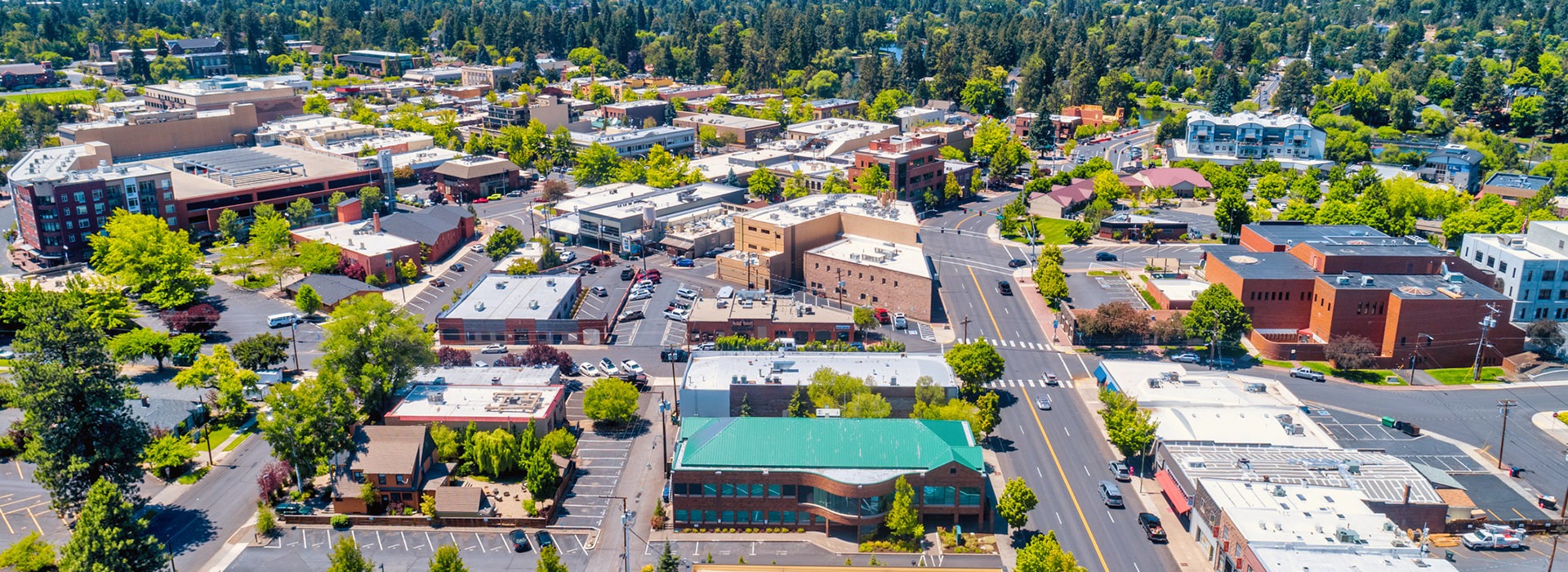
Today, the firm is managing commercial assets west of the Cascade Mountains from Roseburg through the Willamette Valley and into Southwest Washington, supported by three satellite office locations in Eugene, Lake Oswego, and Washougal.
For the Compass Commercial team, the growth is intentional. It is not expansion for the sake of a bigger map. It is an expansion in response to client demand—and enabled by a structure that supports scale without sacrificing service.
A One-Stop Model Built for Commercial Clients
Compass Commercial’s “one-stop shop” approach is built around the idea that commercial real estate needs don’t exist in isolation. Clients often need a broker to lease or sell the asset, a property management team to operate it, and construction services to deliver tenant improvements or upgrade the space. Compass Commercial offers all three.
From the brokerage side, the firm supports sales and leasing across retail, office, industrial, land, and investment property types, including multifamily investments, though the company does not provide residential property management. Property management services include maintenance operations as a subset, ensuring operational continuity and faster response. The construction division focuses primarily on tenant improvements, supporting build-outs for incoming tenants—whether that’s a restaurant, office user, or service operator.
Internally, leadership does not follow a traditional “C-suite” structure. Compass Commercial operates with a partner model, currently led by a group of nine partners who represent and guide the firm’s major divisions and operational responsibilities. That structure creates strong visibility across departments and allows leadership to stay close to both client and employee realities.
Growth West of the Cascades
The most significant operational change since Compass Commercial’s previous profile is the expansion of property management services into new regions.
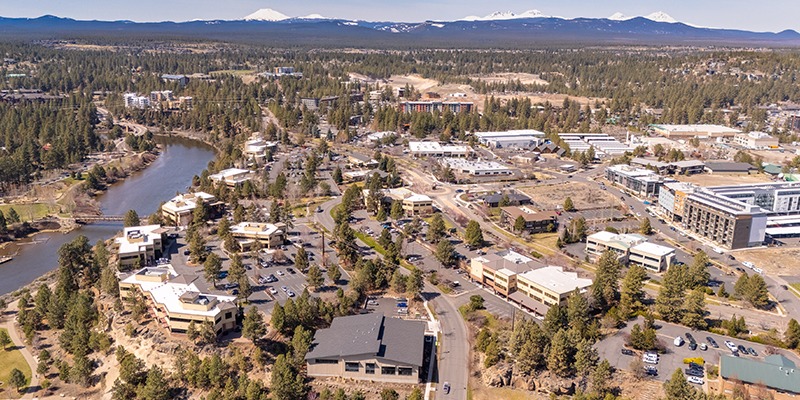
The firm’s portfolio growth was driven largely by relationships—both long-standing and newly acquired—through brokers and market connections that created direct pathways into new client accounts. As new management contracts came online, Compass Commercial built localized staffing west of the Cascades and established satellite coworking-based office spaces to support those team members.
Compass Commercial made a deliberate decision not to build this growth on fully remote roles. Leadership believes property management cannot be done effectively from behind a desk alone. Teams are encouraged to be in the field, interacting with tenants and vendors, and staying connected to the asset. At the current stage of expansion, coworking spaces provide flexibility and coverage while the company evaluates where long-term centralized office locations may be necessary as density grows in specific markets.
Relationships as the Business Engine
If there is one theme Compass Commercial repeatedly returns to, it is relationships.
The company’s mission statement reflects that directly: cultivating lasting relationships while exceeding client expectations through superior commercial real estate services. In practice, Compass Commercial sees relationship capital as the core driver of growth. New property management contracts often originate through brokerage trust, where brokers bring Compass Commercial’s management team into conversations with clients who already rely on them for advisory work.

The firm also views vendor relationships through the same lens. As Compass Commercial scales, the ability to maintain consistent service standards depends on contractor reliability, responsiveness, and alignment with Compass’ operational expectations. Leadership emphasizes that relationship-building is not an optional “extra.” It is the foundation that supports both client retention and scalable growth.
Technology, AI, and the Push for Efficiency Without Losing the Human Touch
Compass Commercial is leaning into technology and AI with a specific goal: reduce time spent on repetitive work and redirect that time into higher-value human interaction.
On the property management side, the company utilizes the Yardi platform, which provides scalability across key operational functions as the portfolio grows. But leadership notes that software alone isn’t what enables scale. Scale also depends on retaining high-performing employees and building systems that allow teams to operate consistently across regions and assets.
AI has become one of the tools supporting that consistency. The firm is using AI across departments and has invested in both subscriptions and external consulting support to ensure adoption remains strategic and responsible. The firm’s perspective is consistent with what many high-performing organizations are recognizing: AI is not a replacement for people. It is a leverage for people.
Compass Commercial is clear about one boundary, particularly in property management. While AI may help streamline internal workflows, the firm is not looking to automate away tenant and client relationships. Those interactions remain human by design. The intention is to offload administrative burden, not the relationship layer that makes the firm distinctive in the market.
Capital Investment: Building Operational Capacity
Although Compass Commercial is not a capital-heavy business in the way pure construction firms are, growth has required meaningful operational investment.
As the maintenance and property management platform expands, Compass Commercial has invested in equipment, vehicles, and facility improvements—everything from lifts and pressure washing systems to larger leased space for maintenance operations. The firm also completed a significant office remodel in the past year and continues to invest in internal systems such as software platforms that improve execution and reduce friction across departments.
These investments reflect the firm’s broader strategy: build infrastructure that supports growth, without creating overhead that outpaces demand.
Central Oregon Market Conditions: Stability and Tight Vacancy
While many markets across the U.S. continue to grapple with high office vacancy and uneven recovery, Central Oregon has remained relatively insulated. Compass Commercial reports office vacancy around 6.5% and industrial vacancy at approximately 3.32% as of Q4—significantly below national averages.
Leadership notes that the lack of new development in recent years has contributed to this tightness. Construction costs remained high, and lease rates did not always rise enough to make new projects pencil. That slowed new supply, which in turn kept vacancy low and competition for existing space strong.
On the financing side, Compass Commercial has seen more positive movement with five- and ten-year money, which matters greatly in commercial real estate, where 30-year fixed financing is not the norm. Lower rates in that range have helped reopen deal flow and improve feasibility for certain transactions, even as longer-term uncertainty remains a market factor.
Retail development remains limited, largely due to feasibility challenges and the lease rates required to support new construction. However, Compass Commercial notes that some smaller strip and neighborhood projects may begin moving forward within the coming months.
Multifamily Investment and Development Momentum
Although Compass Commercial does not manage residential multifamily, the firm remains active in multifamily investment sales and land transactions tied to development.
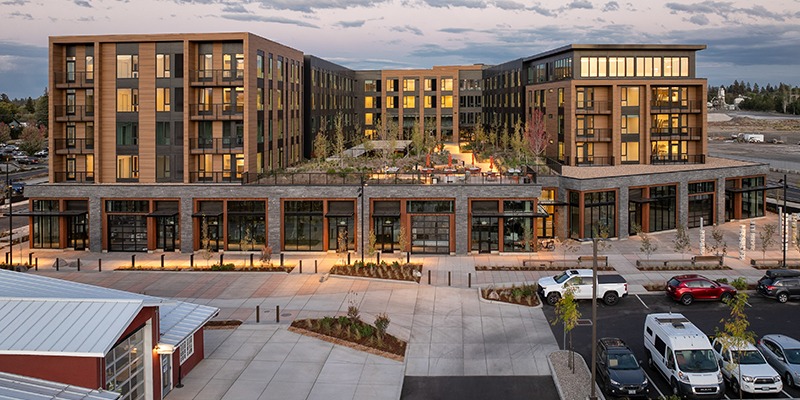
The company continues to see demand for multifamily construction and value-add investment strategies, including projects that reposition assets through remodels and rental upside. One recent transaction involved a five-acre land closing for a major multifamily developer planning approximately 325 units. Another large project, Jackstraw, has recently been completed with approximately 305 units of higher-end product.
Multifamily remains one of the most active sectors in the market, reflecting broader national trends tied to housing demand, affordability pressures, and continued population growth across regional nodes.
Design, Development, and the Northwest Aesthetic
In markets like Bend, development is shaped not only by economics but also by community standards and environmental considerations. Compass Commercial notes that building design is increasingly influenced by Northwest aesthetics and by local codes—including strong regulations around tree preservation.
Developers are often required to design around existing trees, retain the canopy, and build in a way that feels compatible with the region rather than disruptive to it. In practice, this has produced modern, high-quality design standards, influenced by larger metro areas such as Portland, while remaining rooted in Central Oregon’s landscape identity.
Community Involvement and the 30th Anniversary
2026 marks Compass Commercial’s 30th anniversary, and the company is treating the milestone as both a celebration and a reflection of its roots: relationships and community.
The firm’s anniversary theme is grounded in a guiding idea—rooted in relationships, progressing with purpose—and it connects directly to Compass Commercial’sCompass Cares initiative. Each year, Compass Commercial supports selected charitable organizations through donations, awareness campaigns, volunteer work, and fundraising efforts tied to client and vendor engagement.
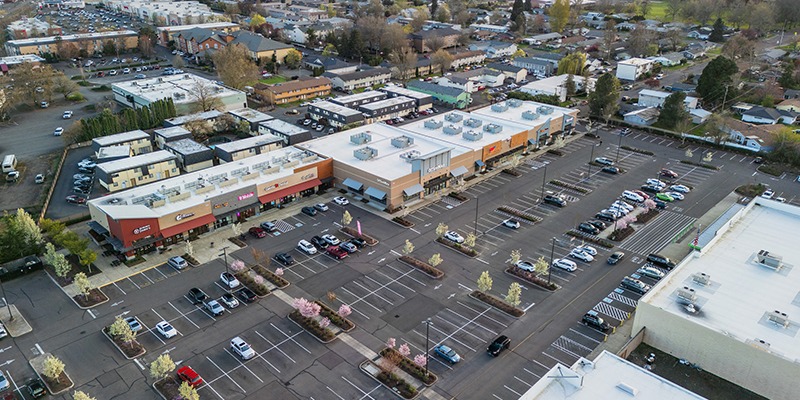
For 2025 and 2026, Compass Commercial’s partner charities include The Giving Plate, Warrior Impact, and Heart of Oregon Corps. Beyond direct contributions, Compass Commercial features these organizations in its annual client and vendor appreciation event, hosts silent auction fundraising, and participates in community events such as Warrior Impact’s golf tournament. The firm has also supported Heart of Oregon Corps’ facility expansion, reinforcing Compass Commercial’s goal of creating broader community impact alongside business growth.
Looking Ahead: Purposeful Growth and Staying Ahead of the Curve
As Compass Commercial looks into 2026 and early 2027, the priorities are clear. The first is continuing to adopt AI and technology in ways that improve scalability without reducing the human quality of service. The second is continued geographic growth west of the Cascades, but only where client demand and service quality can be maintained without overextending resources.
Compass Commercial is committed to hiring intentionally, maintaining strong retention, and avoiding growth that outpaces execution. The company is building its next chapter the same way it built its first 30 years: through relationships, disciplined infrastructure investment, and a clear understanding that in commercial real estate, trust is the true long-term asset.
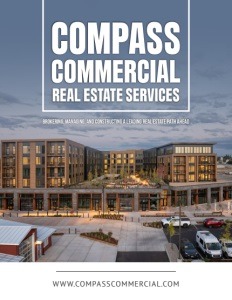
Click The Cover To View Or Download The Brochure
AT A GLANCE
Who: Compass Commercial Real Estate Services
What: A West Coast leader in commercial real estate, providing the expertise, combined experience, and local flair to provide unparalleled services.
Where: Bend, Oregon
Website: www.compasscommercial.com
PREFERRED VENDORS/PARTNERS

Security Pros: www.securityprosbend.com
Security Pros, Inc., located in Bend, Oregon, is a regional security services provider that specializes in Nightly Business Patrols, Posted Corporate Security Officers, Burglary Alarm Response and Camera and Alarm Systems install and maintenance. We have operated non-stop 365 days per year for 32 years and boast a 98.45% client retention rate, while protecting over $1 Billion in client property value!