A City Meeting Place and Civic Gem
A Historic Institution, Building for the Future
For 157 years, Cleveland Public Library (CPL) has been a place of connection, knowledge, and opportunity, and one of the city’s most enduring civic institutions. Founded in 1869, the library has grown alongside Cleveland itself, adapting to a changing world along the way.
2025 marked the 100th anniversary of the library’s Main Branch, designed by the renowned architectural firm Walker and Weeks. This iconic building remains an anchor in downtown Cleveland and a reminder that libraries are about so much more than just books.
“We’ve always been a resource for information, education programming, and a wealth of services,” says John Lang, Chief Operations Officer. “We have everything from after-school lunch programs to our 12 million-item research collection. We routinely have PhD candidates and nationally and internationally renowned authors who research a whole wealth of subjects from our collections.”
The Role of Libraries in a Tech-Driven World
From its earliest days, CPL has embraced progress. “The history of librarianship is pretty transactional,” Chief Strategy Officer Tana Peckham explains. “”It used to be that you took a ticket up to a circulation desk and staff would retrieve the material for you. Cleveland was one of the first places to have open shelving and to allow people to browse on their own. We have a history of innovation and trying to remove barriers so that people have greater access to resources.”
Although books remain a mainstay of a modern library, they are now only one component of a wide range of services and experiences. John Malcolm, Chief Innovation and Technology Officer, describes, “The libraries of today are not the libraries that most of us grew up in. We still have books on shelves, but we are also creating spaces for community in our new libraries. As we rebuild them and rebrand them, one of the many areas that we can take advantage of is technology.”
One successful initiative is “Joysticks to Genius,” a program designed to attract teens through gaming and then introduce them to other learning experiences. “We start with gaming,” Malcolm acknowledges. Participants then move to programming using Raspberry Pi devices, Python coding, LED builds, and FarmBot, an AI-driven farming system. “We have to meet our teens where they are and with what excites them,” Malcolm says. “Regular gardening isn’t the excitement that it was when I was a kid. Now we’re blending it with automated AI systems that they can manage remotely. That gives them STEM exploration, along with gardening and agriculture. So, these things are married to what we do with our programming.”
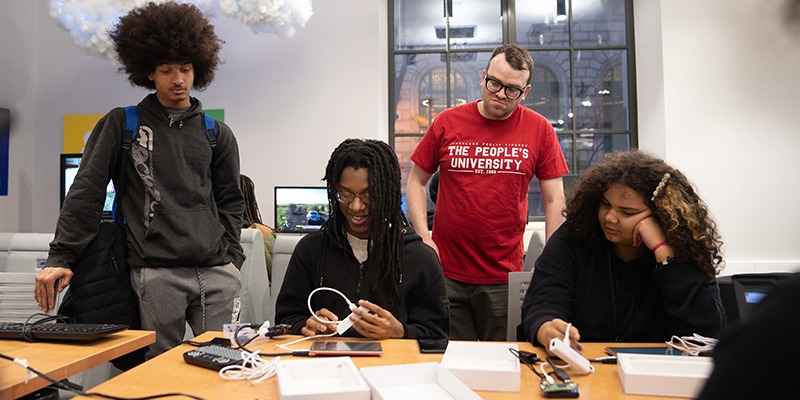
At the same time, the program options extend beyond youth. The library offers virtual reality world tours for seniors, drone workshops, and a tech van that travels into neighborhoods bringing various technologies. “Our adults and our teens are really into it. You can teach a senior who’s over 70 how to fly a drone just as well as you can teach a young person. And this starts to help demystify the technology,” Malcolm highlights. “That’s one of our real goals at CPL, to ensure that our community is comfortable with technology.”
Programming is designed to suit the unique needs of each branch. Malcom explains, “If we know that this community, in particular, needs sessions with seniors around basic smartphone navigation, we will do programming in our lab to help them. It stays flexible, whether it’s basic computer literacy and knowledge, or 3D and laser design and development, and Python programming. We cover the gamut.”
The library is also piloting an internal AI model to show staff how artificial intelligence can enhance service delivery. “We just can’t bury our heads in the sand around AI,” he emphasizes. “One of the bridges that has to be built is truly understanding how it can be effective, not just in doing papers and workarounds and thinking for ourselves, but how we can do business more efficiently.”
A Community Connector
At its core, Cleveland Public Library remains an important community support system, leveraging collaborative opportunities to expand its reach. “Across the organization, partnerships are a cornerstone of how we operate,” says Peckham. “We have partnerships on many different levels, across the different sectors, public, private, and nonprofit, because we’re all trying to help the city thrive.”
CPL works closely with local school districts to align programming with curriculum and to ensure students have access to library cards and resources. The organization also maintains a long-standing relationship with the Greater Cleveland Food Bank to address food insecurity. Peckham expands, “When they come into our branches, they’re eligible for free meals. They can come to us as a resource and a safe place to be after school and know that they can get a meal to be able to continue to thrive as much as possible.”
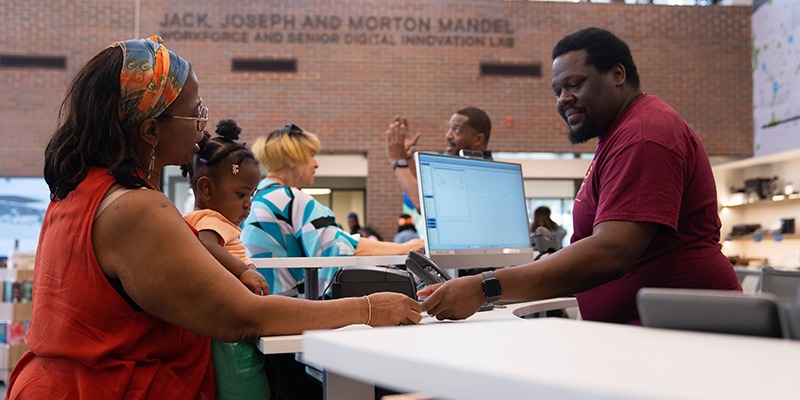
Workforce development is another priority. Through partnerships with organizations such as Greater Cleveland Works and Goodwill Industries, the library provides resume assistance, job fairs, and career exploration. “We’re trying to expand the capacity to serve our neighborhoods, giving them opportunities to have one-on-one coaching,” she highlights. “For scholars, it’s exposing them to potential career paths. And it’s also creating ways for people to connect to meaningful work, to either get a job or create a job for themselves.”
“Our building strategy is in lockstep with our institutional strategy,” Lang adds. “We are designing spaces that meet patrons’ existing needs and can work for enhanced technology, digital maker spaces, small community rooms, large community rooms, places that are technologically enabled to support job interviews and telemedicine appointments.”
Reimagining 27 Branches
In 2017, Cleveland voters approved a levy that set the stage for a 10-year, $110 million capital improvement program. “We had overwhelming support from the community, a 70% yes vote for a tax increase that gave us the kind of financial underpinning to go into capital planning,” Lang relays. From 2017 to 2019, the library partnered with Bialosky the Kent State University Urban Design Collaborative to evaluate each of its 27 neighborhood branches. Facilities were assessed both for physical condition and for how effectively they served patrons.
“With the information generated from that master planning process, we came up with a project for all of our locations and $110 million all-in, spread over all 27 campuses. We planned it over 10 years. From a budget perspective, it’s consecutive five-year programs, and we’re at the midpoint of that right now.”
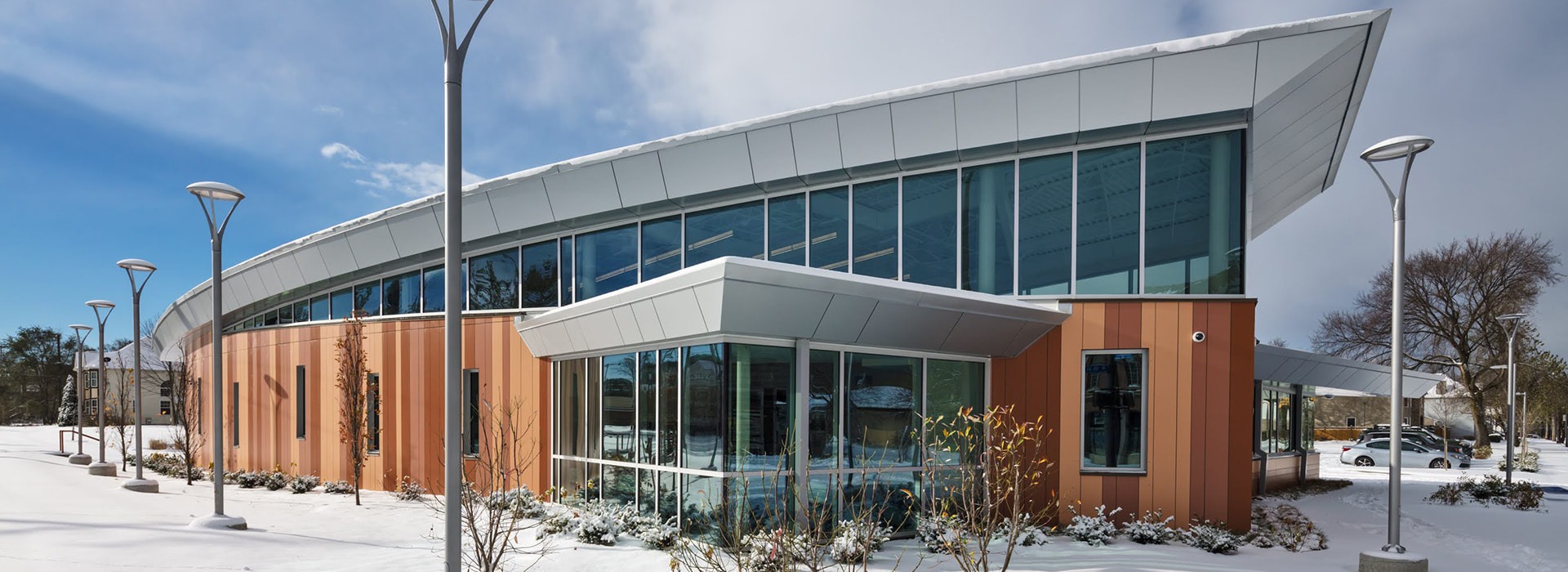
Projects range from renovations and expansions to entirely new buildings. Four brand new libraries have already been constructed. “We see the libraries of the future less as a home for a collection of books and materials, and more of a community living room, configurable space that can meet a wide range of needs,” Lang portrays. “So, to that end, we put in larger, flexible community rooms, smaller study rooms, and gathering spaces. It’s what our patrons asked for. Our furniture designs are all on casters, so the branch librarians can reconfigure spaces to meet community needs.”
The Glenville Branch, recently reopened after expansion and renovation, includes a Digital Innovation Lab and STEAM classroom designed with workforce development and technology access in mind. “We’ve upgraded our internet speeds tenfold over its previous speeds at our branches,” Malcolm conveys. “We also offer technologies that you just don’t have at home, laser cutters, engravers, 3D printers, VR headsets.”
The upcoming Walz Branch will combine library services with 70 affordable senior housing units, developed in partnership with Northwest Neighborhoods Community Development Organization. “It will be a state-of-the-art, five-star new community hub, library for CPL,” reports Lang. “We’re always looking for those innovative partnerships to make sure we’re building the libraries of the future correctly.”
The Next 157 Years
Looking ahead, Cleveland Public Library remains focused on meeting the needs of today while keeping an eye toward long-term resilience. “It really is just about trying to make the biggest impact for our community, and creating the most opportunity for people,” Peckham stresses. “That will mean different things in the future, and we are remaining flexible to be able to deliver that in the best way possible for our neighborhoods and our city.”
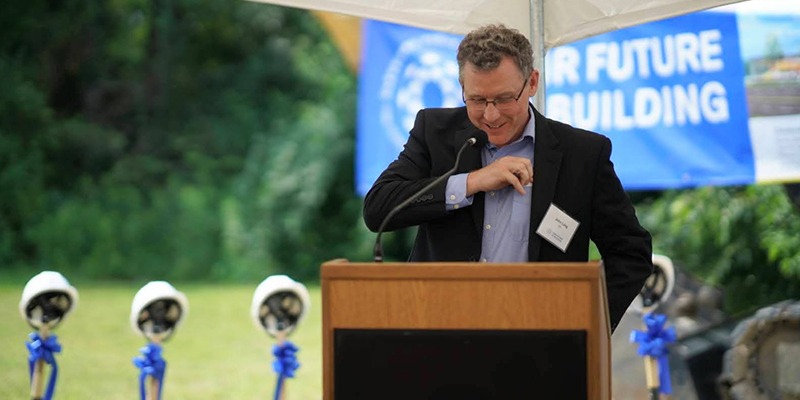
As the 10-year project approaches the halfway mark, Lang says attention remains on innovation and vision that will carry the library forward. “This is only the third major capital building program in the institution’s history,” he shares. “It’s more than a once-in-a-generation opportunity. We have to make sure we’re providing the buildings and the services, so we can continue to serve Cleveland for the next 157 years.”
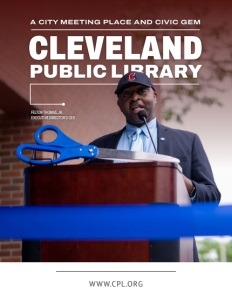
Click The Cover To View Or Download The Brochure
AT A GLANCE
Who: Cleveland Public Library
What: A 157-year-old institution, offering services and resources for the future
Where: Cleveland, Ohio
Website: www.cpl.org
PREFERRED VENDORS/PARTNERS
IP Systems: www.ipsystems.tech
IP Systems delivers end-to-end security integration, including video surveillance, access control, intrusion detection, fire systems, communications, and managed services. Our Network Operations Center provides real-time monitoring, predictive maintenance, and rapid issue response to ensure reliability and protect critical facilities and assets. What can we help you secure?

Unique Management Services, Inc.: www.uniquelibrary.com
Unique Management Services specializes in library communications, helping public libraries free up staff time, improve efficiency, and better connect with patrons. Through advanced communication tools, material recovery, and patron services, UMS helps libraries strengthen community connections, protect collections, and deliver a better experience – backed by decades of library-first expertise and human-centered support.

MNJ Technologies: www.mnjtech.com
MNJ Technologies is a trusted technology partner for libraries, education, and public sector organizations, delivering flexible IT solutions, procurement expertise, and lifecycle services. With a focus on secure, future‑ready infrastructure and digital access, MNJ supports institutions as they modernize facilities, expand community services, and adapt to evolving learning and workforce needs.