
Connectivity and Community at the Core
Strategic Housing, Downtown Momentum, Sports Infrastructure, and Regional Leadership Take Center Stage
As communities across Atlantic Canada work to balance growth, livability, and economic resilience, Truro continues to distinguish itself through thoughtful planning and a strong sense of regional purpose. Already known for its central location and high quality of life, the town is building on those strengths with investments in housing, recreation, downtown development, infrastructure, and future mobility.
For Mayor Cathy Hinton and CAO Michael Dolter, Truro’s advantage begins with its geography, but it is the town’s community amenities, collaborative outlook, and willingness to plan ahead that are helping turn that advantage into sustained momentum.
This is a town that understands where it sits, what it offers, and where it wants to go next.
A Central Location with Big-Community Amenities
Truro’s location remains one of its greatest assets. Positioned roughly an hour from Halifax and closely connected to the broader province, the town offers residents a lifestyle that blends accessibility with community scale.
“I would say one of our key points for our area would be our geographic location,” says Mayor Hinton. “We’re so central to so many other things.”
That centrality is more than a map feature. It supports workforce attraction, business connectivity, and a work-life balance that continues to appeal to both residents and newcomers. Truro offers the feel of a smaller town, while delivering amenities more commonly associated with much larger centres.
Dolter points to that mix as one of Truro’s defining qualities: “Small-town living with a lot of big community amenities.”
Those amenities include recreational infrastructure, cultural activity, a vibrant downtown, and a growing housing base—all of which are helping position Truro as a destination for families, professionals, and retirees alike.
Recreation as a Competitive Advantage
A major part of Truro’s appeal lies in its recreation assets, which continue to serve both residents and the broader region.
Among the town’s signature features is Victoria Park, a rare and remarkable municipal park spanning more than 3,000 acres. With waterfalls, trails, mountain biking routes, playgrounds, and an outdoor pool, the park has long been one of Truro’s defining spaces. It attracts users from across Nova Scotia and continues to reinforce the community’s reputation for outdoor living and natural beauty.

The town also benefits from the Rath Eastlink Community Centre, a major multi-use facility that has become a hub for fitness, recreation, entertainment, skating, and climbing.
Now, that strong recreation base has been significantly expanded with the completion of the new No. 2 Construction Battalion Athletic Facility and the redevelopment of the former Truro Athletic Association grounds.
This large-scale project has been transformational. What was once an aging dirt track and grass field has been reimagined as a modern sports destination featuring an artificial turf field, eight-lane track, clubhouse, and throwing area, while a new senior baseball field was also built nearby.
The total project, valued at approximately $11.6 million, was supported through federal and provincial funding, municipal investment, and substantial community fundraising. That local buy-in says a great deal about how important the project was to residents.
“It’s a game changer for the town,” says Hinton.
It is not just about local use. The new facility positions Truro to host tournaments and regional events, opening the door to expanded sports tourism and the economic benefits that come with it.
Downtown Truro Gains New Energy
Truro’s downtown is another area where momentum has become increasingly visible.
The Inglis Place area continues to benefit from both public realm improvements and a growing sense of confidence among businesses and residents. One notable initiative has been the downtown partnership’s pilot project to close the street to vehicle traffic one weekend per month, turning it into a more pedestrian-oriented experience.
The idea is simple but important: make the downtown easier to enjoy on foot, create a stronger gathering atmosphere, and help reinforce the district as a place to shop, linger, and connect.
The results have been encouraging enough that the project is returning this year.
At the same time, Truro’s growing downtown population is having a direct impact on business vitality. As multi-unit housing continues to come online in and around the core, the district is seeing increased foot traffic, more extended business hours, and new momentum in the restaurant and service sectors.
“Because of the densification and the increased population downtown, a business will close down, and very quickly we’ll have another business come in,” Dolter explains.
That is a strong sign of market health. Rather than struggling with long-term vacancies, Truro is now seeing commercial spaces turn over more quickly, often with new and diversified uses.
Housing Growth Is Reshaping the Core
Housing has become one of Truro’s most significant growth stories.
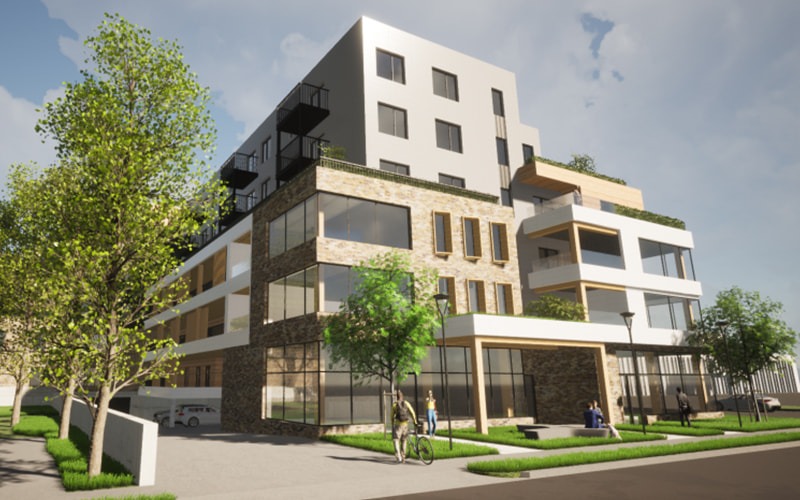
Since 2020, the town has added more than 800 new units, with approximately 1,000 more approved and additional development interest continuing to emerge. Much of that growth has been driven by a deliberate focus on densification, particularly in and around the downtown.
Recent projects have helped bring more people into the town centre, supporting local businesses and making downtown living more viable and attractive. The appeal is especially strong for people who want walkability, nearby services, and reduced dependence on a vehicle.
As Mayor Hinton notes, newer residents are increasingly choosing Truro because they can live downtown and access key amenities on foot. That kind of lifestyle shift is helping reinforce the town’s long-term strategy.
Two major downtown-area projects are among the most notable current developments, with others also underway nearby. And while much of the initial success has been concentrated in the core, Truro is now beginning to see that development pressure expand outward into adjacent areas.
The town’s success in attracting multi-unit construction reflects both demand and developer confidence. It also speaks to a municipal approvals process that is clear, responsive, and comparatively efficient—something Dolter notes has made Truro attractive to developers who may face much longer timelines in larger urban centres.
Planning for the Next Growth Area
As downtown development continues, Truro is also preparing another key growth area at the south end of town, particularly along William Barnhill Drive and Yonge Street.
Once a largely undeveloped area, this part of Truro is now rapidly changing. It already includes a mix of single-family homes, townhouses, apartments, school facilities, and commercial activity, with further residential expansion on the horizon.
Town staff is currently putting together a comprehensive infrastructure and engineering plan to support future phases of development there. The strategy is tied closely to potential housing-enabling funding programs, with the municipality aiming to be shovel-ready when opportunities become available.
This proactive approach is especially important at a time when affordability pressures are affecting both municipalities and developers. By working with developers and trying to secure support for road networks and underground servicing, Truro hopes to accelerate much-needed housing while reducing some of the barriers that can slow projects down.
The area is expected to represent several million dollars in future infrastructure work and could play a major role in Truro’s next wave of residential growth.
Public Transit as a Future Game Changer
Among the town’s most important strategic initiatives is the exploration of public transit.
In partnership with the Municipality of the County of Colchester, Truro has been conducting a feasibility study to examine what a regional transit system could look like and how it might be implemented.
For a community of Truro’s size and role, transit represents far more than convenience. It is increasingly being viewed as an economic development tool and a key support for housing, workforce participation, and regional access.
As strategic initiatives staff have identified, public transit could help connect people living in the downtown and other residential areas to employment sites, including business parks and major commercial zones on the edges of town.
It could also help address the mobility expectations of students, newcomers, and younger residents who are less reliant on car ownership than previous generations.
“We’re at a point with growth in our community where public transit is really a bit of a game changer for economic development,” says Allison Grant, manager of strategic initiatives and communications.
Transit is still in the planning phase, but it is clearly emerging as one of Truro’s most important long-term priorities.

A Diverse Business Base Remains Strong
While Truro’s downtown and housing story is increasingly prominent, the town also continues to benefit from a diverse and resilient business base.
Its industrial and business park areas remain active, with most available lands already occupied by operating businesses. The focus now is less about filling vacant industrial space and more about supporting existing business growth and responding to opportunities on a case-by-case basis.
One major recent success story has been Asante Freight, a local logistics company that stepped into a major facility after the closure of a large U.S.-based carpet manufacturer. What could have become a difficult long-term vacancy was instead turned into a new growth opportunity, with the company expanding its operations and bringing jobs back into use.
That transition speaks to the adaptability of Truro’s economy and the strength of its local business leadership. It also reflects a broader pattern: despite individual business changes, the town’s industrial sector has remained solid, with businesses continuing to invest and expand rather than contract.
The local agri-business sector also remains important, particularly in feed-related operations and agriculture-connected industries, while nearby institutional partners such as the Dalhousie Agricultural Campus continue to contribute research and activity that benefit the broader region.
Healthcare Infrastructure Adds Another Layer of Strength
Healthcare is another area where Truro’s regional importance continues to grow.
The existing local hospital remains a modern and important facility for the area, but additional healthcare capacity is now being advanced through a collaborative project involving the Province of Nova Scotia and Millbrook First Nation.
What began as a smaller collaborative clinic concept is evolving into a much larger healthcare facility that will support not only Millbrook but the wider Truro region. The expanded clinic is expected to offer a range of services, including blood collection and mental health support, while helping relieve pressure on the main hospital.
For Truro, the value of this project is clear. It enhances healthcare access, strengthens the regional service offering, and may also improve the community’s ability to attract physicians and healthcare professionals.
That kind of infrastructure is increasingly vital for workforce attraction, especially as families and professionals weigh where they want to settle long-term.
A Regional Role with a Local Focus
One of the most compelling things about Truro’s current trajectory is how clearly the town understands its dual role.
On one hand, it serves a population of just over 15,000 residents. On the other hand, it functions as a regional hub supporting tens of thousands more in the surrounding area. That makes its investments in recreation, healthcare, housing, and mobility meaningful not only for the town itself, but for the broader Colchester region.
Yet, even with that regional role, Truro has not lost sight of the local experience.
Mayor Hinton returns repeatedly to the importance of resident satisfaction, community feelings, and ensuring that growth enhances rather than diminishes the qualities people already value.
The goal is not growth at any cost. It is growth that supports residents, strengthens services, and preserves the sense of place that makes Truro attractive in the first place.
Looking Ahead
As Truro moves through 2026 and into 2027, two priorities stand out above the rest.
The first is public transit, which leadership increasingly sees as essential to future growth, workforce access, and regional connectivity.
The second is the continued expansion of housing and business activity in ways that build on Truro’s existing strengths—walkability, recreation, quality of life, and efficient municipal partnership.
“We want our residents to be happy and content,” says Hinton. “And we want to draw new people to the area. That’s how we’re going to grow and survive.”
That perspective captures the balance Truro is trying to strike: welcoming new residents and new investment while continuing to deliver for the people who already call the town home.
A Town Positioned for the Next Chapter
Truro is growing, but it is doing so with unusual clarity.
It knows that housing matters. It knows that sports and recreation are economic assets, not just amenities. It knows that a successful downtown depends on people living there, walking there, and spending time there. It knows that healthcare and transit are increasingly part of the economic development equation. And it knows that its central location gives it an edge—provided it continues to act strategically.
That combination of practicality and ambition is helping Truro carve out a strong and confident future.
For a town with deep roots and a growing regional role, the next chapter looks increasingly promising.
AT A GLANCE
Who: Truro, Nova Scotia
What: A beautiful and engaging community that puts its residents first as it grows forward
Where: Colchester County, Nova Scotia
Website: www.truro.ca
PREFERRED VENDORS/PARTNERS

Glenn Group: www.glenngroup.ca
Trusted by municipalities for over 40 years, our team of recreation and park experts guide in the delivery of exceptional inclusive and accessible spaces that reflect local heritage. Our process ensures that economic and sustainability targets are realized for the entire community.