Educating for the Future
Strategic Planning, Career Pathways, and Partnerships Built for a “World-Class” Standard
For Mathis Independent School District, the phrase “world-class” is not a slogan—it is a working standard. Superintendent Dr. Todd White frames the district’s mission through a clear lens: a world-class district is one that goes above and beyond, creates outcomes strong enough that others want to learn from the model, and ensures students can compete anywhere—locally, nationally, and globally.
“Our kids have an opportunity to access anything and everything they would choose to pursue as a career,” he says. That belief is shaping how Mathis ISD invests in partnerships, career technical education, and long-term planning—while also strengthening the community collaboration that small and rural districts depend on to thrive.
A Five-Year Strategic Plan Shaped by the Community
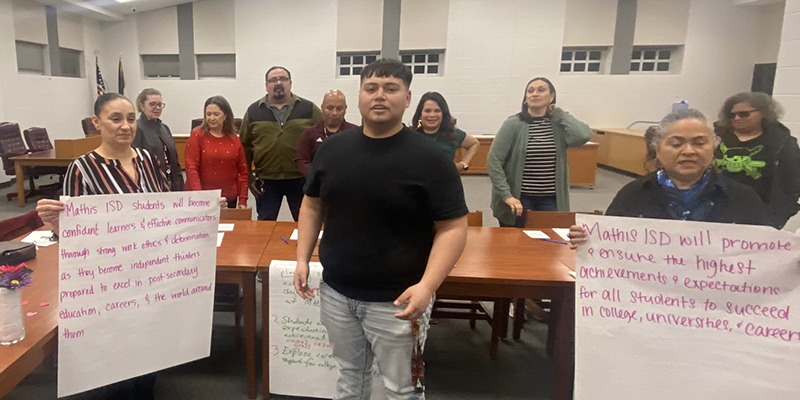
Mathis ISD’s direction is anchored in a five-year strategic plan developed last spring through an unusually broad stakeholder engagement process. Dr. White estimates that roughly 400 stakeholders participated—students, parents, staff, community members, and local leaders—organized into 11 different committees that worked through goal setting and action planning.
Importantly, that involvement was not symbolic. Community leaders played active roles in developing priorities and presenting them publicly. The mayor participated, along with the city planner and the head of the local Economic Development Committee (EDC). A student also served as a featured voice in the process. For Dr. White, this is the point of strategic planning: when people help shape the solution, they become invested in making it work.
This approach has also positioned Mathis ISD as a resource for surrounding districts. With Mathis’s footprint spanning three different counties—an uncommon arrangement—collaboration is already part of the district’s operating reality. Dr. White has shared tools and guidance with neighboring districts such as Orange Grove and George West, helping them develop their own strategic planning and community engagement models.
A Community Hub with a Regional View
Mathis ISD serves the wider community beyond the city itself, including Lake City, Patricio, and surrounding Lakeshore areas. The district sits along a key corridor between San Antonio and Corpus Christi—rural in character, but connected to a wider regional economy with growing industry, workforce needs, and emerging partnership opportunities.
Because schools often function as the largest employer and central hub in smaller communities, Dr. White emphasizes that Mathis ISD views community partnership as essential—not optional. Whether through committee participation, career fairs, or industry collaboration, the district’s goal is to ensure the community has a voice and that students have direct exposure to real career pathways.
A Career Fair Built Around Exposure and Opportunity
One tangible example of that engagement is the district’s career fair, which Dr. White described as a wide-ranging event designed to show students how many options truly exist.
Participants included major industry partners such as Kiewit, along with a cross-section of local and regional opportunities—from cosmetology and salon entrepreneurship to aviation, law enforcement, EMS, towing services, and even professional sports engagement through the Corpus Christi Hooks baseball organization.
The mayor attended as well, underscoring that workforce development is increasingly a civic priority, not just a school priority.
For Mathis ISD, career exposure is not a one-time activity. It is part of a broader effort to build pipelines—aligned to real workforce demand—so that students graduate with direction, confidence, and a plan.
Fiscal Turnaround: Resetting Priorities and Cutting Waste
When Dr. White arrived, Mathis ISD was facing a deficit budget of approximately $2.6 million—significant for a district of its size. The turnaround, he says, came through restructuring, tighter prioritization, and smarter management of resources.
That work included eliminating underused programs and software subscriptions, correcting inefficiencies, and refocusing spending on what directly supports student outcomes. The district also improved how it invested and managed its fund balance. The result is a stronger financial footing that allows Mathis ISD to invest in high-impact priorities rather than carrying forward legacy costs that no longer serve students.
Facility Investments That Expand Career Pathways
Mathis ISD has made targeted facility upgrades to match student demand in key CTE pathways—particularly in welding, health sciences, and agriculture.
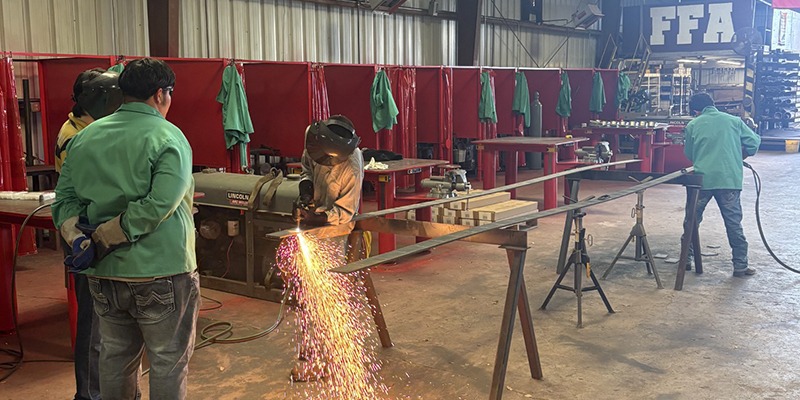
Welding has become one of the district’s most visible growth areas. Dr. White describes it as among the strongest programs in the state, supported by an instructor with real industry experience and an emphasis on professional-grade quality—not just “shop” welding. Enrollment growth made expansion necessary, and the district responded by repurposing and upgrading a large building into an additional welding facility. That project included roofing and electrical work, equipment upgrades, and the hiring of a second welding instructor.
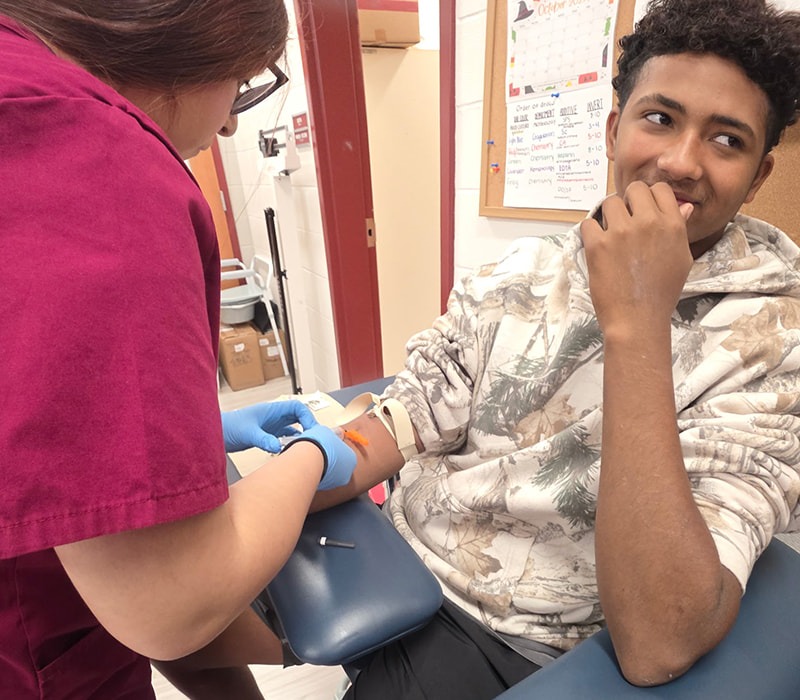
Health sciences is another fast-growing pathway. The district converted a large classroom into a dedicated CTE space, and the program has become a point of pride—students in maroon scrubs moving through the halls, working toward certifications with a reported 100% pass rate across program credentials. With roughly 40 students moving into health-related pathways, the district anticipates needing further expansion as interest continues to rise.
Mathis ISD is also laying groundwork for cosmetology, with plans to convert an older building into a full training space for next year—driven directly by student interest and regional opportunity.
Agriculture programming continues to expand as well, with facilities repurposed to create additional space for student participation and animal projects—reflecting both tradition and continued relevance in the region.
A Business Program Competing on a National Stage
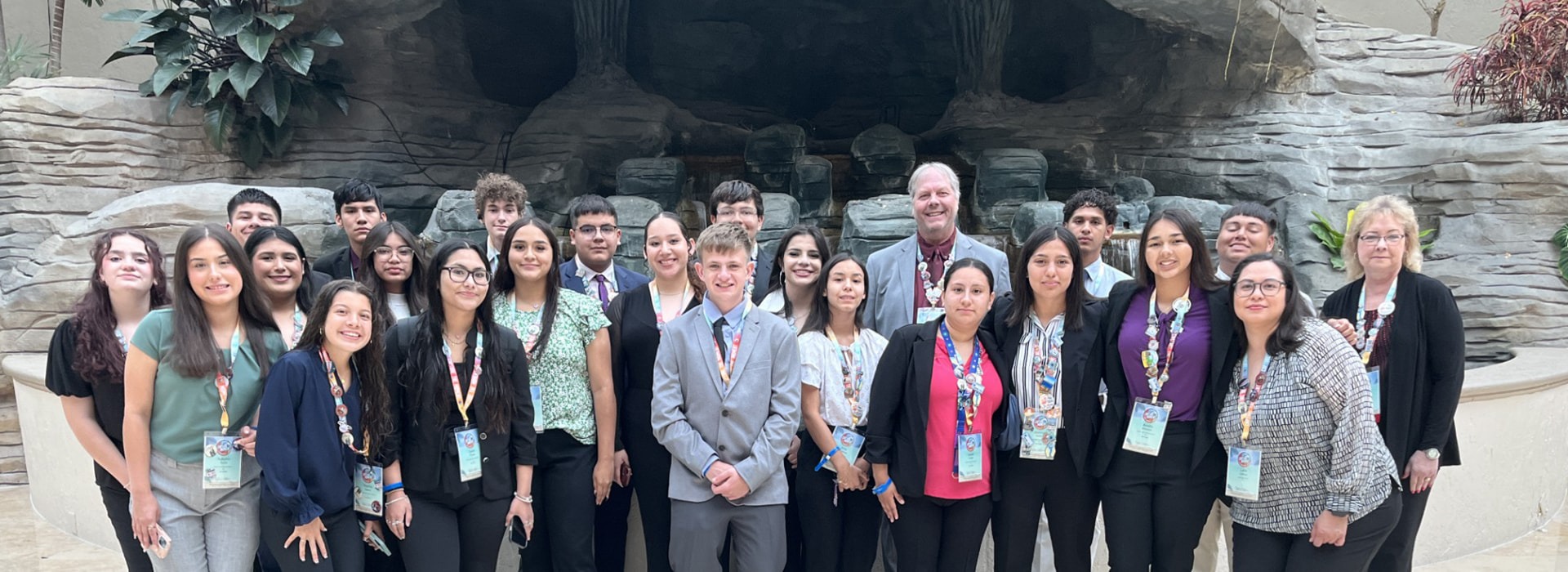
Mathis ISD’s business program stands out not only for participation but for competitive achievement. Through Business Professionals of America (BPA), the district qualified 24 students for national competition in Orlando—an outcome significant enough that additional administrative support was required simply to manage travel logistics and scheduling around athletics and other commitments.
Dr. White sees this as part of what “world-class” means: students competing beyond the district, beyond the state, and gaining experience that prepares them for a broader world.
That student leadership theme is also being reinforced through the district’s Superintendent Student Cabinet, a group spanning grades 5 through 12.
One upcoming milestone is particularly notable: the district’s State of the District presentation in November will be delivered by students. They will choose what programs to highlight, what stories to tell, and how to represent the district’s progress—directly tied to the strategic plan goal of elevating student voice.
Partnerships That Change the Trajectory: Kiewit and Work-Based Learning
One of the most significant workforce partnerships currently shaping Mathis ISD is with Kiewit—an industry leader in pipefitting, welding, and related skilled trades.
The partnership is designed as a structured pipeline: each year, a cohort of 10 seniors will complete additional programming embedded into their welding/ag mechanics pathway. This training aligns with Kiewit’s onboarding standards, allowing students who transition into Kiewit employment to enter at a higher classification and higher starting wage.
The district was selected for this opportunity not simply due to geography—Mathis is approximately an hour away from the coastal industrial base—but because of the quality of student work coming out of the program. The partnership is further strengthened by a workforce grant recently awarded to support the internship-style model, and by Kiewit’s commitment to contribute equipment, materials, and welding stock to support the district’s facility expansion.
Equally important, Dr. White notes that Kiewit has assigned a dedicated liaison to the district—someone who actively supports relationship-building, program alignment, and idea sharing. In the district’s view, this is what effective collaboration looks like: employers do not simply “show up” to recruit—they invest, advise, and co-design the pathway so students can succeed.
Mathis ISD is also expanding partnerships with Del Mar College—both to grow dual credit offerings and to explore cosmetology program alignment. Long-term, the district aims to create conditions where students can graduate with significant college credit, and eventually with associate degrees prior to high school graduation.
Student and Staff Support Through Voice and Alignment
While the interview focused heavily on strategy and CTE expansion, Dr. White emphasized that support services—especially social-emotional stability—are built into how the district operates through culture and leadership structures.
His view is that when educators have voice, autonomy, and clear alignment to district goals, they are more supported—and more effective. Mathis ISD uses the strategic plan as a filter: if an initiative aligns to the plan, the district finds a way to support it. If it doesn’t, even if it seems interesting, the district stays disciplined.
Leadership development is also being strengthened through a district leadership team called the “Captain’s Crew,” a cohort of 20–25 teachers, counselors, and emerging leaders focused on communication, support, and strengthening leadership capacity across campuses.
In a small district, Dr. White believes this approach directly impacts student support. When teachers are supported, they stay. When they stay, relationships deepen. And when relationships deepen, students have greater stability and opportunity.
Priorities Ahead: Dual Credit Growth, New Partnerships, and “The Plan After the Diploma”
Looking ahead to the next two years, Mathis ISD’s priorities remain focused on expanding partnerships and building a stronger postsecondary pipeline.
The district is working to scale dual credit programming through Del Mar College with a long-term target: students graduating with associate degrees before they walk across the high school stage. Dr. White has seen that outcome before in prior districts, and he wants Mathis ISD to build toward it through stronger systems, scheduling, and partnership development.
Equally important is continuing to build industry relationships that mirror the Kiewit model—pathways that lead directly to work-based learning, certifications, employment, and upward mobility.
But the district’s goal is broader than any one program. Dr. White describes the endpoint clearly: every student who graduates should have a plan, and graduation should not be the end of the walk. Whether that path is college, a certification program, an apprenticeship, or immediate employment with training built in, Mathis ISD wants every graduate to leave with direction, momentum, and the confidence to keep moving.
In Mathis ISD, “world-class” is being built through disciplined planning, deep stakeholder engagement, and career pathways that connect students to real opportunity—locally and beyond.
Click The Cover To View Or Download The Brochure
AT A GLANCE
Who: Mathis Independent School District
What: A world class look at educational and career readiness that puts the students in the educational drivers seat
Where: Mathis, Texas, USA
Website: www.mathisisd.org
PREFERRED VENDORS/PARTNERS

Linebarger Goggan Blair & Sampson, LLP: www.lgbs.com
As Linebarger celebrates 50 years of service, we are proud to partner with Mathis ISD and school districts across Texas to recover public revenue that strengthens school funding. Representing more than 2,600 public-sector clients nationwide, Linebarger helps recover more than $1 billion annually in public revenue for a stronger future.