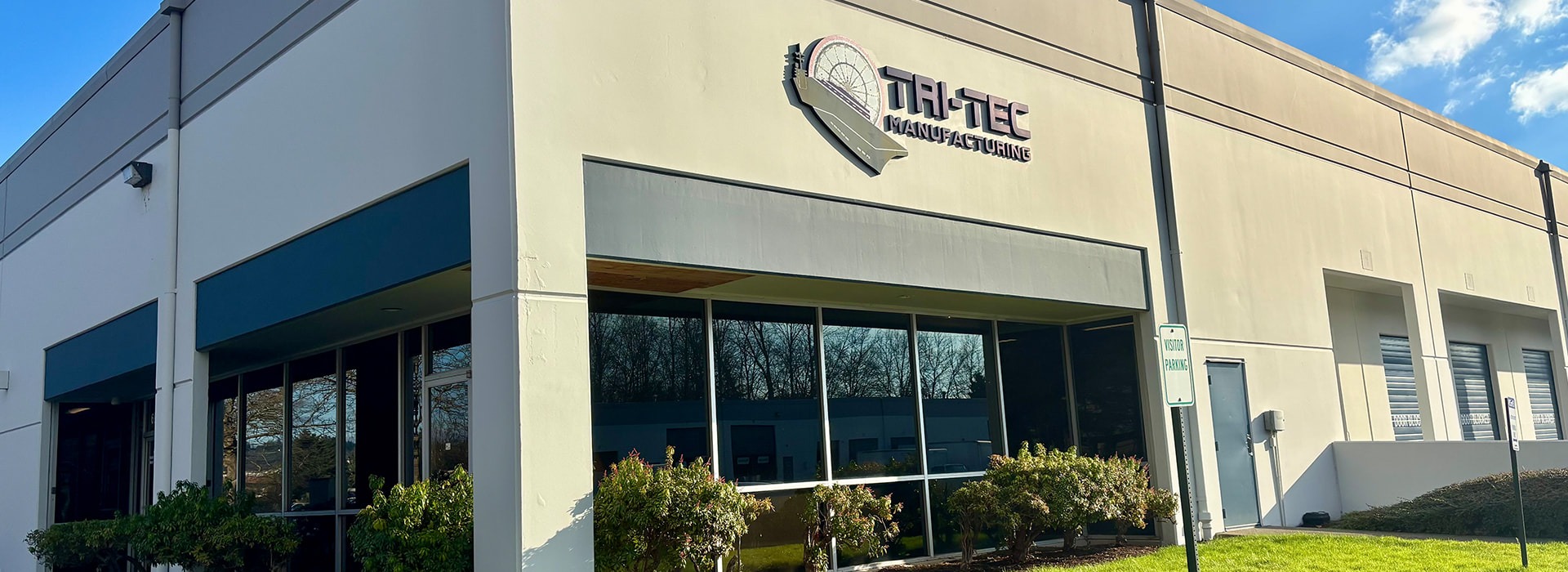
On Board for Further Growth
Engineering-Driven Innovation Supporting U.S. Naval Readiness
For more than five decades, Tri-Tec Manufacturing has carved out a reputation in one of the most demanding arenas in American industry: designing and building mission-critical valve automation devices that support the safe, reliable operation of U.S. Navy ships.
Founded in 1972 and active in Navy work since the late 1980s, the company has steadily evolved from a maintenance-and-repair provider into an engineering-led manufacturer delivering sophisticated systems that help sailors stay focused on their stations – especially when circumstances are at their worst.
As President and CEO, Mark Haller explains, Tri-Tec’s growth has been defined by key program wins and an intentional push toward deeper technical capability. A pivotal aircraft carrier contract in the early 2000s propelled the firm into its next phase, followed by major work supporting the DDG 1000 program—an advancement that enabled Tri-Tec to move into a new facility and expand its engineering capacity. Today, that engineering focus is central to how the company differentiates itself.
“We pay more attention to specifications,” Haller says. “We’re not a multinational, so we focus on what matters: highest quality, best price possible, and timely delivery.” In an environment governed by demanding Department of War (DoW) standards, that attention to detail is not simply a selling point – it is foundational to performance under the most stressing conditions and trust that our systems will perform when required.
Built for the Worst Day, Not the Best Day
Tri-Tec’s core work centers on actuated valve automation devices—equipment that sits atop valves and allows piping systems to be remotely operated. While those systems enable efficiency in normal day-to-day operations, their true value is revealed in emergencies.
On naval combatants – whether aircraft carriers, amphibious warships, or surface combatants—systems controlling firefighting and fuel systems must function flawlessly. The ability to shut off fuel to a fire, isolate systems, or control critical flow of fire suppression systems without sending sailors into hazardous spaces can materially influence outcomes in crisis scenarios. Tri-Tec’s work is designed with that reality in mind, and leadership is candid about the stakes.
Everything the company produces is built to rigid DoW specifications, and the internal objective is to exceed those requirements. In Tri-Tec’s view, performance is not an abstract measure—it is directly tied to survivability, operational continuity, and readiness.
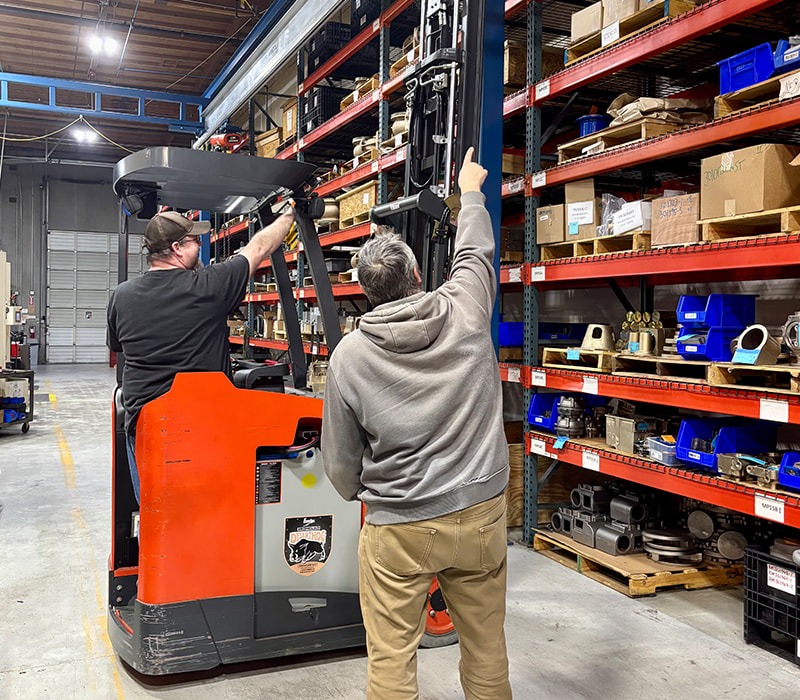
A Different Take on Supply Chain Challenges
In an era when supply chain disruption has become a universal explanation for delays, Tri-Tec offers a more pointed perspective shaped by decades in Navy contracting. From Haller’s vantage point, the core challenge is not an inability of suppliers to respond, but rather the Navy’s own procurement environment and inconsistent program stability.
He cites years of funding instability under continuing resolutions, shifting program priorities, and truncated shipbuilding initiatives that make it difficult for small businesses to commit resources and confidently scale. New compliance demands—particularly in cybersecurity—have also imposed high costs on smaller firms trying to remain competitive within the defense industrial base.
For Tri-Tec, that context matters. The company participates in industry associations, coalitions, and policy conversations because, in their experience, long-term readiness depends as much on predictable decision-making and stable program execution as it does on manufacturing capacity.
Engineering at the Center of the Model
That philosophy is reinforced by an engineering organization that has become a defining strength of the company. Vice President of Engineering Bill Reynolds joined Tri-Tec in mid-2023 with a clear mandate: retain and grow the team. Since then, the group has expanded from less than 10 to 25 engineers with expertise spanning mechanical engineering, electrical engineering, firmware, and PCB design.
This level of vertical integration is intentional. Tri-Tec designs its own products, builds its own controllers, and develops the firmware that powers them. That combination enables tighter quality control, faster iteration, and greater flexibility – particularly when solving highly specific Navy challenges where off-the-shelf solutions cannot meet the requirement.
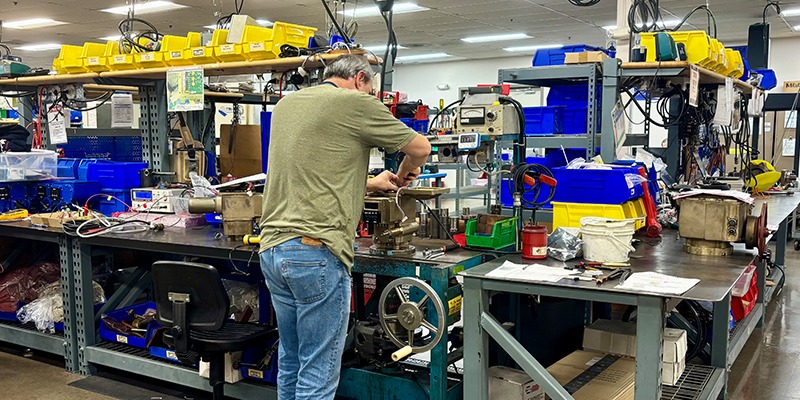
Reynolds describes a team motivated by complexity. “They’re always looking for more challenges,” he says. “They want the next thing, the next improvement, the next problem to solve.”
Experience is another differentiator. The engineering team draws from multiple industries and brings what Reynolds estimates as nearly 200 combined years of engineering experience. Importantly, the broader organization includes a notable number of Navy and military veterans—professionals who understand not only technical requirements, but also the day-to-day realities of shipboard operations.
That lived understanding helps align engineering decisions with real-world conditions, ensuring solutions are grounded in how sailors actually work, not only how systems perform in theory.
Using Data to Strengthen Maintenance and Repair
Tri-Tec’s leadership believes the next frontier is intelligence—capturing and using operational data to improve maintenance, readiness, and lifecycle performance. Because Tri-Tec devices include embedded computing and control, they can serve as data collection points across the ship.
On one aircraft carrier program discussed in the interview, Tri-Tec systems can be deployed across hundreds—potentially more than a thousand—locations. Those distributed devices can track operational cycles, vibration, electrical signals, and performance indicators that help maintenance teams better understand equipment health.
The strategic implication is significant: instead of relying on fixed schedules or reactive maintenance, ships could use device-level data to target interventions, reduce downtime, and strengthen readiness. Tri-Tec sees this as a way to modernize phase maintenance and repair – using information already available in the system but not fully captured today.
The long-term vision also includes device-to-device communication and smarter system coordination, enabling automated responses and improved integration across shipboard automation networks.
AI Integration—with Caution and Intention
With AI reshaping industrial workflows across sectors, Tri-Tec is actively exploring how these tools can be responsibly integrated into both engineering and business operations. For Haller, the question is not whether AI matters, but how it can be applied in a way that enhances performance and value for the Navy.
Reynolds, too, is looking at practical internal applications—from accelerating technical documentation and manual development to supporting design workflows and production integration. One early challenge was cultural: reassuring engineers that AI is not intended to replace them, but to remove friction and boost efficiency. The goal is augmentation, not substitution.
Naturally, DoW contracting introduces complexity. Balancing the benefits of AI with evolving cybersecurity requirements is part of the conversation, and the company is mindful that compliance and security must remain uncompromised.
On the business development side, Senior Vice President Jim Van Antwerp is already experimenting with AI to streamline proposal writing and communications. With some proposals running hundreds of pages, the potential for speed, clarity, and consistency is meaningful – especially in an environment where time and precision are both competitive advantages.
Relationships That Start Strong, Then Become Price-Driven
Tri-Tec operates in a niche market where credibility is earned over time. Once a supplier demonstrates capability, the shipyard environment becomes highly price sensitive. Leadership describes this as a reality of the market: relationships are essential for establishing trust and proving performance, but the final decision often comes down to cost.
To remain visible and credible, Tri-Tec stays deeply engaged across the government and commercial maritime ecosystem. The company participates in multiple industry associations and coalitions, attends major expositions, and maintains relationships across naval engineering and shipbuilding communities.
Beyond shipyards, Tri-Tec also collaborates with Naval Surface Warfare Centers on development efforts and maintains important working relationships with major shipbuilders, including Fincantieri, General Dynamics, Newport News, and Ingalls. These partnerships play a central role in product development, engineering services, and long-term program positioning.
A Culture Built Around Purpose—and a Legacy Plan
While Tri-Tec’s work is technical, leadership consistently frames the organization in human terms. Haller is explicit that the company’s purpose goes beyond profit. He speaks about helping employees find their highest and best use, creating a workplace that removes “day-to-day irritants,” and investing in stability so teams can focus on what matters—performance, quality, and mission.
That philosophy extends into how the company is thinking about its future ownership structure.
Tri-Tec intends to transition ownership to employees, but leadership is equally clear about what it will not do. An ESOP, they believe, introduces constraints and risks that can hamstring a small company operating in a complex contracting environment. Instead, Tri-Tec is planning an alternative path that enables employees to buy in and participate in the legacy they have helped build.
Looking Ahead: 2026 and Beyond
Tri-Tec enters 2026 with a strong backlog and a demanding set of priorities. Leadership outlined several focal points: re-establishing positioning following the disruption of a long-developed frigate program relationship, continuing advanced work with Newport News tied to future carrier needs, and supporting broader industry efforts on Capitol Hill to advocate for stable budgets and realistic program execution.
There are also opportunities on the horizon tied to new Navy actuator initiatives, where Tri-Tec is serving as a design agent—work that could influence standardization and future adoption across platforms.

Through it all, the company remains anchored in its identity: a highly specialized, engineering-driven manufacturer committed to the reliability and safety of naval operations. By combining deep technical expertise with a mission-first mindset, Tri-Tec Manufacturing is positioning itself not only to meet the Navy’s needs today but to help shape what readiness looks like in the years ahead.
Click The Cover To View Or Download The Brochure

AT A GLANCE
Who: Tri-Tec Manufacturing
What: A leading manufacturer specializing in the marine industry
Where: Kent, Washington
Website: www.tritecmfg.com
PREFERRED VENDORS/PARTNERS

Commercial Gear & Sprocket: www.commercialgear.com
Manufacturer of standard and custom helical, spur, worm, bevel, rack, pinion, and miter gears. Ratchets, jaw clutches, splines, and belt pulleys are provided. Also distributes sprockets and chains. Capabilities include machining, milling, turning, hobbing, cutting, and deburring. Large production runs available. Suitable for applications in machine tool building, construction, medical equipment, mining, power hand tools, defense, mass transit, and railcar systems.