Education to Benefit All
Community-Powered Education with a Clear Eye on the Future
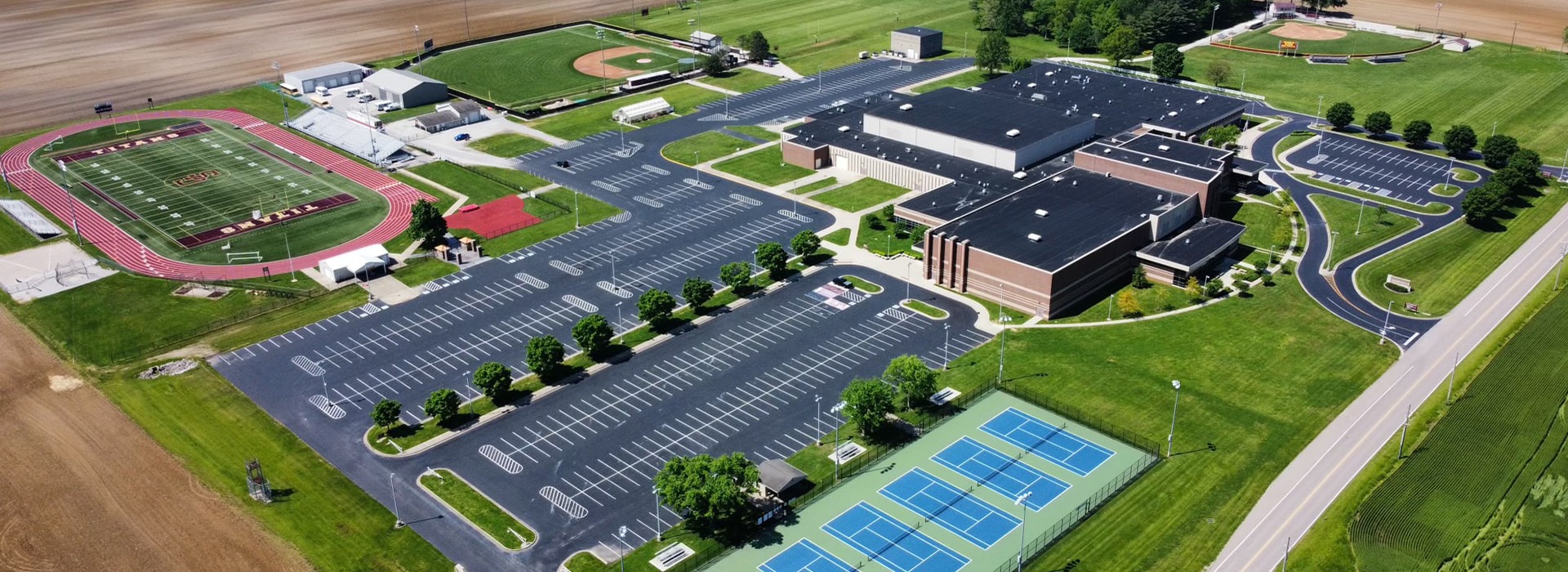
In rural Indiana, South Gibson School Corporation is proving that a small-district setting can deliver big outcomes when expectations are high, community involvement is strong, and leadership stays relentlessly focused on what matters most: preparing students to succeed in life.
Superintendent Dr. Bryan Perry describes the district’s purpose in practical terms. South Gibson is committed to academic success first, but equally invested in the full student experience—cooperative learning, athletics, and co-curricular engagement that develops confidence, character, and readiness for the real world. The district’s approach is not about choosing between rigorous academics and a well-rounded education. It is about ensuring students graduate with both.
What makes that approach sustainable, Perry says, is the community itself. South Gibson is deeply supported by residents who take pride in their schools and step forward when needs arise. “You don’t have to go looking very hard to get people to be involved,” he notes. In South Gibson, expectations and support move together—and that partnership between schools and community has become a defining strength.
A Community That Shows Up
That connection is especially visible in the district’s Career and Technical Education programming, where relationships with local employers and community members translate into hands-on opportunities for students.
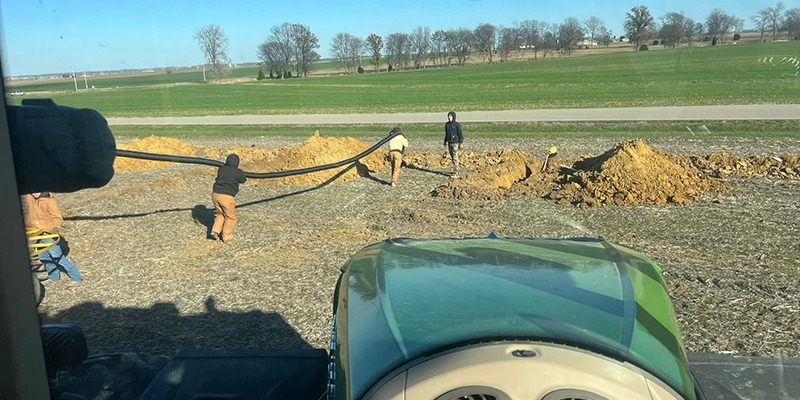
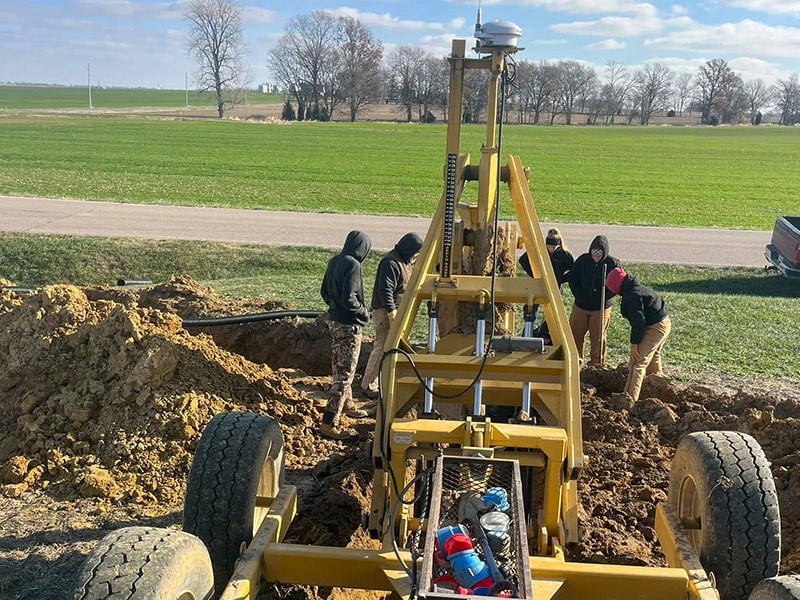
Agricultural educator Jessie Mraz points to a simple reality: when South Gibson asks, the community answers. Whether she posts a request online or speaks directly with local farmers, support is immediate and often extraordinary. One example stands out. Returning from maternity leave last fall, Mraz saw local farmers step in to help improve the district’s 10-acre test plot—an ongoing fundraiser and experiential learning resource where students alternate growing corn and soybeans. On two of the coldest days in December, community members worked alongside about 15 students to install tile drainage, improving the field’s performance and increasing potential yield.
The message for students is clear: their community values what they are learning, and real professionals are willing to invest time and effort to help them grow.
High School Principal Jon Adams, a graduate of the district himself, says that expectation is woven into South Gibson’s identity. From academics to agriculture, arts, and athletics, the community takes ownership in student success—and the district works hard to meet that standard year after year.
Technology as a Learning Tool—and a Pathway Forward
At the high school level, technology is treated not as a novelty, but as a practical tool to enhance instruction and unlock opportunity. Classrooms are equipped with modern instructional tools, and South Gibson continues to expand offerings tied directly to workforce trends.
Dr. Perry notes that the district is actively pursuing expansion of Project Lead The Way programming, building on existing engineering-related coursework and aligning to student interests that span both four-year college pathways and immediate employment opportunities. For South Gibson, engineering is not “either-or.” It can serve students bound for university, and it can also support those entering high-demand technical fields right after graduation.
One of the district’s most distinctive technology-driven initiatives is its eSports program—an unusually robust offering for a rural community. According to Adams, the program includes about 40 members, with a dedicated iRacing team competing statewide through the Indiana eSports Network. Students participate in structured competitive formats modeled after major racing events such as the Daytona 500 and Indianapolis 500, while also engaging with other technology-based tools, including a flight simulator and a semi-truck simulator.
The results have been tangible. In just four years, South Gibson has seen four eSports seniors earn full-ride scholarships—a powerful example of how emerging programs can create real postsecondary access and career momentum.
Navigating AI with Balance and Practicality
Like districts across the country, South Gibson is actively determining how to address the rapid growth of artificial intelligence tools in education. The district’s approach, as described by Adams, is to embrace AI as a tool while reinforcing academic integrity and responsible use.
Faculty discussions have included both instructional applications and student misuse concerns, and teachers are beginning to leverage AI-support software to detect AI-generated content. The challenge now is not simply detection—it is defining appropriate use. South Gibson recognizes that AI can support learning when used responsibly, and leadership is working to help staff understand where AI assists and where it undermines the development of essential skills.
The district’s philosophy mirrors a broader historical lesson: new tools—from calculators to search engines—initially raise concern, but can become powerful learning supports when integrated with clear expectations and strong teaching practices.
Career Pathways Rooted in Real Experience
South Gibson’s Career and Technical Education model is built around defined pathways, aligned with state standards and workforce realities. In agriculture, students begin with Principles of Agriculture, which introduces foundational concepts and allows them to identify interests before choosing more specialized directions.
From there, students can pursue pathways such as animal science and veterinary science, plant and soil science, agribusiness, or a more hands-on track through agricultural power and mechanics. Technology is integrated throughout, from software-driven FFA award applications and spreadsheet-based agribusiness analysis to guest speakers and tours that connect classroom learning to modern industry.
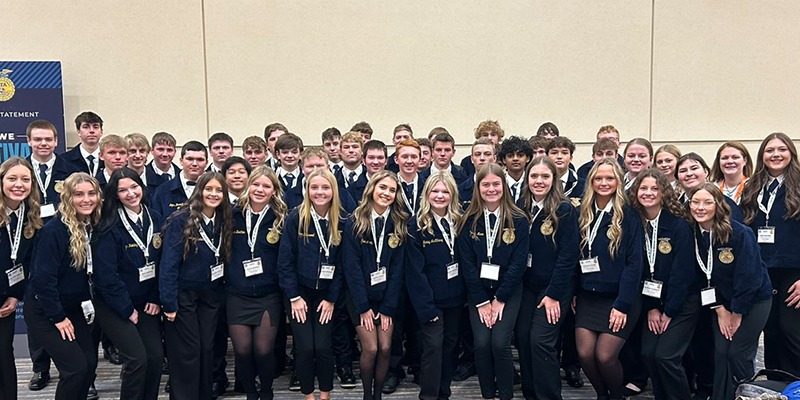
Mraz also highlights the value of career exposure through local partnerships. Guest speakers share real-world examples of how technology, innovation, and entrepreneurship intersect—such as a vendor who once worked in major manufacturing plants and now designs specialized tools, while also hiring South Gibson students for internships.
Beyond agriculture, the district leverages partnerships to broaden options. South Gibson works in collaboration with a regional career and technical education center serving multiple counties, giving students access to programs such as auto mechanics, trades, nursing, and additional engineering coursework—without requiring the district to independently fund a standalone career center.
Another notable pathway is the Toyota partnership through the 4T program, which provides students with structured preparation during junior and senior years and can lead directly to employment opportunities. Leadership also notes that, as Indiana’s diploma requirements evolve, work-based learning will become even more central.
To prevent overwhelming local employers, South Gibson is working in coordination with neighboring school corporations to build a shared network of work-based learning placements, supported by dedicated staff focused specifically on relationship-building with businesses.
Dual Credit and AP: High Expectations, Proven Outcomes
South Gibson’s academic programming remains a core point of pride. Dual credit opportunities span key disciplines, including Career and Technical courses, allowing students to graduate with significant college progress already completed. Principal Adams shared a personal example: his own daughter entered college with freshman year already completed—a reflection of the district’s ability to offer real savings and acceleration for families.
The district also offers a strong AP program supported through Notre Dame’s AP-TIP initiative. Current AP offerings include Calculus, Biology, Chemistry, Physics, and Literature/Composition, with student performance consistently strong—often with all participating students meeting or exceeding the benchmark score of three.
For a high school of roughly 730 students, those outcomes underscore a broader point: rural districts can deliver elite-level opportunity when expectations are consistent and support systems are strong.
Strategic Investment: Security, Facilities, and Energy Efficiency
In today’s educational environment, South Gibson is investing in both safety and sustainability. The district employs full-time School Resource Officers in each school through an agreement with the Gibson County Sheriff’s Department—a visible commitment to security that also supports family confidence.
At the facilities level, leadership has prioritized preventive maintenance and infrastructure renewal. HVAC systems—often overlooked until failures occur—have been a major focus, with full renovations completed at Fort Branch Community Schools and ongoing work underway at Haubstadt and Owensville. These investments keep buildings reliable, comfortable, and cost-efficient.
Energy management has also delivered measurable returns. Dr. Perry credits Chief Operations Officer Darryl Angermeyer with generating more than $300,000 in energy savings—funds that can be redirected into educational priorities rather than absorbed by rising utility costs.
The district has also begun construction of a multipurpose facility to address space constraints for athletic practice and student programming. As part of that project, the agriculture program will receive a new greenhouse, located closer to classroom space for improved safety and access.
Priorities Ahead: Diploma Change, Accountability, and Long-Term Stability
Looking forward, South Gibson’s priorities reflect the realities facing Indiana schools statewide. The transition to Indiana’s new diploma requirements is at the top of the list, as the district works to ensure students are placed in the right pathways and supported through evolving graduation expectations.
Closely tied to that is the state’s forthcoming accountability model—an impending shift the district is monitoring carefully to ensure its performance is accurately reflected and that adjustments are made where needed.
Finally, long-term financial planning remains essential. With property tax changes and the projected fiscal “cliff” of 2028 on the horizon, leadership is focused on maintaining stability well beyond that date. South Gibson believes it is positioned to weather the coming constraints, but the district intends to ensure that whoever leads next inherits a system built for sustainability.
A Quiet Leadership Style, a Clear Purpose
Dr. Perry describes himself as quiet by nature, with little interest in being “out front.” What motivates him, he says, is helping others succeed—principals, teachers, staff, and ultimately students. In a world of shifting mandates and external noise, he remains focused on what the district can control: strong people, high expectations, and the best opportunities possible for every student.
For South Gibson School Corporation, the formula is straightforward and effective: community involvement that runs deep, academic programming that competes with the best, career pathways that reflect modern workforce realities, and leadership that keeps the mission centered on student success. In rural Indiana, it is a model proving that excellence is not a matter of district size—it is a matter of focus.
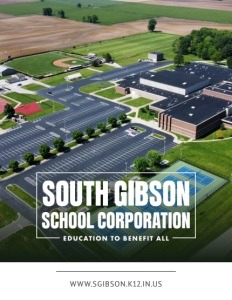
Click The Cover To View Or Download The Brochure
AT A GLANCE
Who: South Gibson School Corporation
What: An adaptive and welcoming school district putting academic, career-readiness, and student success first
Where: Fort Branch, Indiana
Website: www.sgibson.k12.in.us/en-US
PREFERRED VENDORS/PARTNERS

Centerpoint Energy: www.centerpointenergy.com
CenterPoint Energy is an electric and natural gas delivery company serving 7 million customers across multiple states. Our vision—to lead the nation in delivering energy and value—drives our strategy and performance. We have an unwavering commitment to safely and reliably deliver electricity and natural gas to millions of people.