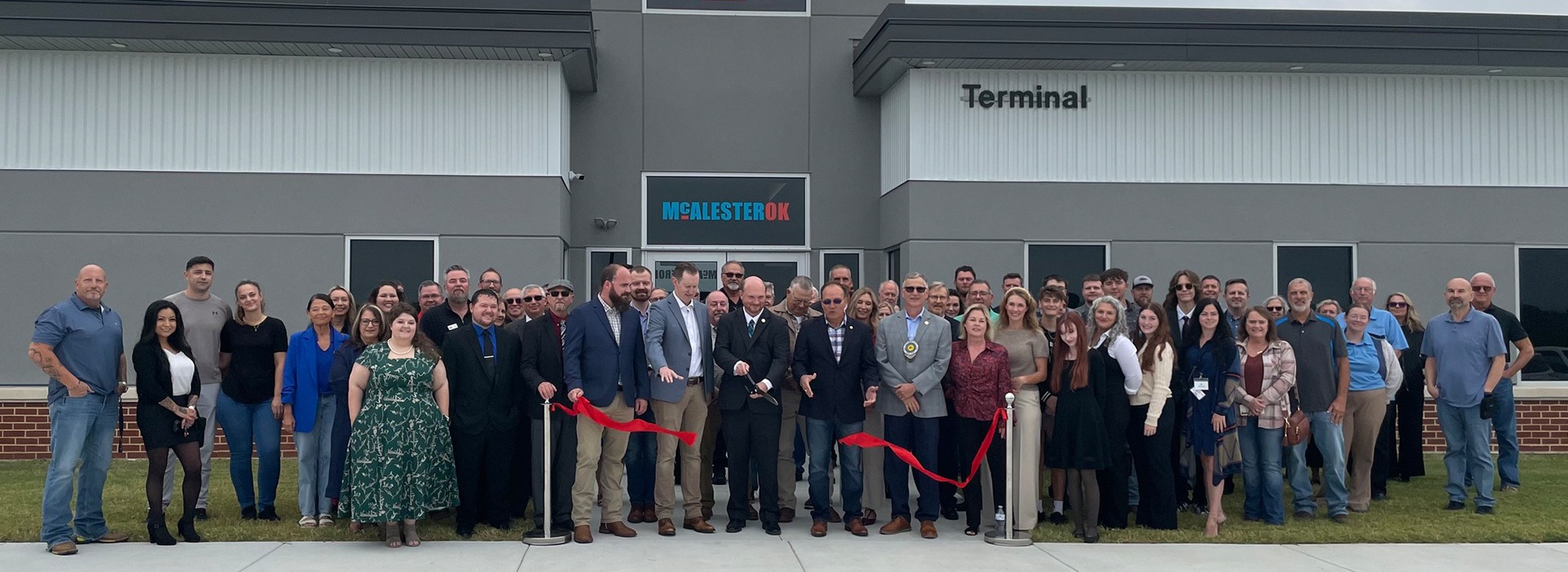
A Civic Gem In the Heart of Oklahoma
Downtown Revitalization, Critical Infrastructure, and Controlled Growth Top the City Agenda
McAlester sits in a category that many communities aspire to—and few manage well: large enough to offer amenities people expect from a metro area, yet still compact enough to feel connected and familiar. Mayor Justin Few describes it as a city that has “the hometown feel” while also functioning as a true hub for southeastern Oklahoma. In practical terms, residents can access national retail, restaurants, and services that are often associated with much larger markets, but still cross town in minutes. The pace feels manageable, the community feels personal, and the amenities feel increasingly metropolitan.
That “middle ground” positioning has become a defining advantage. McAlester is roughly two hours from multiple major markets—Dallas, Tulsa, Oklahoma City, Fort Smith—and sits in proximity to major transportation assets that are foundational for industry. With Interstate 40 nearby, the Highway 69 corridor, the Indian Nation Turnpike, rail access, and a regional draw that extends well beyond city limits, the municipality has become a natural landing place for growth.
Leadership’s message is direct: McAlester is open for business—across housing, manufacturing, restaurants, and commercial investment—and the city is prepared to work creatively to bring projects to life.
Part of that readiness, Few notes, comes from a willingness to collaborate at every level. If a project requires state partnership or assistance through Oklahoma Commerce, the city engages. If a project benefits from coordination with regional partners, McAlester engages. If a project aligns with shared opportunities across sovereign partnerships, McAlester engages—particularly through relationships with the Choctaw Nation of Oklahoma. The approach is not limited to one tool or one lane; it is rooted in problem-solving and a commitment to creating opportunities that strengthen community stability and quality of life.
Creating a Downtown That Works for the Next Era
McAlester’s downtown priorities are shaped by both practicality and pride. Few brings a perspective that is rare in municipal leadership: he is not only overseeing downtown revitalization as a policy agenda—he is personally invested in it as a business owner.
In his own downtown building, Few deliberately structured use across floors to support a stronger downtown experience. The first floor remains mercantile and retail-facing, while office and conference space occupies upper levels, and a residential component—an Airbnb studio—adds new life to a portion of the building that historically might have remained unused.
That blend is intentional. Like many smaller communities with historic architecture, McAlester has faced a challenge that is both economic and physical: the first floor is often utilized, but upper levels are left empty because older buildings rarely include elevators, and foot traffic rarely flows upward without purpose.
City leadership is working to change that model, not by forcing development into a rigid formula, but by removing obstacles and aligning zoning and incentives so that redevelopment becomes achievable. Few references to dual zoning and related bulk department ordinances that were designed to better support adaptive reuse—especially in historic buildings—so that downtown can become more than a row of first-floor storefronts. The goal is to create a downtown environment where businesses, residents, and visitors feel invited to stay, not simply pass through.
That effort has already been supported through public investment. McAlester completed a streetscape project in part of downtown and is now looking at what the next phase should be. The conversation includes walkability improvements such as sidewalks and lighting, the condition and appearance of façades, and, most importantly, what merchants and retailers want the next stage of downtown to be. Rather than imposing a vision from the top, leadership is focused on listening to the businesses that make downtown work.
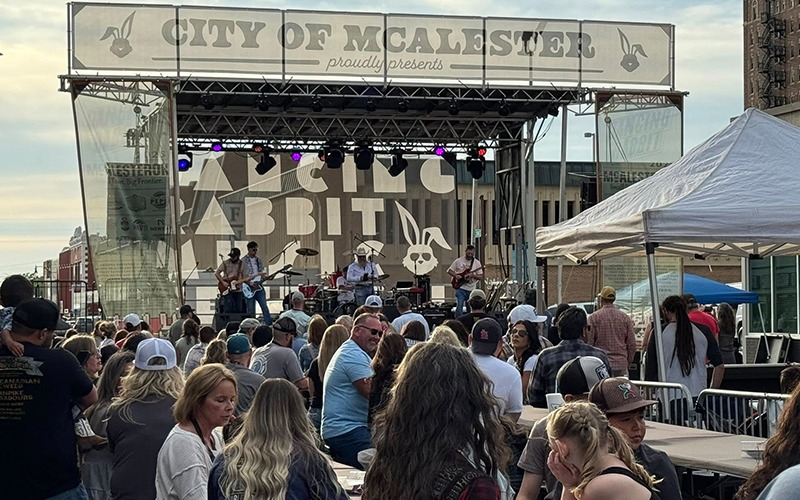
One of the newest additions to downtown’s identity is a pavilion bandstand that functions as a community focal point—an anchor space for gatherings, parades, and events. Few describes it as a version of a town square: not oversized or overbuilt, but effective in creating a place where the community naturally congregates. It is precisely the kind of small but strategic investment that helps downtown feel active and connected.
And while McAlester’s downtown is still evolving, it already has the types of locally owned destinations that build culture and consistency. Few highlighted Lucy’s as a beloved stop—located near the historic Aldridge Hotel building (now apartments)—offering sandwiches, soups, and sweets, and reflecting the kind of place that residents identify with. He also pointed to a growing coffee destination, Spaceship Earth Café, as a space that is quickly becoming a gathering point for the community—a place where people meet, socialize, and linger.
These are the businesses that signal a healthy downtown—small, consistent, locally rooted—and they provide the foundation that larger redevelopment can build upon.
Industrial Growth and a Commitment to Controlled Expansion
Beyond downtown, McAlester is balancing growth through an industrial lens. The city already has an industrial park, and leadership says it has room to accommodate new manufacturers and employers. The priority is not growth at any cost, but what the mayor describes as controlled growth—expanding the tax base and job market while remaining capable of providing the services residents rely on.
This is where infrastructure becomes non-negotiable. Growth that outpaces water, sewer, and service capacity is not sustainable, especially in smaller municipalities that cannot absorb rapid scale without strain. McAlester’s leadership is aware of this tension and is building growth, understanding that infrastructure must keep pace.
At the same time, the city is clear that its residents want progress. They want higher-paying jobs. They want increased economic mobility. And they want local opportunities that prevent young people from leaving to build a stable life.
McAlester is already seeing that momentum translate into major announcements. In the industrial park, the city is preparing for the development of a new manufacturer that is expected to break ground in the near term. One of the most significant projects discussed is American Li-Ion, a lithium recycling facility that represents the type of cutting-edge industry that can change a local economy quickly. The project is expected to support hundreds of jobs, with wage scales that exceed what many smaller communities have historically been used to seeing.
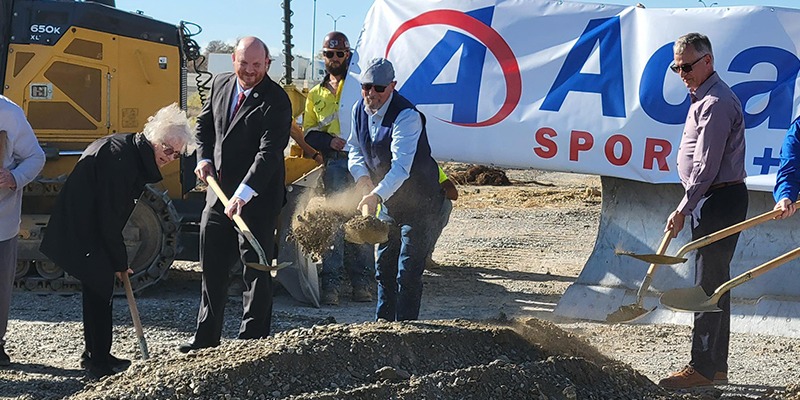
On the commercial side, McAlester is also using tools like TIF districts to support targeted development. Leadership referenced a new TIF district supporting a project anchored by Academy Sports + Outdoors, along with additional pad site opportunities that can attract further retail and service expansion. These types of developments are particularly valuable in hub communities—they capture regional traffic, build convenience for residents, and create the consumer base that helps smaller local businesses thrive.
Infrastructure as the Foundation for Growth
While McAlester’s economic development story includes major projects and strong partnerships, leadership is clear that none of this works without a stable infrastructure foundation. As the city attracts new employers and expands housing and commercial services, it must ensure that core systems—especially drinking water—remain reliable, compliant, and capable of serving both existing residents and new development.

One of the city’s current priorities is a drinking water rehabilitation project, designed to ensure consistent access to clean drinking water across the community. In smaller cities, water infrastructure is often the single most important bottleneck for growth. It affects business recruitment, housing development, public health, and community confidence. McAlester is treating it as a foundational investment, recognizing that long-term quality of life begins with utilities that residents can trust.
As these projects progress, the city’s emphasis remains on pacing. McAlester intends to grow, but not faster than its infrastructure capacity can support. That discipline is what separates sustainable growth from growth that later becomes a liability.
Looking Ahead
McAlester’s next chapter is being defined by a simple but powerful principle: become a larger community without losing what makes the community feel like home. Leadership is working toward a downtown that is both historic and functional, an industrial base that brings modern jobs with real wages, and infrastructure that keeps the community stable while growth accelerates.
For Mayor Few, the city’s strongest advantage is its positioning—geographically, economically, and culturally. McAlester has the transportation connections that industry needs, the amenities that residents want, and the civic mindset required to build partnerships that unlock opportunity.
It is a city that understands it is no longer just a small town—and is preparing accordingly—while still protecting the identity that makes residents stay for generations.
Click The Cover To View Or Download The Brochure
AT A GLANCE
Who: McAlester, OK
What: A thriving municipality that has a key focus on infrastructure projects, housing, and business growth through 2026 and beyond
Where: Pittsburg County, Oklahoma
Website: www.cityofmcalester.com
PREFERRED VENDORS/PARTNERS

Eastern Oklahoma State College: www.eosc.edu
Eastern Oklahoma State College is a public, two-year institution dedicated to cultivating growth, creating futures, and changing lives through workforce-driven education. Serving southeastern Oklahoma, Eastern delivers career ready training, academic pathways, and industry partnerships that strengthen the regional workforce and support economic development.

The Bank N.A.: www.thebankna.bank
The Bank N.A. is a community bank, offering a comprehensive selection of services, from checking, savings and personal loans, to in house and secondary market mortgage loans. The Bank was chartered in 1927 and currently operates in the Pittsburg, Payne, Tulsa and Wagoner County markets. Member FDIC. Equal Housing Lender.

Bemac Supply: www.bemacsupply.com
Bemac Supply, with Headquarters in McAlester Oklahoma since 1897, is a regional wholesaler of Plumbing and HVAC supplies as well as a state of the Art 7,000 square-foot luxury Bathroom, Kitchen and Lighting Design Showroom. We offer high quality cabinetry, vanities, lighting, kitchen and bath plumbing fixtures and so much more. Come see our knowledgeable staff for all of your kitchen and bath needs.
McAlester Pepsi: www.mcalesterpepsi.com
McAlester Pepsi is a family owned and operated beverage distributor that has been in business since the 1940’s. We are committed to community involvement and dedicated service to our customers. Communities across North America are hearing about the success stories of our accomplishments and numerous National and Local awards.