Preparing for the Next Step
Building a Culture of Opportunity Through Partnerships, Credentials, and Community Resilience
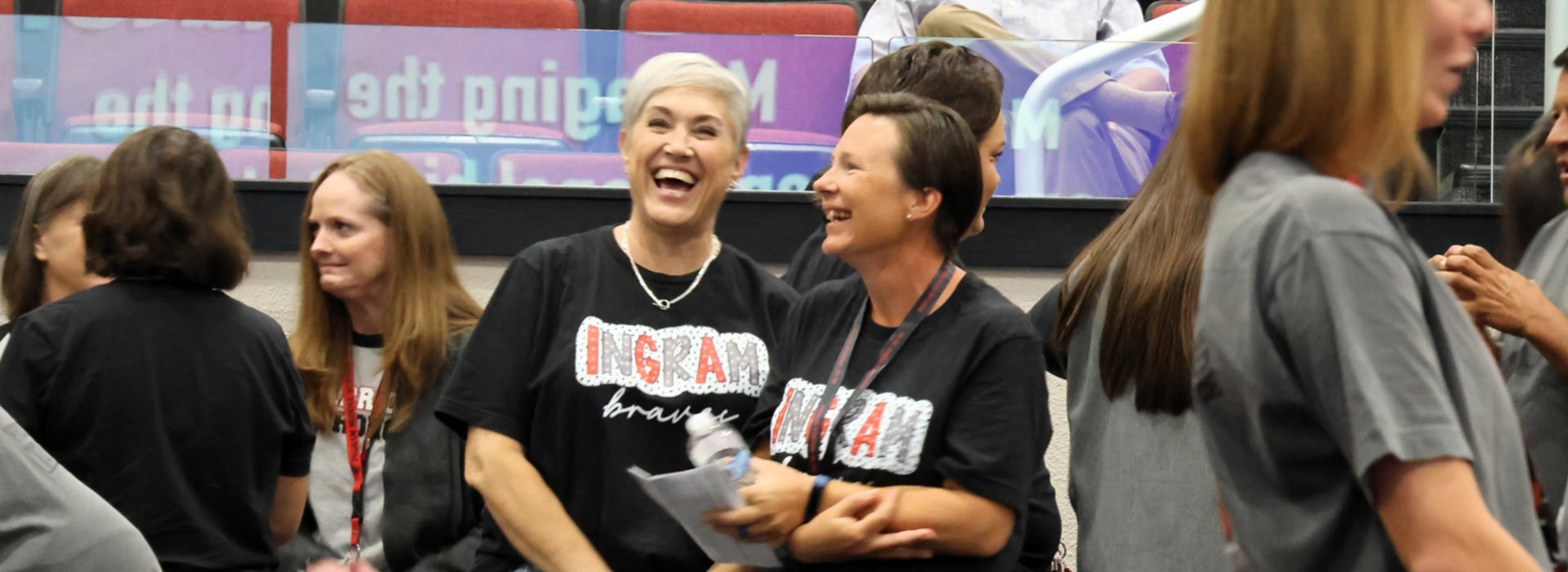
In Ingram ISD, the mission is clear and deeply personal: every student who walks across the graduation stage should walk directly into a future with purpose, preparation, and opportunity.
For Interim Superintendent Dr. Mindy Curran, that vision is not abstract. It is rooted in the district’s realities—serving a high-poverty student population, navigating natural disaster recovery, and redefining what it means to prepare students for life beyond high school.
“Our goal is to make sure that every single student who graduates from Ingram ISD is prepared for the next step in life,” Curran explains. “Whether that’s a four-year university, trade school, the military, or going straight into the workforce—we want them to leave here with the education, training, and credentials they need to succeed.”
That mission is shaping everything from strategic planning and workforce partnerships to facility investments and career pathway expansion.
A Strategic Plan Built by the Community
Ingram ISD’s direction is guided by a five-year strategic plan developed through broad stakeholder collaboration. Community members—students, parents, staff, local leaders, and business representatives—participated across 11 committees to shape goals and action steps.
This was not a symbolic exercise. Local leaders played active roles. The result is a plan that reflects community values while preparing students for a global economy.
In a small rural district, Ingram ISD functions as more than an educational institution—it is the backbone of the community. Curran notes that when the school thrives, the community thrives. Property values, transfer requests, and family interest in relocating to the district all reflect the school’s performance and reputation.
An A-rated district by the Texas Education Agency (TEA), the district embraces its conservative, family-oriented values while ensuring students can compete anywhere. “We’re a community school,” Curran says. “And we reflect the values of the families we serve.”
From Flood Recovery to Forward Momentum
In July, Ingram ISD faced an extraordinary challenge when severe flooding impacted the region. The district’s central office sustained five feet of water and is now a total loss. The building shifted off its foundation and must be demolished. Security fencing and infrastructure at the high school were also damaged.
Yet the district’s first focus was not facilities—it was people.
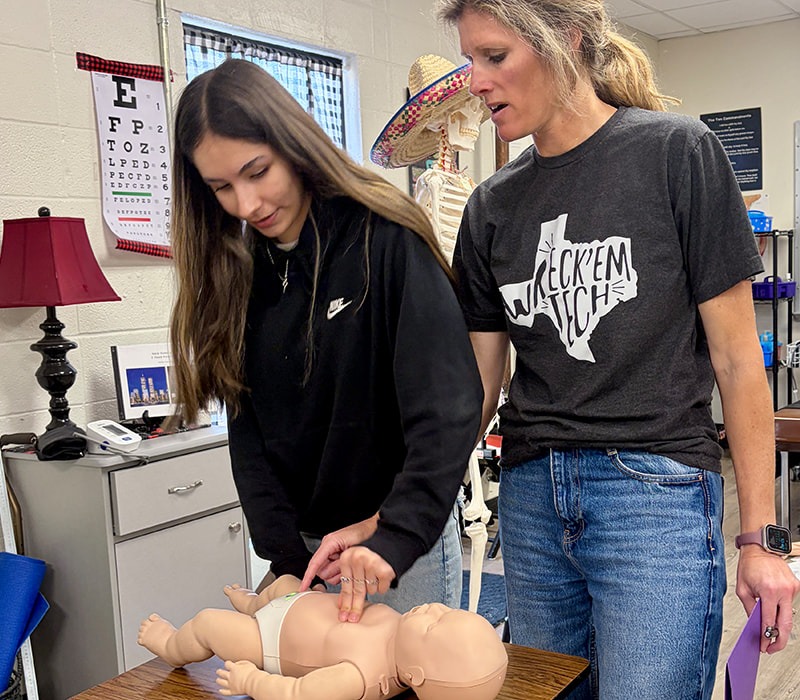
Ingram ISD became a reunification center and medical evacuation site during the crisis. Coaches, athletes, FFA students, and staff mobilized immediately, delivering meals, distributing supplies, and coordinating support across West Kerr County. The district hosted disaster relief operations, partnered with HEB for recovery support, and worked directly with the Community Foundation to secure emergency funding within days.
Despite the devastation, the district resumed operations quickly by repurposing existing portable facilities. “We worked with what we had,” Curran says. “We had to.”
While flood recovery has introduced new capital planning challenges—particularly as floodplain maps shift and rebuilding requires new sites—the district continues moving forward. Most bond-funded projects were already completed before the disaster, including expansion of agricultural and welding facilities, a new construction technology space, athletic upgrades such as turf installation, and security enhancements.
Remaining bond projects now require recalibration in light of new environmental realities, particularly the planned high school gym construction and locker room upgrades.
Career Pathways That Lead to Credentials
If there is one defining feature of Ingram ISD’s transformation, it is its full-scale P-TECH model. Unlike selective P-TECH campuses, Ingram ISD operates a whole-school P-TECH approach—every student has access to advanced pathways. The philosophy is simple: eliminate barriers.
“We don’t want to create any additional obstacles for students who already face so many,” says High School Principal Brandie Guzman.
In a district where approximately 64% of students are economically disadvantaged, the emphasis on stackable credentials and associate degrees is intentional. Education is viewed as the pathway out of generational poverty.
The results are remarkable. Last year alone, graduating students earned 25 Associate of Arts degrees, 23 Associate of Science degrees, and eight Associate of Applied Science degrees in cybersecurity. Students also earned 12 Welding Level 1 certifications, six Cybersecurity Level 1 certifications, and 11 Phlebotomy certifications. With a graduating class of roughly 109 students, these outcomes represent an extraordinary credential attainment rate and a clear signal that the district’s strategy is working.
Health Sciences as a Regional Workforce Pipeline
Health science pathways are among the district’s strongest. Students can pursue associate degrees that keep their options broad while they explore medical careers, or follow more targeted tracks such as pre-nursing. For students seeking immediate employability, Ingram ISD offers certification routes that open doors quickly.
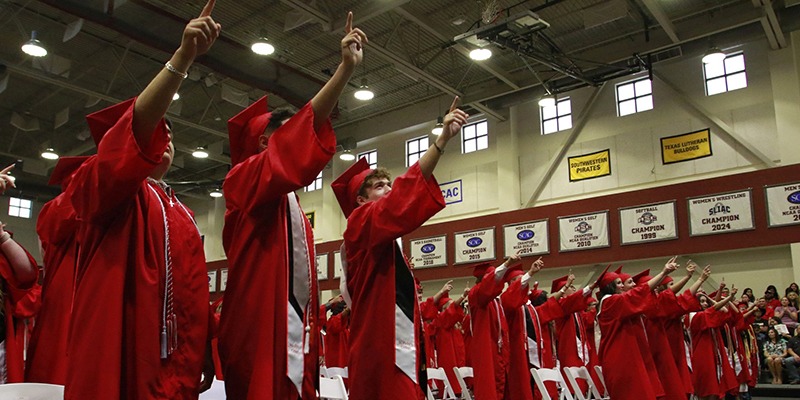
One of the most impactful elements of this pathway is how it aligns with local employer needs. A key healthcare partner shared that students graduating with both CNA and phlebotomy credentials would be highly sought after. In response, the district built these as stackable credentials rather than choosing one or the other, giving students a stronger launch point into healthcare careers.
The pre-nursing track provides another advantage. Students who complete the pathway can transition into a nursing program with momentum already built, and through partnership structures, the pathway supports faster completion of a BSN after graduation.
Welding, Construction, and Industry Partnerships
As Lisa Arledge, College and Career Advisor with the district, highlights, all the career paths offered by the school district are yielding success for their students, and the district is busy adding more career paths to their offerings.
Among the multitude of career pathways students can choose from, Arledge gives a nod to the district’s popular welding and construction programs, which remain central to Ingram ISD’s career readiness strategy.
“Some of our rock-solid pathways include our welding and construction pathways,” she notes. “They are pathways that our kids are interested in, and they stay in the pathways, getting their level 1 certifications and going straight to work.”
Helping to grow the range of program offerings is the district’s strong adherence to and belief in the role industry partners and higher education partners play in career readiness and the ability to offer such robust career pathways.
“It is part of our mindset,” Curran offers. “We believe so much in these kids.”
Business, Agriculture, and Emerging Pathways
Ingram ISD’s pathways are broad by design. Students can pursue agriculture, construction technology, cybersecurity, accounting and finance, real estate, and entrepreneurship, among others. The district’s approach to adding new pathways is rooted in listening first. Community partners and local employers help inform what is needed, and the district builds backward from those real workforce demands.
Technology Integration and AI Readiness
Technology integration begins well before high school. At the middle school level, students operate within a one-to-one Chromebook environment, engage in research, and participate in programs like AVID that require career exploration and planning. Teachers use a suite of online learning tools to support instruction and help students strengthen skills in reading, math, and language development.
At the high school level, the district is also addressing the realities of AI. The message from leadership is balanced: AI is here and can be valuable, but it must be used responsibly. Teachers are using tools that provide immediate feedback on student writing, while also guiding students to evaluate accuracy, verify sources, and avoid outsourcing their thinking.
A Culture of “We Can If”
Perhaps the most defining feature of Ingram ISD is its mindset. Rather than shutting ideas down, the district operates from a “we can if” philosophy. Identify the barrier, then solve it. That mentality has allowed Ingram ISD to build an unusually strong network of postsecondary and industry partners, expand career pathways quickly, and convert opportunity into measurable credentials.
Looking Ahead
Over the next two years, Ingram ISD will remain focused on expanding dual credit and associate degree attainment, strengthening workforce pipelines, rebuilding critical facilities post-flood, and deepening the partnerships that make this model work.
But the long-term goal goes beyond numbers. “We want to see our graduates in good jobs,” Curran says. “We want to see generational poverty broken.”
Ingram ISD is not simply educating students. It is engineering a cultural shift—one credential, one partnership, and one resilient step at a time.

Footnote: At the time of the interview, the district was preparing for a leadership transition. Dr. Justin Turner officially began serving the district as superintendent on January 1, continuing the district’s focus on preparation, credentials, and post-graduation readiness.
Click The Cover To View Or Download The Brochure

AT A GLANCE
Who: Ingram Independent School District
What: A district committed to the community, career-readiness, academic success, and its valued students
Where: Ingram, Texas
Website: www.ingramisd.net
PREFERRED VENDORS/PARTNERS

HCTC: www.hctc.net
For 75 years, HCTC has kept Texas families connected. We’re the internet behind homework help, movie nights, video games, and birthday party videos that never stop. As a local cooperative, we work behind the scenes every day so kids can play, learn, and share without interruption.