Civic Pride and a Historic Past
Building a Stronger County Seat Through Planning and Partnership
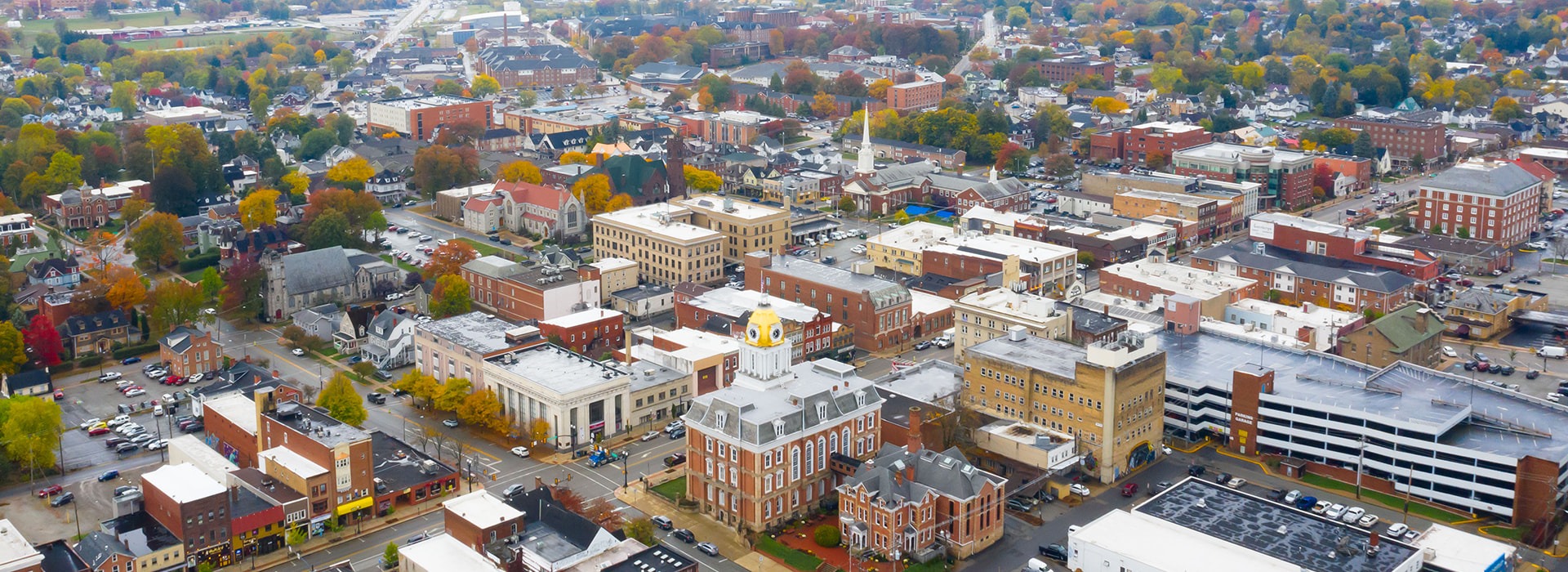
As the county seat of Indiana County and home to Indiana University of Pennsylvania, Indiana Borough plays a central role in the region’s civic, cultural, and economic life. The borough blends the energy of a university community with the familiarity of a close-knit town, where historic character, a strong small business presence, and a deep sense of civic pride continue to shape both its identity and its future.
“It’s a very vibrant, welcoming, and historic community,” says Charles Simelton, Mayor of Indiana Borough. “We have a strong sense of identity and pride. We have a diverse local business culture and a deep cultural heritage here. Being the home of Indiana University of Pennsylvania gives us a unique blend of small-town warmth and university-driven energy.”
Rather than chasing rapid expansion, Indiana Borough is pursuing steady progress rooted in planning and collaboration.
A Renewed Vision for the Downtown Core
Downtown Indiana Borough remains one of the community’s most important assets. The district serves as the borough’s economic and cultural hub while bringing together residents, students, and visitors.
The borough’s comprehensive plan, finalized in 2024, provides a clearer framework for guiding development and future investment.
“As we were developing the chapter for the downtown, what we did was go through the downtown and look at occupancy,” explains Trajan Jones, Planning Director. “We looked at which storefronts were occupied and which were vacant, and then we evaluated the diversity of businesses within the downtown core.”
The process gave borough leaders a stronger understanding of their existing commercial environment. “We’re at the point where we’re organized,” Jones adds. “We’re not simply reacting to new businesses that come in. We can be more forward-thinking about what businesses we want to attract and how we can shape the downtown experience.”
Supporting a Locally Driven Downtown
Indiana Borough’s downtown is shaped largely by independent businesses and long-standing local establishments. Rather than pursuing large-scale development, borough leaders are focused on creating an environment where locally owned businesses can continue to thrive.
To support that goal, the borough is updating its zoning ordinance to create greater flexibility for downtown uses and development standards.
“We’re certainly open for business,” Jones explains. “Through the zoning ordinance, we wanted to provide more flexibility for uses in the downtown core and for things like parking and signage that affect whether businesses can operate successfully.”
The borough’s size naturally limits large-scale expansion. “Our downtown is pretty much within that footprint,” says Nicole Sipos, Borough Manager. “There’s not much room to expand.”
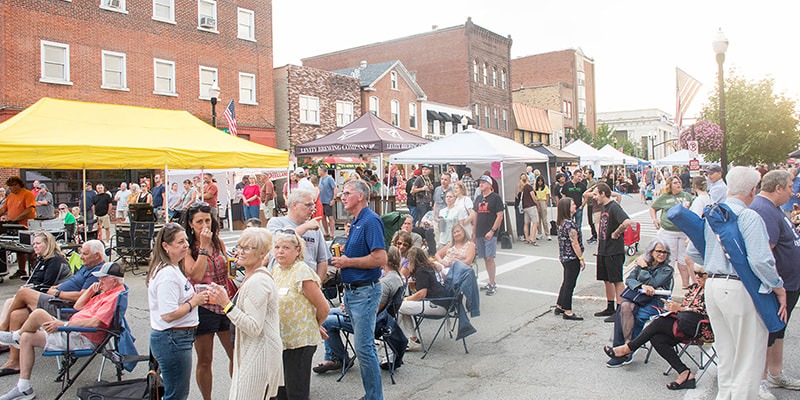
Yet that limitation has also helped preserve Indiana Borough’s distinctive character. Generational family businesses remain central to downtown life.
Sipos points to longstanding establishments such as The Coney and other locally owned restaurants that have served residents for decades.
“We have a beautiful main street filled with locally owned businesses,” says Jonathan Smith, President of the Indiana Borough Council. “That’s what we’re really leaning into as we plan for the future.”
Local institutions like Naps and Spaghetti Benders continue to anchor the downtown scene, while newer restaurants such as Lemoona House and Thai eateries reflect evolving tastes and a growing diversity of dining options.
Connecting Campus and Community
Indiana University of Pennsylvania has long shaped life in the borough, and local leaders see opportunities to deepen that relationship.
One major initiative supporting that goal is the Eighth Street corridor project, which aims to strengthen the physical and social connection between the university, downtown, and surrounding neighborhoods.
“There’s an interest between both IUP and Indiana Borough to strengthen those relationships,” Smith explains. “The Eight Street initiative creates opportunities to connect residents, students, and businesses.”
While infrastructure improvements remain a priority, the initiative also reflects a broader effort to expand partnerships and investment. The borough is working with organizations such as the Indiana Borough Foundation and the Community Foundation for the Alleghenies to identify additional funding sources for civic priorities.
Complementary Roles in a Shared Economy
Indiana Borough operates within a broader regional context that includes neighboring White Township. While the borough itself has limited development space, the surrounding township offers room for larger commercial projects.
The two municipalities often play complementary roles in shaping the local economy.
“I think that’s one of the things that makes Indiana unique,” Jones observes. “White Township tends to have more space for chain restaurants and big box stores, while the borough is better suited for smaller businesses and locally owned shops.”
Sipos notes that the relationship between the borough and the township remains cooperative, especially as new development opportunities arise in the region. Businesses that locate in surrounding areas still influence activity in downtown Indiana Borough, making regional coordination essential.
Upgrading the Foundations
Indiana Borough continues to invest in infrastructure that supports both daily life and long-term growth. Projects range from stormwater upgrades and road improvements to modernizing public buildings and improving parks.
“We’ve started upgrading stormwater systems and modernizing our public buildings,” Mayor Simelton explains. “These investments improve daily life and support economic growth.”
One of the borough’s largest upcoming projects involves upgrading the sewage treatment plant shared with White Township. The investment totals more than four million dollars and includes the installation of solar panels.
“We’re putting over four million dollars into our sewage plant upgrades,” Sipos says. “We’re also installing solar panels for the first time as part of preparing for the future.”
Addressing Evolving Housing Needs
Housing has become a growing priority for Indiana Borough as demographic patterns change.
“In the past, IUP had significantly higher student enrollment,” Jones explains. “As enrollment declined, we saw less demand for student housing.”
The result is a housing market that is still adjusting. Some properties once used primarily by students have not yet been repurposed.
“We’re not seeing as many families move into those units or renovate them,” Jones notes.
To better understand the borough’s housing capacity and future needs, officials plan to conduct a comprehensive housing study.
“We want to determine whether we need more single-family homes, multifamily housing, or housing for young professionals,” Jones says.
The issue also ties into broader economic development opportunities, including potential job growth associated with redevelopment at the Homer City site. If employment opportunities increase, housing demand may follow.
Seasonal Traditions
Community events remain an important part of Indiana Borough’s identity and social life.
“Events are definitely one of the heartbeat pieces of the borough,” Mayor Simelton says. “We host festivals, music events, and seasonal celebrations that bring people together.”
Among the most popular traditions is the It’s a Wonderful Life parade, which draws thousands of attendees each year and has become a highlight of the holiday season.
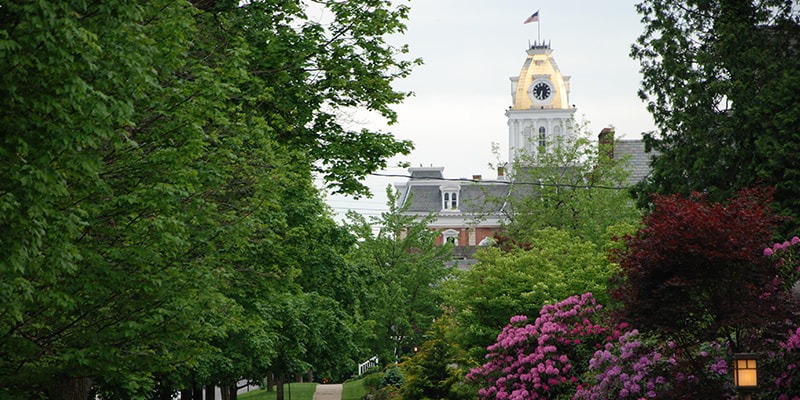
Mayor Simelton reflects that the event leaves a lasting impression on students who may be experiencing small-town traditions for the first time.
“Our police department does an excellent job managing these large events,” Mayor Simelton adds. “Their work ensures that everything runs smoothly and safely.”
Expanding Green Space
While Indiana County offers significant outdoor recreation opportunities, borough leaders recognize that green space within Indiana Borough itself is limited. “That’s one of the areas we know we can improve,” Jones says. “We don’t have as much park space within the borough as we would like.”
Efforts are already underway to address the issue. Plans for McGregor Park include a new playground, walking track, and upgraded facilities designed to make the space more accessible and enjoyable.
Smith emphasizes that these improvements reflect strong community interest. “Our residents made it clear that outdoor spaces matter,” Smith explains. “Investing in parks and green space is a priority.”
Sipos adds that maintaining trees and greenery across the borough remains important. The borough’s shade tree committee works with local staff to maintain existing trees and identify opportunities to add more green space.
Working with Regional Partners
Partnership and collaboration play an important role in Indiana Borough’s success. Leaders emphasize that working closely with regional partners allows the borough to expand its capacity and address challenges that might otherwise be difficult for a smaller municipality.
Smith points to public safety as one example. Indiana Borough works closely with neighboring municipalities, state police, and university partners to coordinate major events and ensure effective emergency response.
The borough is also a founding member of the Indiana County Municipal Emergency Services Authority, a countywide initiative that coordinates emergency services across 21 municipalities.
Jones explains that partnerships also strengthen community engagement. “In a smaller municipality, you don’t have a large staff,” Jones says. “Working with community partners allows us to reach more residents and gather more input.”
Turning Planning into Action
As Indiana Borough looks toward fiscal years 2026 and 2027, leaders remain focused on improving safety, strengthening infrastructure, and implementing the priorities outlined in the comprehensive plan.
One major initiative involves pedestrian improvements along Philadelphia Street, the borough’s main corridor. “We’re introducing a four-way stoplight phase so pedestrians can cross safely,” Mayor Simelton explains. “It will make our main street safer for everyone.”
Smith observes that the borough’s planning efforts have made it easier to respond quickly to challenges. Because walkability and safety were already identified as priorities in the comprehensive plan, leaders could move forward with improvements more efficiently.
Jones believes the borough is now better prepared for future opportunities. “We’ve done a lot of work internally to get our house in order,” Jones concludes. “We have plans and initiatives in place so we’re ready when opportunities come along.”
AT A GLANCE
Who: Indiana Borough, PA
What: A historic college town and county seat that blends university energy, strong civic pride, and a vibrant locally driven downtown within a close-knit Pennsylvania community.
Where: Located in western Pennsylvania, about 60 miles northeast of Pittsburgh.
Website: www.indianaboro.com
PREFERRED VENDORS/PARTNERS

Peoples Natural Gas: www.peoples-gas.com
Peoples provides safe, reliable natural gas service to approximately 700,000 homes and businesses throughout Western Pennsylvania and serves 41,000 customers in Kentucky through its sister utility, Delta Natural Gas. By providing essential, cost-effective energy while reducing emissions and investing in the communities it serves, Peoples shows its commitment to customers, employees, and the environment.

IRMC: www.irmc.org
Indiana Regional Medical Center has served Indiana County and surrounding communities since 1914. A nationally recognized employer, IRMC meets the needs of patients and staff alike. The organization remains committed to the region by continually reinvesting in facilities, technology, and its people to deliver the highest possible level of care.