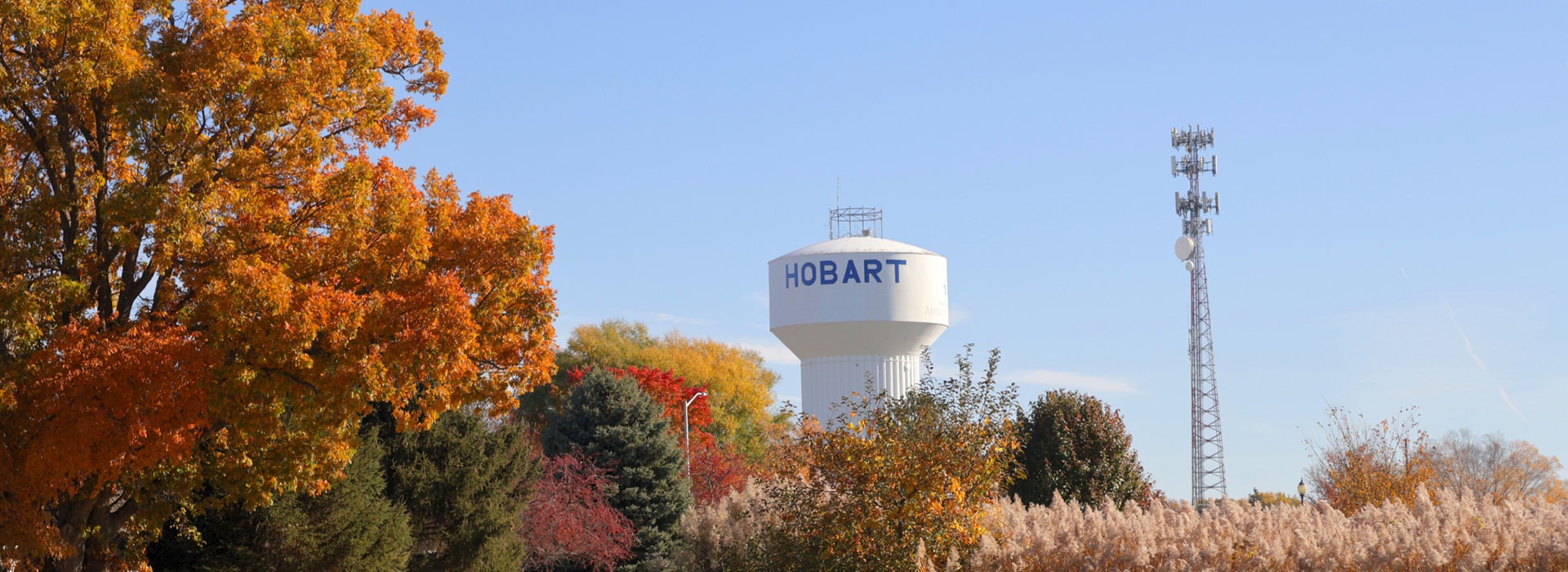
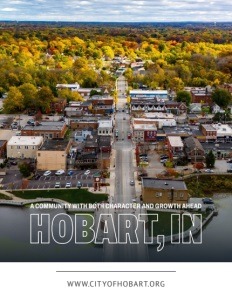
A Community with Both Character and Growth Ahead
A Small-Town Feel with Big-City Access, and a Growth Story Poised to Accelerate
In Northwest Indiana, the City of Hobart offers something that is becoming harder to find: a community that feels familiar, rooted, and personal—yet sits at the center of one of the most strategically connected regions in the Midwest.
Hobart covers roughly 26.5 square miles and is home to about 30,000 residents, but local leadership says the city still operates with a genuine small-town rhythm. You’ll find it in the everyday routines—neighbors who know each other, long-standing local gathering spots, and the kind of continuity where it is not uncommon to see fourth- and fifth-generation families who could leave, but choose to stay.
The result is a strong sense of pride and place, reinforced by a community culture that values tradition while still making room for progress.
That balance—maintaining a hometown feel while preparing for the future—is central to Hobart’s development strategy today.
A City Built Around Connectivity and Choice
Hobart’s location is one of its greatest competitive advantages. As local leadership often says, “Northwest Indiana is 20 minutes from everything,” and Hobart sits at a critical junction of major corridors, offering quick access to I-65, I-80/94, and the broader Chicago metro. This positions the city less than an hour from one of the largest economies in the world, while still benefiting from Indiana’s tax climate and cost profile.
That accessibility has allowed Hobart to pursue a deliberately diversified economic development model—one that does not rely on a single industry or one dominant employer. Instead, Hobart is shaped by three distinct corridors that each play a role in the city’s holistic identity: the Route 6 corridor, the downtown corridor, and the US 30 corridor, which serves as the city’s major retail spine.
The US 30 corridor is also home to one of Hobart’s most recognizable local success stories—Albanese Candy Factory. Known nationally and internationally for its gummies, the company has expanded steadily over time, and Hobart leadership points to a consistent theme: the city has grown with Albanese, supporting expansion as new lines and new investments came online.
Hobart’s industrial growth has also strengthened over the past two decades through its industrial park, which has attracted major employers and global names, including Daifuku, a Japanese Fortune 500 company. This area has become the city’s primary hub for larger industrial investment, while Hobart has worked to preserve the distinct character of downtown as a place for small businesses, local entrepreneurs, and community life.
Measurable workforce data also supports the city’s recent industrial success. Hobart holds a Location Quotient of 1.05 in key industrial occupations, meaning the community maintains approximately five percent more specialized industry talent than the national average.
Economic Drivers That Extend Beyond Industry
Hobart’s economic story isn’t limited to manufacturing and logistics. The city has also leaned into agritourism and outdoor recreation—two areas that contribute both to local quality of life and regional visitation.
County Line Orchard has grown from a small orchard into one of the region’s most significant agritourism draws, bringing in hundreds of thousands of visitors annually during peak season. Johnson’s Farm is another strong example, offering seasonal “pick-your-own” experiences that include strawberries, blueberries, and other family-friendly activities.
These businesses matter because they help Hobart compete in a different way. They create reasons to visit, not just reasons to work. And increasingly, cities that attract people—especially younger professionals and growing families—are the cities that maintain long-term economic momentum.
A Transformational Investment: Amazon’s Data Center Development
Hobart’s development trajectory took a dramatic leap forward with the announcement of an $11 billion Amazon data center development in the city’s industrial area. The city recently approved an economic enhancement package and development agreement tied to the project, establishing what Hobart leadership views as a once-in-a-generation catalyst.
Under the agreement, the city is set to receive substantial community enhancement payments in multiple phases aligned with project milestones—beginning with a significant upfront payment, followed by additional payments as construction progresses, buildings go vertical, and temporary occupancy is achieved. The scale of these payments is extraordinary in comparison to Hobart’s typical annual general fund operations.
For a city whose general fund budget has historically been in the range of $25 million, the ability to deploy tens of millions of dollars into quality-of-life projects, infrastructure, and strategic community investment changes the equation. Local leadership describes it as a moment that will help Hobart accelerate long-held plans, underwrite additional development opportunities, and provide long-term benefit to residents.
The project is also expected to support significant job creation, and it has already expanded the city’s workforce development conversations—both at the local school level and in collaboration with partners that understand data centers require specialized skills and long-term pipeline planning.
Workforce Development: The Pipeline is Becoming the Strategy
While Hobart maintains a hometown feel, it sits at the center of a significant regional workforce. Within a 30-minute labor shed, more than 169,000 skilled workers are available. For companies like Amazon or Daifuku, Hobart is not simply a city of 30,000 residents. It functions as a regional hub supported by a workforce with a higher-than-average concentration of specialized industrial and technical talent.
Hobart is not treating workforce development as a side conversation—it is increasingly becoming a core part of how the city positions itself for new industry.
Northwest Indiana has long benefited from strong, skilled trades infrastructure and union strength, particularly in construction. Hobart also highlights local education pathways that are building the next workforce. Hobart High School’s “Hobart University” model enables students to earn associate degrees across multiple areas, creating measurable savings for families while accelerating credential attainment for young adults.
The city sees this as more than a school success story—it is a business recruitment advantage. Employers are beginning to recognize they must be part of the solution, partnering in workforce training rather than simply expecting ready-made talent to appear. With Amazon’s arrival, the momentum behind these collaborations is expected to grow.
Housing Growth in Motion
Hobart is also seeing meaningful residential development, with roughly 500 new homes in various stages of planning and construction. A large subdivision of approximately 400 units is underway, alongside smaller 20- to 30-home developments that are being built by a range of national and specialized builders.
One of Hobart’s strengths is its broad housing mix. The city offers housing stock that ranges from small starter homes to larger family homes, creating a “melting pot” that supports affordability and accessibility across income levels.
Hobart leadership acknowledges the city does not typically compete at the ultra-luxury tier, but it competes very well where many communities struggle most: providing attainable housing within a community that still offers strong quality-of-life amenities.
Quality of Life: The Assets That Keep People Here
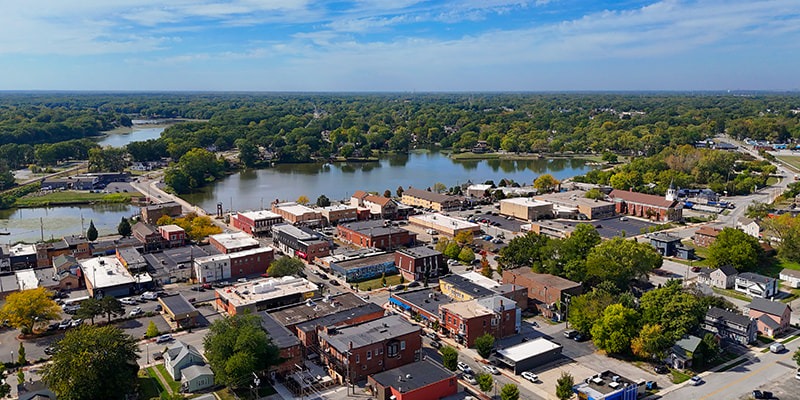
Hobart’s identity is tied to recreation and community gathering in a way that reinforces its small-town character. Festival Park hosts regular events, including a Thursday market in the summer. The lake—running through the heart of the city—supports kayaking, fishing, and everyday outdoor use, even though it is not structured as a high-speed boating destination.
The city also features more than 1,000 acres of protected space, providing trails, nature access, and environmental continuity that many growing cities lose as density increases. A bike trail runs through the community, and Hobart’s parks programming remains a unifying element for residents across neighborhoods.
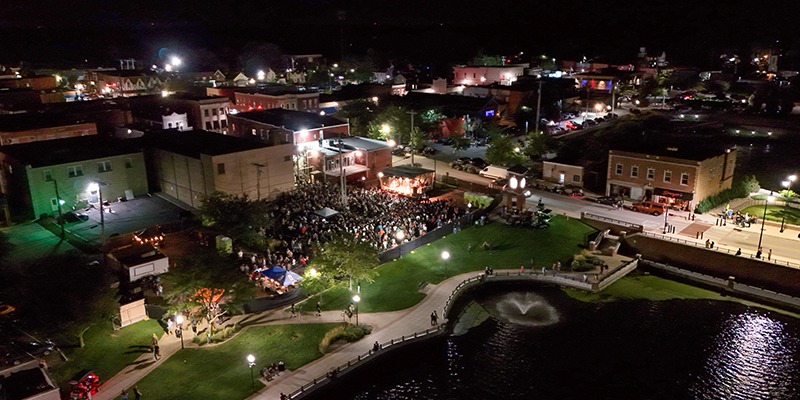
Downtown continues to function as a weekend anchor as well. The historic Hobart Art Theater has been transformed into a concert venue, regularly drawing crowds for live music and creating the kind of “third place” energy that supports local dining and small business vitality.
Reimagining the Retail Corridor: Southlake Mall and What Comes Next
Like many communities across North America, Hobart is also navigating the evolution of traditional retail. Southlake Mall remains a major footprint, but the city is working with partners to reimagine what that corridor becomes in the next era—particularly through the potential repurposing of outlots and adjacent space.
Hobart’s retail strategy is evolving beyond traditional shopping centers. With strong regional consumer expenditure and high daily traffic counts, the Southlake corridor is being reimagined as a destination. The city is leveraging regional spending power to encourage mixed-use development and greater commercial density.
The goal is not simply “more retail,” but a better mix of retail, entertainment, and destination experiences that give residents—and visitors—more reasons to spend time in the area. Hobart leadership sees this as part of a broader regional need: Northwest Indiana has done a strong job attracting industry, but to retain and attract people, communities must also offer things to do, places to gather, and experiences that make the region feel alive on evenings and weekends.
Managing Growth Without Losing Identity
With all of this momentum comes a challenge Hobart is candid about: growth must be balanced. Not every resident sees change the same way, and a city with deep generational roots will naturally feel the tension between preserving what has always been and welcoming what could be.
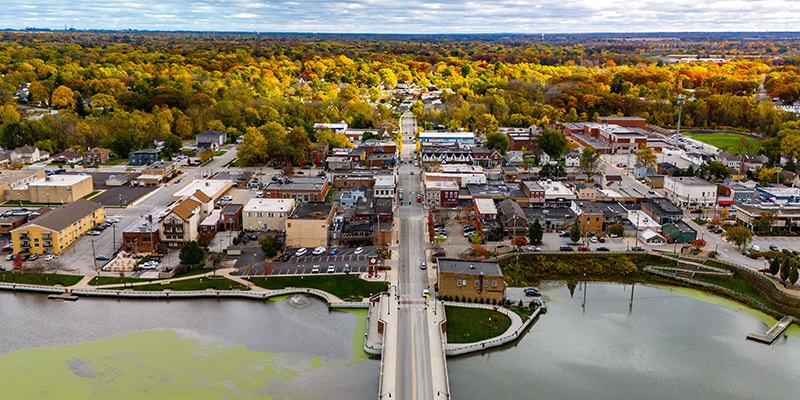
Hobart’s leadership sees the answer in thoughtful planning and measured investment—building infrastructure where it is needed, underwriting development that aligns with long-term goals, and ensuring that growth strengthens the community rather than diluting it.
A Message to Investors and Future Residents
Hobart’s pitch is increasingly clear: this is a city with access, affordability, and upside. It sits near Chicago and Lake Michigan, offers Indiana’s tax climate, maintains low crime and strong quality-of-life assets, and is entering a new era of economic enhancement driven by major private investment and strategic public reinvestment.
Hobart offers strong economic value. Median hourly earnings of $21.45 sit slightly above the national median, indicating a workforce that is both stable and fairly compensated while remaining cost-competitive for employers. Combined with strong transportation access and efficient operating costs, Hobart provides a highly attractive environment for business investment.
For those who have not taken a close look at Northwest Indiana—and specifically Hobart—local leadership believes the surprise comes quickly once you see what the city already has, and what it is now positioned to become.
Hobart has laid the foundation. With major projects underway and new resources coming online, the city believes it has not yet scratched the surface of its potential—and that the next chapter will be defined by smart growth, stronger workforce pipelines, and a community that continues to feel like home even as it grows.
Click The Cover To View Or Download The Brochure
AT A GLANCE
Who: Hobart, IN
What: A charming and charismatic municipality with a host of projects geared towards residents and housing/business growth
Where: Lake County, Indiana, USA
Website: www.cityofhobart.org
PREFERRED VENDORS/PARTNERS

American StructurePoint: www.structurepoint.com
With more than 750 in-house professionals across 11 disciplines, American Structurepoint’s award-winning team defines the standard of excellence for people who want help building and bettering their community. Headquartered in Indianapolis, Indiana, American Structurepoint has seasoned professionals working in 18 design centers throughout Indiana, Florida, Illinois, Kentucky, Ohio, Tennessee, and Texas to support clients nationwide.