Brokering the Right Solutions for Its Members
Where Relationships, Technology, and Responsible Standards Meet to Strengthen Modern Franchising
In a franchising landscape that continues to expand in both complexity and opportunity, the Franchise Brokers Association (FBA) is working to keep one thing clear: the best outcomes happen when people enter franchise ownership with alignment, education, and the right support system behind them.
Sabrina Wall, CEO of FBA, explains that FBA exists to connect three critical parties in the franchise ecosystem—franchise consultants, franchise systems, and prospective franchise owners—while supporting those relationships with training, technology, and standards designed for long-term success. It is not simply about matching people to brands. It is about guiding candidates through the reality of ownership, helping franchisors present their models clearly and responsibly, and creating a professional environment where the franchise model can continue to thrive.
At the center of that process is the Association’s FrankLink System (FLS), which Wall describes as the franchising equivalent of an MLS in real estate. Franchise systems input brand information, data, and positioning into the system so that consultants within the FBA network can evaluate, compare, and understand franchise opportunities at a deeper level. The consultants then work directly with franchise candidates—often individuals who want to go into business but do not yet have clarity on what that business should be—helping them define what they truly want out of ownership.
That guidance is increasingly important because most candidates begin with assumptions. They walk in thinking they want the franchise they already know as a customer. But once they learn what it means to operate that model as an owner—staffing requirements, operational complexity, financial realities, and the day-to-day structure—their perspective often changes. FBA’s consultants help candidates move beyond first impressions and toward informed decision-making, narrowing the field to brands that actually fit the candidate’s goals, lifestyle, and risk tolerance.
For Wall, the deeper value of franchising is not simply the systems and procedures. It is the network itself.
“When someone joins a franchise,” she explains, “they’re joining the franchise system staff, other owners, vendors, and an entire support ecosystem. Everyone is interconnected, and everyone is dependent on each other’s success.”
That interdependence—when it is built on fit and mutual expectations—is what creates predictability. And predictability is what makes franchise ownership uniquely attractive for entrepreneurs who want structure without isolation.
Supporting the People Who Support Franchise Growth
FBA’s membership includes both franchise consultants and franchise systems. That dual membership structure is intentional. Consultants need accurate, current, and transparent information about franchise opportunities to properly advise candidates. Franchise systems need professional representation in the marketplace, with consultants who understand how to educate, qualify, and guide candidates through a process that is ultimately a major investment decision.
The Association provides training for new franchise consultants, helping them develop the skills to guide candidates responsibly. That includes how to gather meaningful information, how to ask better questions, and how to avoid the common trap of letting the process remain at the level of assumptions or emotional preference. It also includes communication training—because franchising has its own vocabulary, and what makes sense to a franchisor can feel like a foreign language to a first-time buyer.
Wall notes that many franchisors unintentionally speak in “franchise terms,” using acronyms and internal language that candidates do not understand. The result is confusion, misinterpretation, and missed opportunities for real clarity. Consultants help bridge that gap by coaching candidates on how to ask the right questions and by giving franchisors feedback on where their messaging is unclear or overly insider-focused.
Just as importantly, FBA works with franchisors to provide marketplace insight that they may not be able to see for themselves. Sometimes, the way a brand thinks it is being perceived is not how it is actually being perceived. FBA provides feedback, response data, and behavioral insights—what candidates are clicking, where they are engaging, what questions repeatedly arise—so systems can address blind spots early rather than discovering them later, after a misalignment has already become a franchisee issue.
In Wall’s view, transparency is a form of respect for everyone involved. It helps candidates make better decisions, and it helps franchisors improve how they present their model and support their owners.
Technology That Accelerates the Process Without Losing the Human Element
Technology is one of the Association’s defining priorities. With AI rapidly reshaping how people search, evaluate, and decide, FBA is focused on integrating tools that improve efficiency while preserving what Sabrina believes is franchising’s greatest advantage: relationships.
FBA’s goal is not to automate away the human layer. Rather, it is to use technology to enhance clarity, reduce friction in the process, and allow consultants and franchisors to spend more time doing what matters most—building trust, exploring fit, and aligning expectations.
Wall points to what she sees as the best examples of AI integration in franchising today: systems using AI to solve real operational pain points for franchisees. Hiring is one of the most persistent challenges across service-based franchise models, and certain franchise platforms are now using AI to source, screen, and vet potential employees through structured layers of evaluation. That helps franchise owners enter interviews better prepared, reduce time spent on poor-fit candidates, and improve retention outcomes.
Marketing is another area where AI is changing the equation. Franchise systems are increasingly using AI to craft and test messaging, manage social media, track engagement, and tighten performance across local markets. When executed well, these tools improve consistency while allowing owners and support teams to focus on execution rather than constant reinvention.
At the Association level, FBA is paying close attention to how technology changes the candidate experience as well—especially as candidates begin researching brands through AI tools and online reputation signals before ever speaking to a human. Wall notes that this reality raises standards for franchisors. A brand’s online footprint is no longer a passive presence; it is a dynamic filter that candidates use immediately, often before they understand the full business model. That makes operational excellence, transparency, and reputation management even more important than it was five years ago.

Legislative Engagement and the Push for Responsible Regulation
As franchising continues to grow, regulatory attention is also increasing. FBA is actively engaged in legislative and regulatory discussions, particularly around the franchise broker model and lead provider activity.
Wall explains that regulators are seeking clearer visibility into who is promoting and offering franchises within their state, who is participating across the chain of influence in the buying process, and how transparency should be handled when there are bad actors in the space. The underlying intent is consumer protection—ensuring candidates have the information necessary to make informed decisions and that problematic patterns are surfaced, not hidden.
FBA’s role in that environment is to provide a complete picture of how the ecosystem works, ensuring policymakers are not receiving one-sided or incomplete narratives. Sabrina emphasizes that good legislation cannot be written in a vacuum. It requires understanding the roles of franchisors, consultants, lead providers, candidates, and support systems—and how each touches the process.
By engaging early, FBA aims to help shape regulation that makes sense, protects candidates, and supports a healthy franchise marketplace without unintentionally damaging the professional consultant model that serves as a critical guidance layer for many would-be owners.
Events That Create Depth, Not Just Networking
While technology and legislative work are major focus areas, the Association continues to view events as one of the most powerful tools for long-term franchise success.
FBA hosts a national event each year, along with regional events throughout the calendar, bringing together franchise systems and consultants in environments designed to build real understanding—not surface-level networking. These events often include brand immersion experiences: touring headquarters, meeting leadership teams, connecting with franchisees, and seeing the operational reality behind the brochure.
Wall notes that these moments matter because the nuances matter. How a brand communicates internally, how it treats people, how it handles operations under pressure—those are not always visible in a marketing deck. But they are exactly the things that determine whether a franchisee will thrive once the relationship begins.
When consultants understand those nuances, they can do a better job placing the right candidates into the right systems. And when franchisors and consultants build trust over time, the candidates who enter through that channel often become some of the strongest performers in the system—because fit was evaluated carefully, not assumed.
The Challenges and Opportunities Ahead
Looking forward, Wall believes the franchise industry is entering an era where standards will continue to rise.
Regulation is increasing, and transparency expectations are accelerating. Candidates now research brands through AI tools and digital signals immediately, meaning franchise systems must be deliberate about performance, reputation, and communication. At the same time, AI is creating new opportunities for franchises to improve operations—especially in hiring and marketing—reducing friction and allowing owners and support teams to focus on growth and leadership rather than constant administrative strain.
Ultimately, Wall sees a long-term shift toward what she values most: the human layer.
As AI takes over more of the logistical and repetitive work, what will matter most is how franchise systems treat people, how strong their communities are, how well owners support each other, and how effectively the ecosystem helps franchisees develop as business owners and leaders.
Priorities for 2026 and Beyond
As FBA looks ahead through 2026 and into early 2027, its priorities are clear and interconnected. The Association is focused on advancing technology in ways that improve the process without weakening relationships, expanding and strengthening events that create deeper brand understanding, continuing legislative engagement to support responsible regulation, and reinforcing the long-term relationship model that makes franchising uniquely powerful.
For the Franchise Brokers Association, franchising is not simply a business format. It is an ecosystem—one that works best when alignment comes first, expectations are clear, support is real, and people are guided into ownership with the kind of preparation that turns an investment decision into a long-term success story.
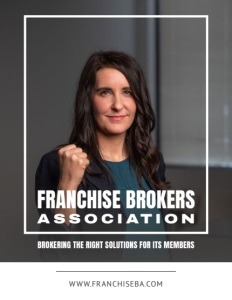
Click The Cover To View Or Download The Brochure
AT A GLANCE
Who: Franchise Brokers Association
What: The organization that supports, educates, provides networking opportunities, and helps its members within the franchising business framework
Where: Florida, USA
Website: www.franchiseba.com