A Holistic View of Student Success
Growing Explorers, Achievers, and Future Ready Graduates
In Essexville-Hampton Public Schools, the strength of education begins with the strength of the community. With generations of families invested in local schools, district leaders are focused on building learning environments that balance student wellness, forward-thinking innovation, and meaningful preparation for the future.
Guided by Purpose, Grounded in Values
Mission-driven leadership plays a fundamental role in how Essexville-Hampton Public Schools approaches education and planning. Davion Lewis, Superintendent, says, “The mission of our district is to create a collaborative environment that encourages all of our learners to reach their full, unique potential.” Lewis explains that while the statement itself is concise, it drives everything from classroom expectations to leadership decisions.
Lewis says the district’s identity is closely tied to its Duke values, which include perseverance, kindness, integrity, and respect. These values are intentionally modeled by staff, so students see them reflected in everyday interactions. “We try to model for our students what we expect of them,” Lewis explains, noting that the values are embedded in the district’s culture rather than treated as separate initiatives.
Prioritizing Mental Health Across the District
Supporting mental health and social-emotional well-being has become a critical focus for districts everywhere, and Essexville-Hampton has developed a layered approach that adapts to different age levels.
Kristen Hahl, Principal of Bush Elementary School, says, “Looking at our youngest learners, we have an on-site school social worker.” Hahl adds that the district partners with its Intermediate School District to provide additional counselling services that support both students and families. She also mentions partnerships with a local university that bring soon-to-be social workers into the school environment to expand student support.
Lewis explains that wellness is monitored through routine student surveys, giving students opportunities to share how they are feeling and request additional help when needed. “It’s an opportunity for students to identify how they’re doing and whether they would like follow-up conversations with counselors or social workers,” Lewis says.
The district’s PBIS framework and multi-tiered systems of support enable staff to tailor interventions to student needs. Lewis explains that supports vary by developmental stage, ensuring that younger and older learners receive age-appropriate assistance.
Student voice is also built into the process. Lewis says the Duke Student Ambassador Program allows students to meet directly with district leadership and discuss issues that matter most to them. “In our last session, the topic that the students selected was mental health,” Lewis recalls, adding that counselors and healthcare partners were invited to participate in those discussions.
Proactive Support at the High School Level
At the high school level, leadership emphasizes consistent relationship building as a foundation for student success.
Brian Campbell, Principal of Garber High School, explains that weekly behavioral health team meetings help staff identify students who may be struggling academically, socially, or emotionally. “We talk about some of the heavy hitters, some of the kids who are struggling for several reasons,” Campbell says. These meetings allow staff to create coordinated action plans and ensure students receive timely interventions.
Campbell says a key strategy involves maintaining positive interactions between staff and students. “Every adult in the building strives for at least a four-to-one ratio, four positive interactions to corrected ones,” Campbell explains. He notes that staff are encouraged to be visible in hallways and engage with students regularly, creating a welcoming and supportive culture.
Teacher Recruitment and Retention
Teacher shortages remain a challenge across North America, but Essexville-Hampton leaders believe culture and mentorship play a key role in retention.
Paul Sansburn, President of the School Board of Education, brings a unique perspective as a retired teacher and current educator in a university teacher preparation program. Sansburn recalls working with future teachers as they navigate the early stages of their careers. “I work one-on-one with all the aspects that you just talked about,” Sansburn says, explaining that many educators develop confidence and resilience through strong mentorship.
Several teachers he has mentored now work within the district, helping to strengthen recruitment pipelines. Sansburn emphasizes that morale is essential to retention. “Positive morale, anything you can do to bring some positive morale to the staff goes a long way,” he says, noting that modern approaches to staff support require creativity and intentional effort.
Technology as a Tool for Deeper Learning
Technology is embedded throughout the district, but leaders emphasize thoughtful use rather than constant use.
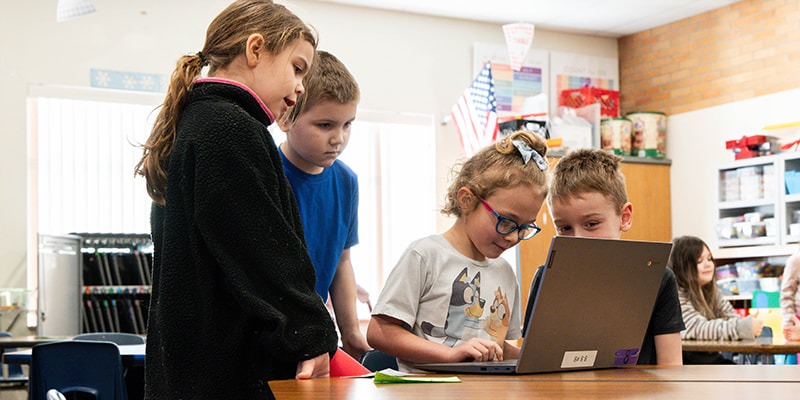
Campbell explains that students receive Chromebooks and regularly submit assignments digitally. “It was novel at one point to be a one-to-one school where every kid had a Chromebook,” Campbell says. Today, technology is integral to daily learning.
However, Campbell stresses that technology is not treated as a solution to every problem. “The emphasis is really on cognitive engagement,” he explains. When technology supports deeper thinking, it is used; when students need to step away from screens and work with paper and pencil, teachers make that shift.
Artificial intelligence has also become part of classroom conversations. Campbell says staff openly discuss AI with students rather than attempting to ban it. “AI is not going away,” Campbell explains. “We try to teach kids how to use that technology to further their thinking rather than using it as a crutch.”
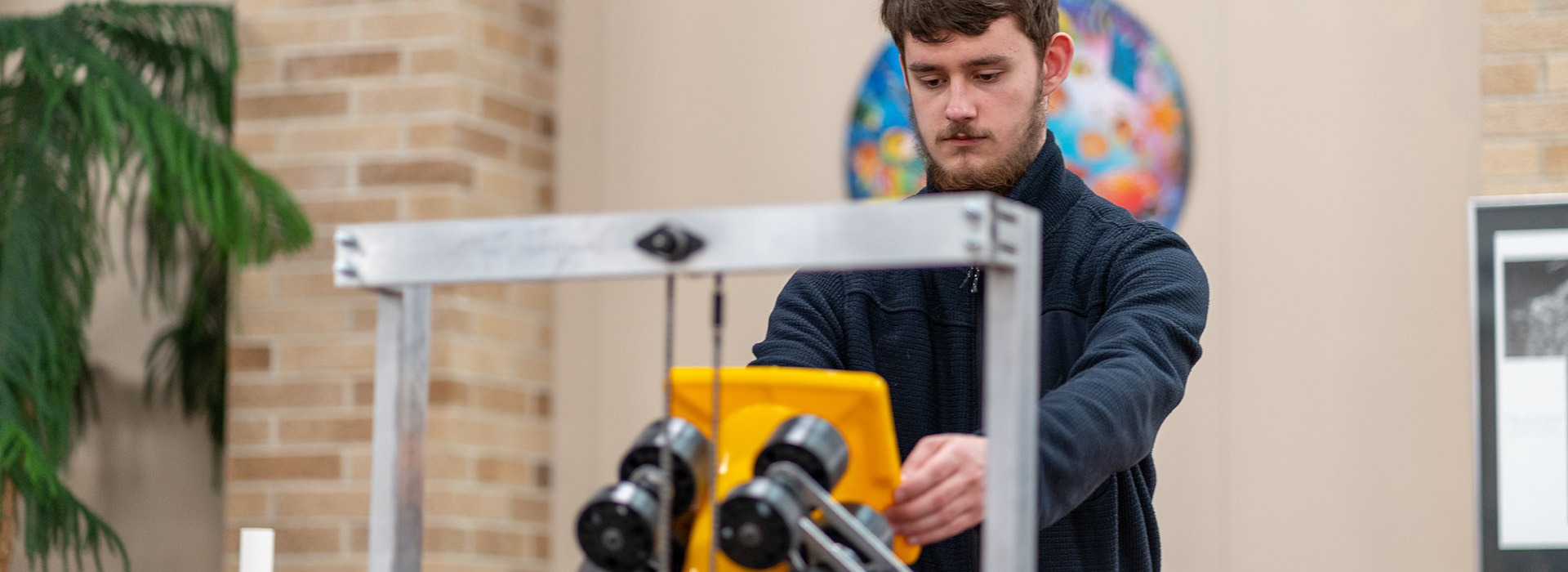
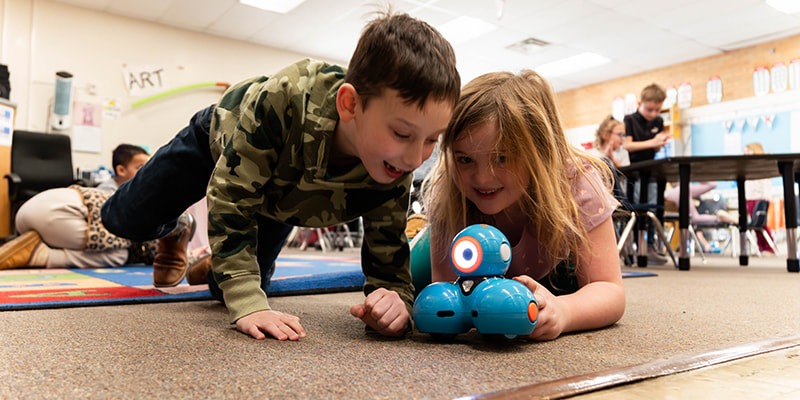
The district’s robotics program is another highlight. Campbell says, “We have a world-class robotics program,” noting that students frequently qualify for world championships. The program’s success reflects long-term leadership and strong community support.
Lewis adds that students also serve in leadership roles, including as chief science officers and on district STEM initiatives. Partnerships with Central Michigan University have introduced virtual reality learning experiences, enabling students to explore anatomy. Lewis explains that these experiences combine innovative tools with real-time collaboration between university professors and classroom teachers.
Investing in Safety and Facilities
District leaders acknowledge that fiscal pressures are real, but investments in safety and infrastructure remain essential.
Sansburn highlights safety and security as a major focus, while Lewis explains that updates include improved doors, security cameras, and alarm systems. These upgrades aim to create safe learning environments while supporting daily operations.
One of the district’s most ambitious projects is the planned Center for Innovation and Community Education. Lewis says the project was made possible by a $1 million state grant tied to the robotics program. “That will be a kind of innovation center open to the community,” Lewis explains, adding that the space will include maker areas and technology-focused learning opportunities.
The district is also preparing to seek voter approval for a bond initiative to support additional capital improvements. Lewis says elementary schools are currently at capacity, and early childhood education remains a growing need. Expansion plans may include additions to existing buildings or the construction of new facilities to better serve families.
Working towards the goal of an even safer and healthier environment for its students, the district values its partnership with Trane, a leading air conditioning, heating, and ventilation contractor. Trane is committed to providing innovative and sustainable solutions for classrooms, leading to productive educational environments. Essexville- Hampton Public Schools benefit from the work that Trane undertakes, and look forward to further collaboration as capital outlay needs arise.
Defining the Portrait of a Graduate
The district’s Portrait of a Graduate framework reflects extensive community input and long-term planning.
Campbell explains that the process involved gathering feedback from staff, students, and community members to identify what the district wants its diploma to represent. “What do we want for our students? What do we want our diploma to mean?” Campbell recalls asking during the process.
The initiative began at the high school level and is now guiding broader district planning. Leaders say the next phase involves aligning learning expectations across grade levels so that students are prepared at every stage of their educational journey.
Connecting Classrooms to Careers
Preparing students for future careers is a top priority, and the district has developed strong pathways that align education with regional workforce needs.
Campbell explains that the Early Middle College program allows students to earn both a high school diploma and an associate’s degree. “Students graduate high school in five years and earn an associate’s degree,” Campbell says, noting partnerships with Delta College and Davenport University. Programs include technology, IT, and skilled trades options.
Career pathways evolve alongside local economic needs. Campbell explains that programs at the regional career center are shaped by workforce demand. “We’re meeting needs that exist and recognizing when those needs change,” he says.
Lewis adds that community partnerships are central to this work. The district maintains strong relationships with the Chamber of Commerce, hospitals, universities, and local businesses. “Community is really at the core of this district,” Lewis says, pointing out that many civic leaders and business partners are parents or graduates themselves.
Expanding Opportunities for Future Learners
As Essexville-Hampton Public Schools looks ahead, leadership is focused on turning long-term vision into action. A key priority is completing the Center for Innovation and Community Education, which Lewis says will expand robotics, STEM programming, and community learning opportunities. “The goal is to have at least the exterior fully constructed by August,” Lewis explains.
The district is also preparing to seek voter approval for capital improvements to strengthen facilities, enhance safety, and expand early childhood programming to meet growing community needs. At the same time, leaders are continuing to implement the Portrait of a Graduate framework, aligning learning from elementary through high school to ensure students are prepared for future success.
Together, these efforts reflect a district grounded in community values while looking confidently toward the future. Lewis says the mission remains clear: “to create a collaborative environment that encourages all of our learners to reach their full, unique potential,” a vision that continues to guide the district’s growth and long-term planning.
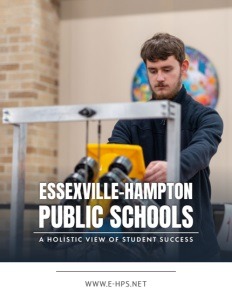
Click The Cover To View Or Download The Brochure
AT A GLANCE
Who: Essexville-Hampton Public Schools
What: A community-focused district committed to collaborative learning, student well-being, and preparing every learner for future success.
Where: Essexville, Michigan, in the Great Lakes Bay Region.
Website: www.e-hps.net
PREFERRED VENDORS/PARTNERS

Trane:
www.trane.com | www.tranetechnologies.com
Trane – by Trane Technologies (NYSE: TT), a global climate innovator – creates comfortable, energy efficient indoor environments through a broad portfolio of heating, ventilating and air conditioning systems and controls, building services, and renewable energy solutions.

Chartwells: www.chartwellsk12.com
Chartwells K12’s mission is to make sure students leave the cafeteria happier and healthier than when they came in by serving food kids love and creating custom dining programs. Through innovative cafeteria programs, dedicated teams, and operational expertise, Chartwells empowers students and schools alike to be their best.