Where Everybody Knows Their Neighbors
Uptown Momentum, Smart Growth, and a Community Focused on the Future
In the City of Elwood, the phrase “Heart of Hoosierland” is more than a geographic claim. For Mayor Todd Jones, it speaks to the character of a community where neighbors look after one another and local businesses are woven into daily life.
“People want to say it’s because of our location,” Jones says, “but I want to say it’s because of our great citizens and businesses that are so compassionate and caring to each other.”
That community-first spirit is now being matched with an ambitious development agenda focused on revitalizing the city’s core, expanding housing options, investing in infrastructure, and building long-term economic resilience.
Uptown Revitalization and a Clear Strategy
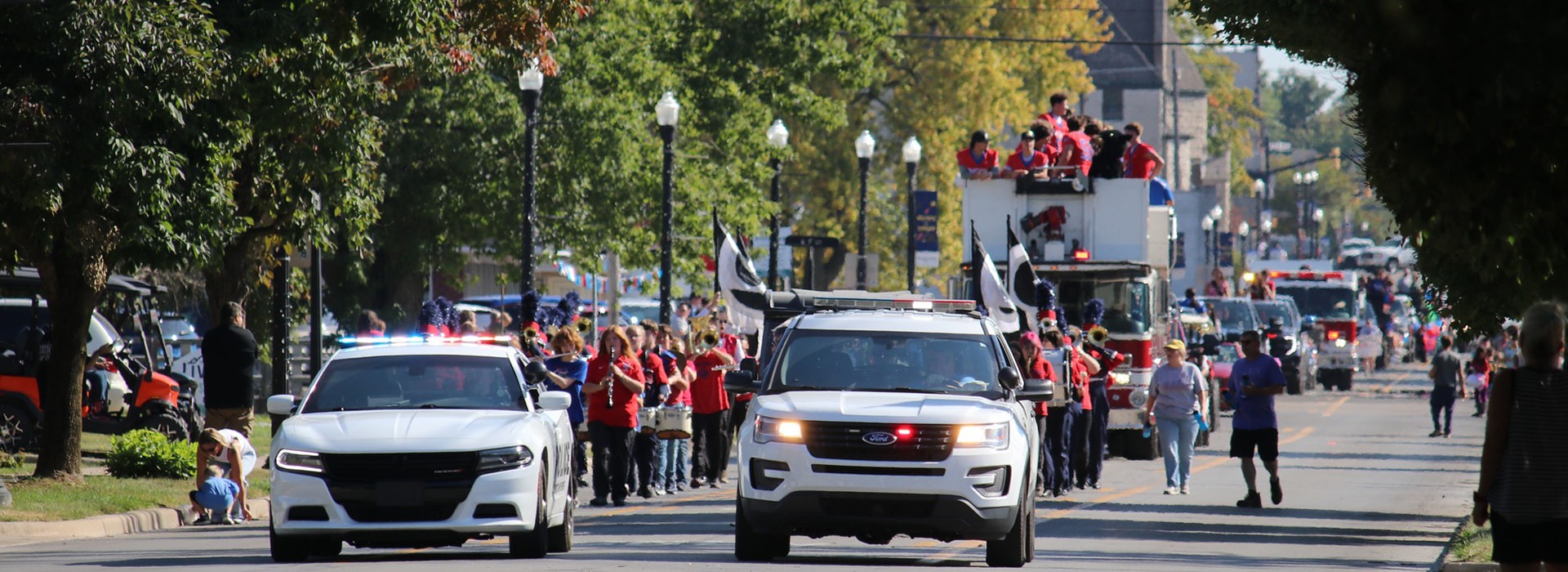
Elwood’s downtown is known locally as “Uptown,” and the name reflects the city’s current posture. As Mayor Jones puts it, Elwood is “always moving up.”
Over the past several years, the city has taken an aggressive approach to exterior revitalization, using food and beverage tax revenues to launch façade improvement programming that provides a 50/50 match for participating building and business owners. The goal has been to restore vibrancy through visible change—improving curb appeal, encouraging reinvestment, and creating an uptown environment that feels active, cared for, and worth visiting.
That same philosophy extends into housing, where Elwood has made a deliberate decision to create demand drivers within the Uptown district. Leaders believe that commerce follows people, and that if the city wants more businesses and activity uptown, it must first ensure residents are living close enough to support that ecosystem.
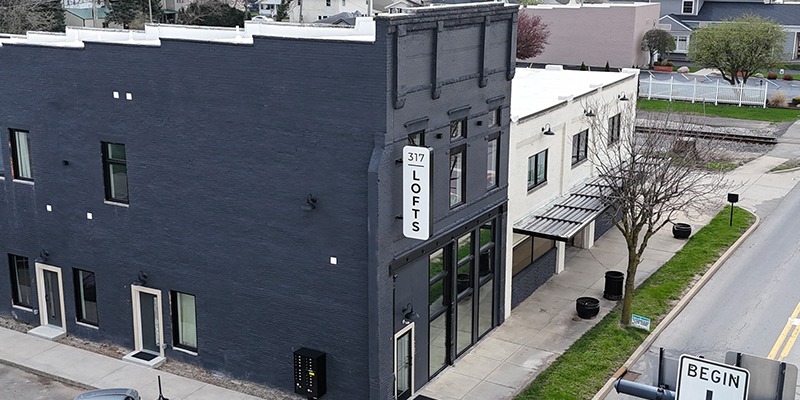
This thinking helped drive two major projects in the Uptown area: the redevelopment of a former newspaper publishing office into a multi-use, multi-family apartment building, and the development of a $10 million multi-family complex known as Tin Plate Square Apartments.
To complement the housing expansion, the city also introduced Veterans Park, a pocket park designed to honor local veterans and create an additional gathering space in the uptown core. In Elwood’s strategy, housing and quality-of-life amenities are designed to move together—helping create an uptown district that feels like a destination, not just a pass-through.
Golf Course Redevelopment and a New Residential Anchor
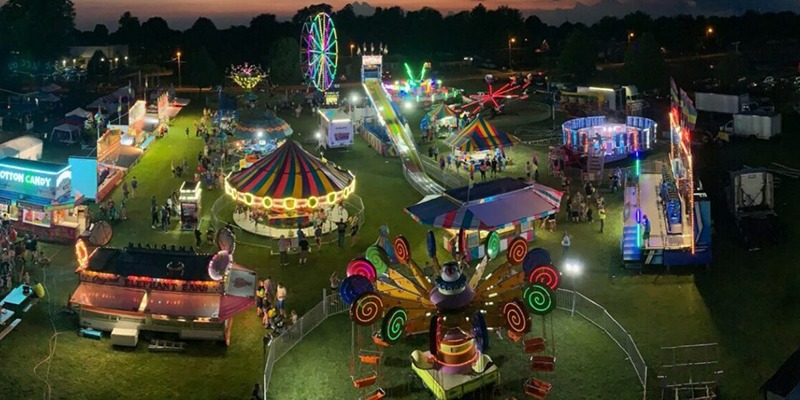
One of Elwood’s most transformative moves began early in Mayor Jones’ tenure. In 2016, the city purchased a previously closed golf course and reopened it as a municipally owned 18-hole facility. That decision became a catalyst for a much larger residential development.
The result was a $25 million housing project at the golf course site that includes a mix of multi-family housing, single-family homes, owner-occupied units, and senior living. Mayor Jones notes that Phase One is fully built out, and the developer has already begun discussing a potential Phase Two, supported by the demand and rapid absorption of the first phase.
Culture and Commerce: The Uptown Experience
Elwood’s revitalization effort is not only about buildings—it is about identity and activity.
One of the most significant cultural anchors in Uptown is the Historic Elwood Opera House, now owned by Duck Creek Center for the Arts LLC and operating as a historic performance venue that has become a strong draw from across Indiana.
Economic and Community Development Director Christy Clark highlights the impact of the Duck Creek Center for the Arts, a theater group that recently acquired the Opera House and expanded programming through live plays, musical performances, and a growing “academy” offering lessons in music, dance, sewing, and other life skills.
What makes the model especially notable is accessibility. Clark shared that programs can be offered at prices as low as $2 per week through sponsorship support—helping ensure arts engagement is not limited by household income.
The Opera House also serves as a flexible community venue, hosting weddings, reunions, and gatherings that bring additional visitation into Uptown.
Food and local dining are also part of Elwood’s growing identity. While not all of Elwood’s commercial development is concentrated downtown, local draws such as Tin Plate Restaurant and Irion’s Smokehouse are building a wider regional reputation—one for tenderloins, the other for smoked meats such as brisket, pork, chicken, and turkey.
Elwood’s approach to uptown also includes walkability. The city has focused on improving sidewalk conditions and connectivity in key corridors, addressing infrastructure challenges such as tree-root damage, while also developing a walking path known as the Panther Prowl. Built using repurposed pavement millings, the path connects areas such as Rock Garden and Callaway Park, extending walkability beyond Uptown into broader recreation corridors.
Infrastructure: Water, Fiber, and Roads
For Elwood, smart growth begins with capacity. Mayor Jones emphasizes that residential and commercial expansion must be paired with infrastructure investment that ensures the city can sustain growth without compromising service quality.
One key investment was the development of a new well, funded through ARP dollars, which increased water production capacity to support both current population growth and future development.
Connectivity has also been a major priority. Before 2025, Elwood did not have fiber availability. Through negotiation with a new fiber optic provider, the city secured fiber installation in rights-of-way at zero out-of-pocket expense to the municipality, making high-speed service available for both businesses and residents who choose to subscribe.
Road improvements are being advanced through Indiana’s Community Crossings grant program, which provides a 75% match to municipalities. Elwood sets aside $250,000 annually to secure its 25% match and has received grant funding that brings the total annual paving investment to approximately $1 million. This approach allows the city to keep pavement upgrades moving forward without overextending local budget capacity.
Mayor Jones notes that collaboration is essential. Growth cannot be managed in a vacuum. Strong relationships with county, state, and federal partners are often the difference between moving forward and “swimming in a circle.”
Business Growth and a Pro-Development Culture
Elwood describes itself as open for business, and city leadership emphasizes that reducing friction for developers and investors is part of the strategy.
Rather than relying heavily on tax abatements, Mayor Jones prefers using TIF-based tools through the Elwood Redevelopment Commission, including the use of TIF funding and TIF bonds to support growth.
The city also stresses speed and accessibility. Jones credits Building Commissioner Lisa Hobbs with helping streamline the permitting process and maintaining constant contact with developers and businesses as projects move through approvals. Clark supports the incentive and funding side of these projects, creating a coordinated approach that makes it easier for businesses to act.
This responsiveness is becoming part of Elwood’s reputation. Investors and contractors are increasingly describing the city as easy to work with—something that, in turn, drives more inbound interest.
Blight Elimination and Neighborhood Stabilization
One of the most visible elements of Elwood’s transformation has been its direct attack on blight.
Since 2016, the city has demolished more than 150 derelict properties. But in 2025, Elwood began shifting strategy in a way that is now producing significant long-term value. Hobbs identified that many homes being scheduled for demolition could instead be rehabilitated—and that investors were willing to do the work.
The results have been significant. Through property rehabilitation efforts, Elwood has generated more than $1.5 million in increased assessed value, while also keeping properties on the tax rolls and improving neighborhood stability.
Beyond the numbers, the cultural impact has been just as important. As Hobbs puts it, when “the worst house becomes the best-looking house,” neighboring homeowners begin reinvesting in their own properties. New roofs, fresh siding, updated paint—small improvements spread block by block, creating a visible shift in pride and perception.
Mayor Jones adds that many of these rehabilitations are substantial, often taken “down to the studs” and rebuilt to near-new condition. The goal is not simply to remove blight, but to create a housing environment that attracts residents, supports property values, and sustains long-term neighborhood confidence.
This work also aligns with migration patterns. As growth pressure from Hamilton County continues to move north, Elwood is increasingly attractive to those seeking a quieter pace, affordability, and a hometown environment.
Workforce Development as an Economic Advantage
Elwood’s development strategy also includes a clear workforce component, and Mayor Jones highlights the Hinds Career Center as one of the city’s strongest assets.
The center provides trade training and structured internships for students who may not pursue four-year university routes. It also benefits local employers directly. Internships allow students to understand what working conditions truly look like—whether that means welding in high heat or working in close quarters—before committing to a career path. Employers gain confidence in the reliability, attendance, and work ethic of prospective hires, reducing turnover and improving retention.
For Elwood, the result is a stronger pipeline of skilled workers who can graduate with employable credentials and remain in the community—building careers, supporting families, and contributing to local economic stability.
Looking Ahead
As Elwood moves into 2026 and the first half of 2027, Mayor Jones identifies several clear priorities. Development along the State Road 28 and State Road 37 corridor remains a major focus, including a letter of intent to purchase 25 acres for a new sports complex that could become a significant demand driver for future retail and commercial activity.
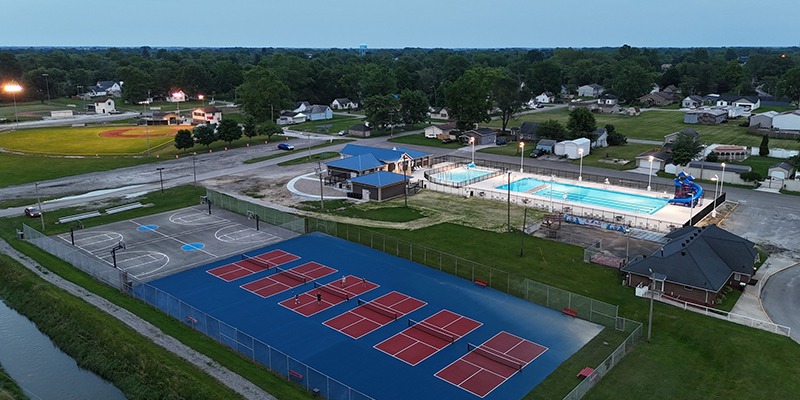
At the same time, Elwood intends to keep its hometown identity intact. The city’s approach to growth is built on visibility, accessibility, and local investment—where community leaders are also neighbors, familiar faces, and everyday residents.
Elwood’s recent progress reflects a community that understands what it wants to become and is willing to do the difficult work to get there. Through Uptown revitalization, housing growth, infrastructure investment, blight elimination, and workforce alignment, the city is proving that smart growth is not simply about expansion—it is about strengthening the heart of Hoosierland, one project at a time.
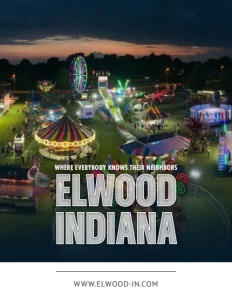
Click The Cover To View Or Download The Brochure
AT A GLANCE
Who: Elwood, IN
What: A hometown poised for business growth along key roadways and continues to provide top amenities for its residents through civic infrastructure projects.
Where: Madison County, Indiana
Website: www.elwood-in.com
PREFERRED VENDORS/PARTNERS
Red Gold: www.redgoldtomatoes.com
Red Gold partners with local family farms across Indiana, southern Michigan, and northwest Ohio to sustainably produce premium quality canned tomatoes, ketchup, sauces, salsas, and juices for foodservice, private brands, brands, export, co-pack, club and retail channels of distribution. The Red Gold family of consumer brands includes Red Gold, Redpack, Tuttorosso, Sacramento, Migliore, Mama Selita’s, Teresa, and Vine Ripe.