
A Charming Town Rooted in Family
Growing with Purpose, Grounded in Community
In Cornwall, Prince Edward Island, growth is not being pursued at the expense of character. Instead, this vibrant and steadily expanding community is working to ensure that each new investment, each new development, and each new initiative strengthens the qualities that residents already value most: connection, accessibility, livability, and a genuine sense of belonging.
Located just outside Charlottetown, Cornwall occupies a unique position in the province. It offers residents close access to employment, services, and regional amenities, while maintaining the warmth and pace of a smaller town. That balance is a large part of what continues to attract families, businesses, and newcomers to the community.
For Mayor Minerva McCourt, the defining feature of Cornwall is simple.
“First and foremost, what really defines Cornwall is the strong sense of community and the pride residents take in where they live,” she says. “Town Council, both past and present, has remained focused on planning for the needs of current and future residents as the Town continues to grow.”
One of the defining strengths of Cornwall is its sense of community, the Mayor highlights. While growth, infrastructure, and housing are all important, it is ultimately the people of Cornwall who make the Town what it is. The strong involvement of residents through community events, recreation, volunteerism, and local initiatives is a big part of what makes Cornwall such a welcoming and vibrant place to live and work. Cornwall’s growth has been significant, but the town has worked hard to preserve the close-knit community feel that residents value and appreciate.
Also, key to Cornwall’s success has been its commitment to proactive, long-term planning. Rather than simply reacting to growth pressures as they arise, Council and staff have been very intentional in planning for the future. Whether through investments in water and wastewater infrastructure, active transportation and transit improvements, housing-related services, or long-range land use planning such as the Main Street vision, our focus is on ensuring Cornwall continues to grow in a sustainable and well-managed way.
That commitment is visible in the town’s programming, partnerships, and public spaces. Cornwall’s leadership has worked to build a community that serves residents across generations, with events and initiatives designed to include seniors, youth, families, and newcomers alike. Community luncheons, seasonal celebrations, school support initiatives, and civic events all play a role in making Cornwall feel both welcoming and engaged.
The support of the local business community has also been instrumental. Mayor McCourt notes that businesses are strong partners in community events, often contributing food, materials, and resources to help make town programming successful. That kind of cooperation reinforces the close-knit, collaborative spirit that residents identify as one of Cornwall’s greatest strengths.
It is also one of the reasons the town continues to grow.
Again and again, Mayor McCourt says she hears the same message from people who have chosen to make Cornwall home: they love the people, and they appreciate the services the town provides. That feedback speaks to a broader truth about Cornwall’s appeal. It is not simply a place with room to expand. It is a place where growth is being guided by a clear understanding of what residents value.
Among the town’s most visible and appreciated assets is its active transportation trail network. Cornwall has made trails a central part of community life, and not only as a recreational amenity. The system is designed to be accessible and inclusive, supporting walking, wheeling, and cycling for residents of all ages and abilities. The trails connect neighborhoods, services, public facilities, and gathering places in ways that strengthen the town’s overall cohesion.
“Our people love our trails,” Mayor McCourt says. “They are easily accessible for wheelchairs, for walkers, for people with kids.”
Geoff Baker, Manager of Engineering and Capital Projects, sees the trail system as one of the key elements that sets Cornwall apart. Residents can move across the community on an active transportation network that largely operates independently from the road system, creating safer and more enjoyable connections between neighborhoods and destinations. For a town of Cornwall’s size, that infrastructure represents a major quality-of-life advantage and a significant long-term investment in livability.
It is also an important part of Cornwall’s evolving vision for its Main Street corridor.
What is now Main Street was once the Trans-Canada Highway, before the provincial government realigned the route around the town. That change created an opportunity for Cornwall to rethink the role of one of its central corridors. Instead of functioning primarily as a throughway, Main Street could become something more connected, more accessible, and more community-focused.
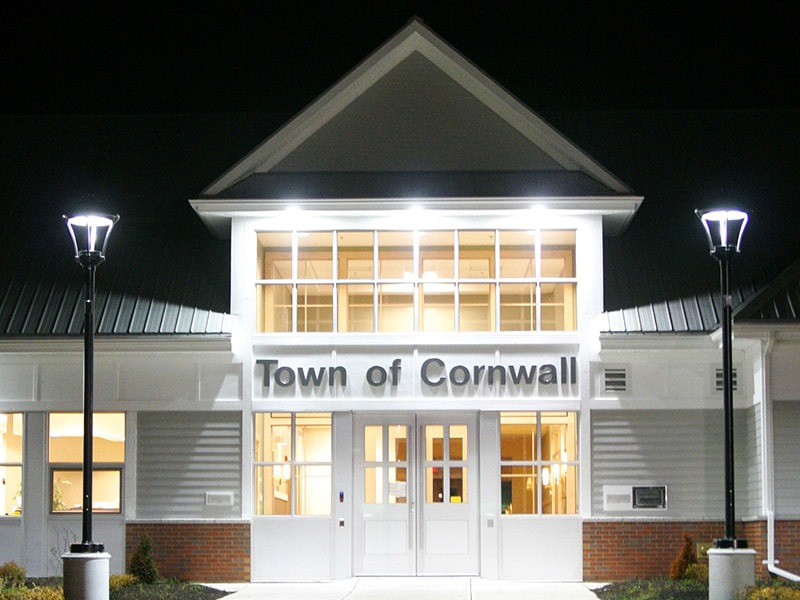
The town has begun working toward that vision through a long-term revitalization strategy centered on walkability, mixed-use development, stronger neighborhood connections, and a more vibrant public realm. The active transportation trail now runs alongside Main Street and links directly to key civic spaces, including Town Hall, which has become an increasingly important hub for public events and community activity.
“We’ve changed our hubs a little bit in our activity,” Mayor McCourt explains. “We still use a civic center, but we’ve changed to the Town Hall for many of our events, just to capture the essence that the town’s growing, that things are happening in the town.”
The shift is subtle but meaningful. By centering more events at Town Hall, directly adjacent to the trail and highly visible from Main Street, Cornwall is reinforcing a sense of place and drawing more attention to the energy of the community. This is the early stage of a broader plan, but the direction is clear.
Baker describes the Main Street initiative as a longer-term effort aimed at improving safety and accessibility while creating a more mixed-use, pedestrian-friendly environment. The ultimate goal is to establish a vibrant corridor that becomes the true heart of the community over time.
That same careful planning is shaping Cornwall’s response to one of the most pressing issues facing communities across Canada: housing.
Like municipalities across the country, Cornwall is grappling with both housing availability and affordability. Town leadership is well aware that continued growth will depend on the ability to provide a broader range of housing options while maintaining the quality and character residents expect.
Mayor McCourt says the town has recently facilitated an affordable social housing development in the North River area and continues to work with developers on additional projects that support affordability. The town is open to a range of housing forms and recognizes the importance of creating a supply that meets a variety of needs.
“We do know that there is a need for housing, so we’re very conscious of that as we promote and build our town,” she says.
Baker notes that housing has become one of the town’s major priorities. Cornwall has already seen significant residential growth in recent years, and its role now is to make sure that growth can continue sustainably. That means ensuring the infrastructure is in place to support new development, from water and wastewater systems to active transportation connections and recreation amenities.
The town is also undertaking a major review of its official plan and development control bylaw, with the goal of encouraging a broader mix of housing types, including higher-density and multi-unit developments. The intention is to increase availability while preserving the small-town feel that continues to draw residents to Cornwall in the first place.
That balance is especially important to Baker, who moved to Cornwall with his family and quickly came to understand the town’s distinctive appeal.
“It has a unique character,” he says. “It’s a small community. It’s a tight-knit community where most everybody knows each other, but you still have full access to jobs and services in the area because of our proximity to Charlottetown.”
That proximity is a major strength, but Cornwall is not content to rely on location alone. The town has been making substantial investments in infrastructure so it can support future growth on its own terms.
From Baker’s perspective, infrastructure is the foundation for nearly everything Cornwall hopes to achieve next. Over the past several years, the community has invested significantly in identifying a new water source, installing a new water tower to increase storage capacity, and advancing a wastewater treatment strategy that can support a growing population. These are not small undertakings for a municipality of Cornwall’s size, but they are essential ones.
The purpose is clear: to ensure that residential, commercial, and employment-related growth can proceed without avoidable constraints.
While Prince Edward Island is not typically associated with large-scale industrial activity, Cornwall sees real opportunity in commercial expansion and business growth. Baker says the town’s role in that process is largely about creating the enabling conditions for success. Infrastructure, competitive tax rates, and proximity to Charlottetown all position Cornwall well for future commercial development, and discussions with developers suggest that interest is beginning to build.
At the same time, the town remains mindful of maintaining a community experience that feels distinctly local. Cornwall may not be a primary tourism destination in the same way as some other places on the Island, but it plays an important supporting role thanks to its central location and quality-of-life offerings.
For Mayor McCourt, one of the clearest examples of Cornwall’s draw is the Terry Fox Sports Centre. Featuring turf and grass fields, surrounding trails, and proximity to a school and playground, the facility has become a major hub for athletic activity and tournament play. From April through November, the area is consistently busy with sports events that bring visitors into the community.
“We’ve often been told this is a golden spot,” she says.
The trails themselves are also a point of pride and a draw for visitors. Whether residents are enjoying them daily or guests are encountering them for the first time, they have become one of Cornwall’s signature amenities. Mayor McCourt recalls hearing praise even from international visitors, including some who were struck by how accessible and well-integrated the system is.
If Cornwall’s tourism appeal is rooted less in headline attractions and more in the overall quality of the community experience, that is exactly how the town seems to like it. This is a place where events, recreation, and civic life work together to create an environment that feels active, caring, and authentic.
That spirit comes through strongly in Cornwall’s calendar of community events. The town has developed a growing roster of popular gatherings that bring residents together throughout the year while reinforcing the sense that Cornwall is both forward-looking and deeply grounded.
The Santa Claus Parade, only a few years old, has already become a standout annual event, drawing families and crowds along the route in increasing numbers. The town also hosts a weekly seniors’ lunch, with meals prepared in partnership with a local restaurant and delivered when needed to those unable to attend in person. Snow Fest, Corn Fest, and the newer Dandelion Festival all add to the mix, while a veterans’ meal organized with community partners provides a meaningful tribute to those who have served.
These events are more than programming. They are expressions of the town’s values and evidence of the close working relationship between council, residents, businesses, and local organizations.
Looking ahead, Cornwall’s leadership is clear about what matters most. Mayor McCourt points to commercial growth as a top priority, while emphasizing that the town must not lose what it already has.
“We don’t want to lose what we have, but we certainly need commercial growth,” she says.
Baker frames the future in similarly practical terms. For him, the town’s leading priorities are growth management and infrastructure investment. Cornwall must continue preparing for increased demand while preserving the quality of life that has made it such an attractive place to live.
That means staying ahead of growth, not simply reacting to it. It means investing in water, wastewater, trails, public services, and planning frameworks that can support a larger population without eroding the town’s identity. It means encouraging more housing and more commercial activity while protecting the accessibility, connectedness, and community spirit that define Cornwall today.
In many ways, Cornwall is an example of what thoughtful small-town growth can look like. It is not chasing expansion for its own sake. It is building deliberately, with a clear sense of who it is and what its residents want the future to feel like.
That future is taking shape through every trail extension, every infrastructure investment, every housing discussion, and every community event that brings people together. In Cornwall, growth is not just about numbers. It is about making sure that as the town moves forward, it remains a place where people feel supported, connected, and proud to call home.
AT A GLANCE
Who: Cornwall, Prince Edward Island
What: A beautiful and family-friendly town that is growing while preserving its historical maritime island charm
Where: Prince Edward Island, Canada
Website: www.cornwallpe.ca
PREFERRED VENDORS/PARTNERS

Cassidy Group:
www.coachatlantic.ca • www.maritimebus.ca • www.t3transit.ca
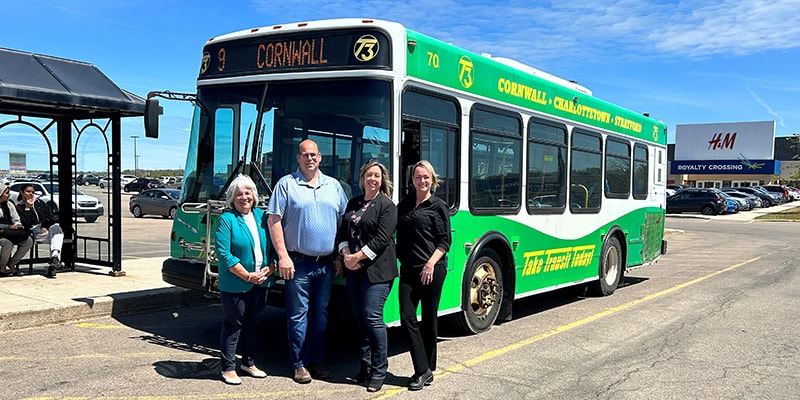
Family-owned Cassidy Transportation Group connects Atlantic Canada through Coach Atlantic, Maritime Bus, and T3 Transit. Operating 250 vehicles with 500 employees, it delivers charters, scheduled interprovincial routes, and PEI rural and urban community transit. Since 2005, the company has expanded diverse services, prioritizing reliable, purpose-driven mobility for residents, visitors, and regional communities.

Landmark Group PEI: www.landmarkgrouppei.com
Landmark Construction is a locally owned company located in Clyde River, PEI that excels in earthwork, offering comprehensive site services like backfilling, excavating, and grading. Equipped with GPS-enabled machinery and a skilled team, they ensure precision and efficiency. Whether it’s foundation digging or road construction, Landmark provides the expertise and technology to deliver a balanced site tailored to future needs.