Building Atlantic Canada
A Legacy of People, Place, and Purpose
There is a particular kind of optimism that takes root in Atlantic Canada. It is not the brash confidence of Bay Street or the gold-rush swagger of the West. It is quieter, more patient, and deeply tied to the land, the sea, and the people who have worked both for generations. It is an optimism built over time. One that grows through community, resilience, and a belief that the region’s best days are still ahead.
Across Atlantic Canada, that belief is becoming more visible. It can be seen in the steady rise of tourism, the evolution of agriculture, the expansion of real estate, and the growing recognition of the region’s natural and economic resources.
For Mike Cassidy, CEO of the Cassidy Group, that optimism has shaped more than four decades of work across Prince Edward Island and the broader Atlantic region. It is a journey that includes his wife, Mary Jane and three of their four children … Matthew, Stephen and Ryan continuing what has become a true family enterprise driven by an entrepreneurial spirit and an extended family of senior management and employees.
“My goal is to use our companies to show the immense future we have in Atlantic Canada,” Cassidy says. “It is not about the Cassidys. It is about the people and resources of the region.”
Tourism That Connects Communities
To understand the growth of Atlantic Canada, you must understand tourism. Not just as an industry, but as a network that connects people, places, and economies across the region.
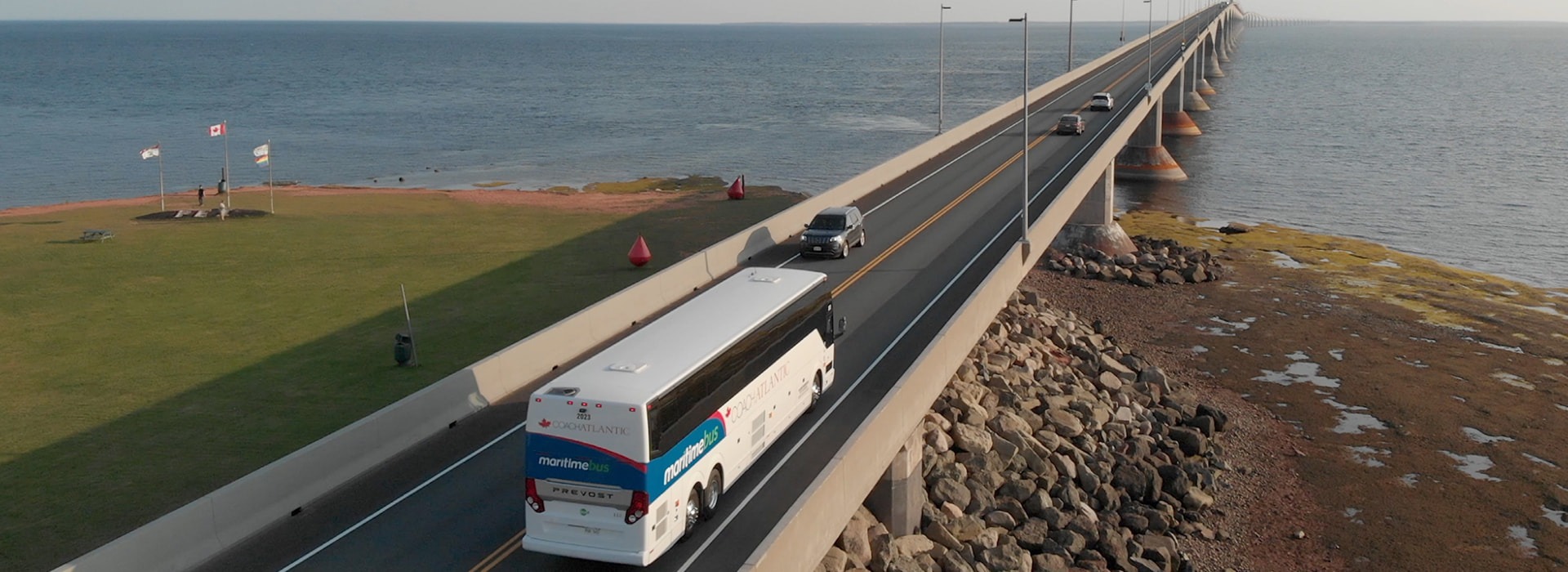
At the center of that network is transportation. Through its ownership of Coach Atlantic Maritime Bus, and T3 Transit the Cassidy Group has built one of the region’s most integrated passenger transportation operations consisting of 250 vehicles and 700 employees providing group charters, ship to shore excursions, multi day tours, school contracts, daily scheduled line run services and PEI municipal/rural bus routes.
Each year, visitors arrive in Maritime Harbour Ports on cruise ships or at Regional Airports beginning journeys across Nova Scotia, Prince Edward Island, New Brunswick, and Newfoundland and Labrador. Many of these trips span seven, ten, or even fourteen days, offering a full immersion in the region’s landscapes and culture.
“When people see a motor coach, they see a bus,” Cassidy says. “What they do not always see is everything behind it. We are connecting people to experiences, and those experiences support hotels, restaurants, attractions, and communities across the region.”
This movement of visitors is not incidental. It is a critical economic driver, supporting local businesses, sustaining employment, and creating opportunities in communities that rely on seasonal and experiential industries.
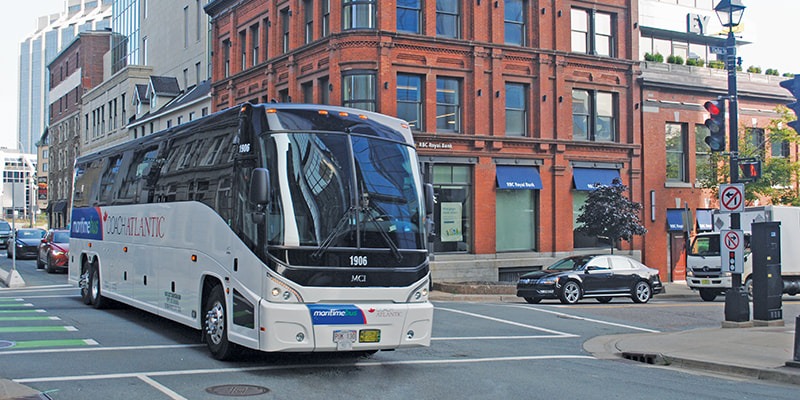
Recently, that ecosystem has expanded further. Through Coach Atlantic, the acquisition of Ambassatours Cruise Ship to Shore Tour Excursions, a cruise-related tourism operation has strengthened major cruise line connections between international visitors and Atlantic Canadian destinations, reinforcing the region’s ability to deliver coordinated travel experiences.
At the same time, long-term investment in transportation capacity reflects confidence in the sector’s future. A major fleet expansion included the purchase of 100 motor coaches from Prevost, a Canadian manufacturer, marking the 2024 Prevost legacy 100th anniversary of manufacturing motor coaches. “It is important to recognize companies that have built something meaningful over time,” Cassidy says. “There is a lot of history and strength in that.”
A Seat for Everyone
While tourism often operates at scale, its impact is often felt in deeply personal ways.
One of the most meaningful examples begins with a student named Jacob O’Brien in Moncton. When his Grade 8 class began planning their end-of-year trip, one thing was clear. They were not willing to go without him. Jacob, who lives with a condition that limits his mobility, had never been able to travel with his classmates on a long-distance trip.
When the situation reached Coach Atlantic, the response was immediate. A new wheelchair-accessible motor coach was introduced, allowing Jacob to travel alongside his peers on the ten-hour journey to Quebec City.
“My son said, ‘We have to make this happen,’” Cassidy recalls. “And we did. Because at the end of the day, this is about making sure everyone has the chance to be part of the journey.” It is a reminder that tourism is not only about movement. It is about access, inclusion, and shared experience.
Expanding Agricultural Opportunities
Atlantic Canada is often defined by its natural beauty, but its economic strength lies in the diversity of its resources and industries. Each province contributes something distinct, creating a region that is both varied and complementary.
“We have so much to offer here,” Cassidy says. “The key is understanding those resources and how we grow them.”
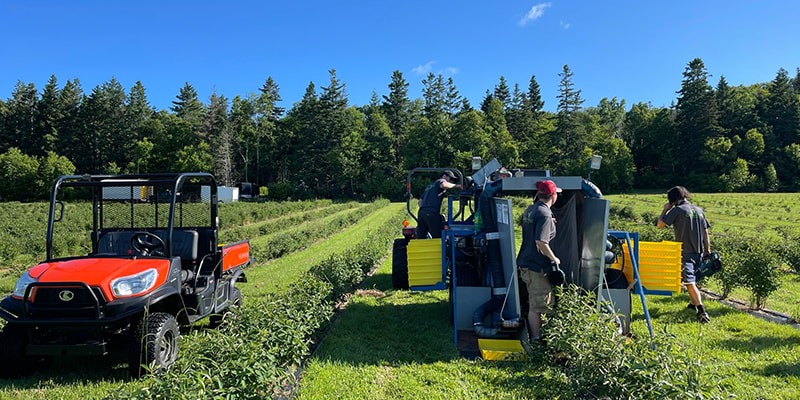
That belief is reflected in how the Cassidy Group invests across the region. On Prince Edward Island, this includes a growing focus on agriculture, where the company is building on the province’s strong farming foundation while exploring new opportunities.
One example is the cultivation and commercialization of haskap berries at Cassidy Farms, a fruit known for its high antioxidant content and increasing demand as a health product. Originally developed in other parts of the world and later in Western Canada, the berry is now gaining traction in Atlantic Canada.
Supported by more than 280 acres of farmland, along with lavender and Vankampens greenhouse operations, the initiative reflects a broader approach. It is a small but meaningful example of how regional strengths can be expanded into new opportunities.
Building for a GrowingRegion
Growth in Atlantic Canada is no longer a future concept. It is happening now and changing the way communities are built.
In recent years, the region has seen steady population growth, driven by both interprovincial migration and newcomers from abroad. With that growth comes both pressure and opportunity. Cities that once expanded slowly are now being asked to think differently about housing, infrastructure, and how people want to live.
In Charlottetown, that shift is already taking shape through projects led by the Cassidy Group. Two major real estate developments, with a combined value approaching $ 600 million, are currently in the planning stages with all stakeholders. One of these projects centers on a 57-acre mixed-use development, designed to bring together commercial, light industrial, and residential spaces within a single, connected community.
At one end of the property, a business park is being developed to support economic activity and job creation. At the other end, plans are in place for a medium-density residential community that accommodates a growing population while preserving the city’s character.
A second project takes a different approach. While downtown Charlottetown has long been a vibrant place to live and work, the uptown area has traditionally been defined by retail and commercial space, with limited residential presence.
“We want to create spaces where people can live closer to where they work and shop,” Cassidy says. “There is real demand for that kind of community.” The City is calling this Uptown Place, Charlottetown’s newest community.
Together, these Cassidy Group developments signal more than expansion. They reflect a shift in thinking toward communities that are more connected, more accessible, and better aligned with how people live today.
Driving Strategic Alignment
Recognizing opportunity is only part of the equation. Turning that opportunity into long-term success requires coordination and a clear path forward.
For Cassidy, that work extends beyond the Cassidy Group and into the broader future of the region. As a member of the Atlantic Economic Panel, he is part of a collaborative effort bringing together leaders from business, academia, and government to help shape Atlantic Canada’s next chapter.

Consultations across all four provinces have reinforced a clear message. The region has strong fundamentals, but unlocking its full potential will depend on alignment around a few critical priorities.
Energy remains a central issue, particularly in terms of reliability and affordability. Workforce development is equally important as industries expand and demand new skills, while immigration continues to play a key role in supporting that growth.
“We need to think strategically about how we bring people into the region,” Cassidy explains. “It is about supporting the growth we are trying to achieve.”
That perspective has been reinforced through consultations across the region, where there is a growing alignment around both the opportunities ahead and the steps required to move forward.
For Cassidy, the focus is clear. “It is not just about identifying opportunities,” he says. “It is about creating an execution plan and making sure we follow through.”
Success Beyond the Bottom Line
After more than 40 years of building businesses in Atlantic Canada, success is not defined solely by financial outcomes. It is defined by impact.
“When we look back, it was not always easy,” Cassidy says. “There were challenges, risks, and uncertainty. You have to persevere and believe in what you are doing.”
It is a journey he has shared with his wife, Mary Jane, from the very beginning, balancing the demands of building a business with raising a family. “Mary Jane has always had one rule,” Cassidy says. “When the family is at the dinner table, business stays off the agenda.” It is a simple boundary, but one that reflects what matters most.
“There is a responsibility to make your community and your region better,” Cassidy adds. “That is where the real gratification comes from.”
A Future Taking Shape
For those who have not yet experienced Atlantic Canada, the appeal is immediate. From the cliffs of Gros Morne, Newfoundland and Labrador to the Nova Scotia Cabot Trail, along the shores of Prince Edward Island to the New Brunswick Bay of Fundy, the region offers landscapes that are both striking and deeply rooted in history.
But what defines Atlantic Canada goes beyond scenery. It is the people, the industries, and the growing belief that something meaningful is taking shape.
“There is no other place I would rather have built a business,” Cassidy says. “This region has given us everything.”
AT A GLANCE
Who: Cassidy Group
What: A diversified Atlantic Canadian company with interests in transportation, tourism, agriculture, and real estate development, focused on supporting regional growth.
Where: Atlantic Canada
Website: www.coachatlantic.ca
• www.maritimebus.com
• www.T3transit.ca
• www.Vankampens.ca
PREFERRED VENDORS/PARTNERS

Cassidy Group:
coachatlantic.ca • maritimebus.ca • t3transit.ca
Family-owned Cassidy Transportation Group connects Atlantic Canada through Coach Atlantic, Maritime Bus, and T3 Transit. Operating 250 vehicles with 500 employees, it delivers charters, scheduled interprovincial routes, and PEI rural and urban community transit. Since 2005, the company has expanded diverse services, prioritizing reliable, purpose-driven mobility for residents, visitors, and regional communities.