Sailing to Success
Connection, Sustainability, and Global Impact
From its earliest origins, the Port of Hueneme has been a place of connection. The story begins with the Chumash people, who used the area as a gathering point and staging ground for trade for thousands of years. In the early 20th century, Richard Bard, son of Senator Thomas Bard, delivered on the vision of a deep-water harbor in Ventura County, leading its development through private investment despite initial federal skepticism. CEO and Port Director Kristin Decas relays,
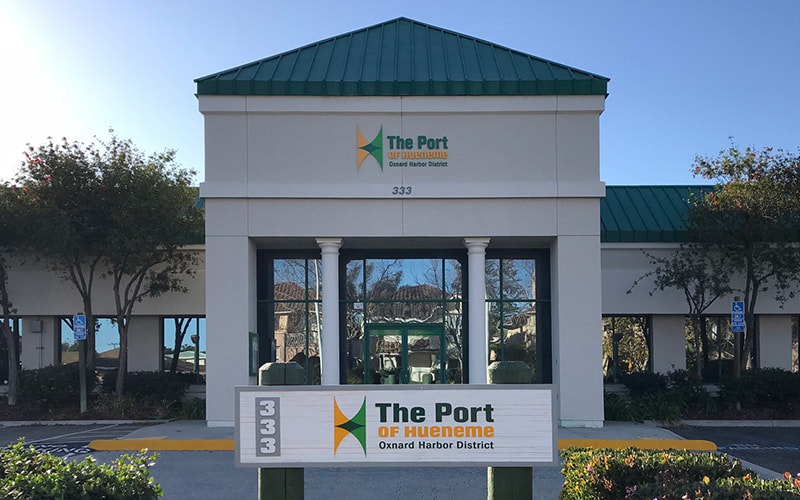
“We were established in 1937 as a special district of the state of California. That means we operate as our own local government—officially known as the Oxnard Harbor District—which includes the cities of Oxnard and Port Hueneme.”
In World War II, the port was used to transport cargo that supported the military effort. In the years following, Hueneme became a shared harbor with Naval Base Ventura County. Decas highlights a collaborative approach that has benefited both entities. “Through joint-use agreements, the Navy allows the Port to use its infrastructure when it’s not used for military needs. And instead of paying in rent, we pay in infrastructure development.”
That same partnership for shared Navy space extends to private tenant Glovis, which processes Hyundai and Kia vehicles on site. “Between the port and Glovis, we’ve brought about $90 million in funding to the Navy for infrastructure projects over the last decade,” Decas notes. “It’s a highly beneficial public-public-private win.”
The original hopes of the Bard family have guided Hueneme through decades of change. “They really wanted to enrich the community to create prosperity and access to jobs,” says Decas. “And that continues to be our mission, to create good-paying jobs and bring prosperity to our community through the commerce that occurs here at the port.”
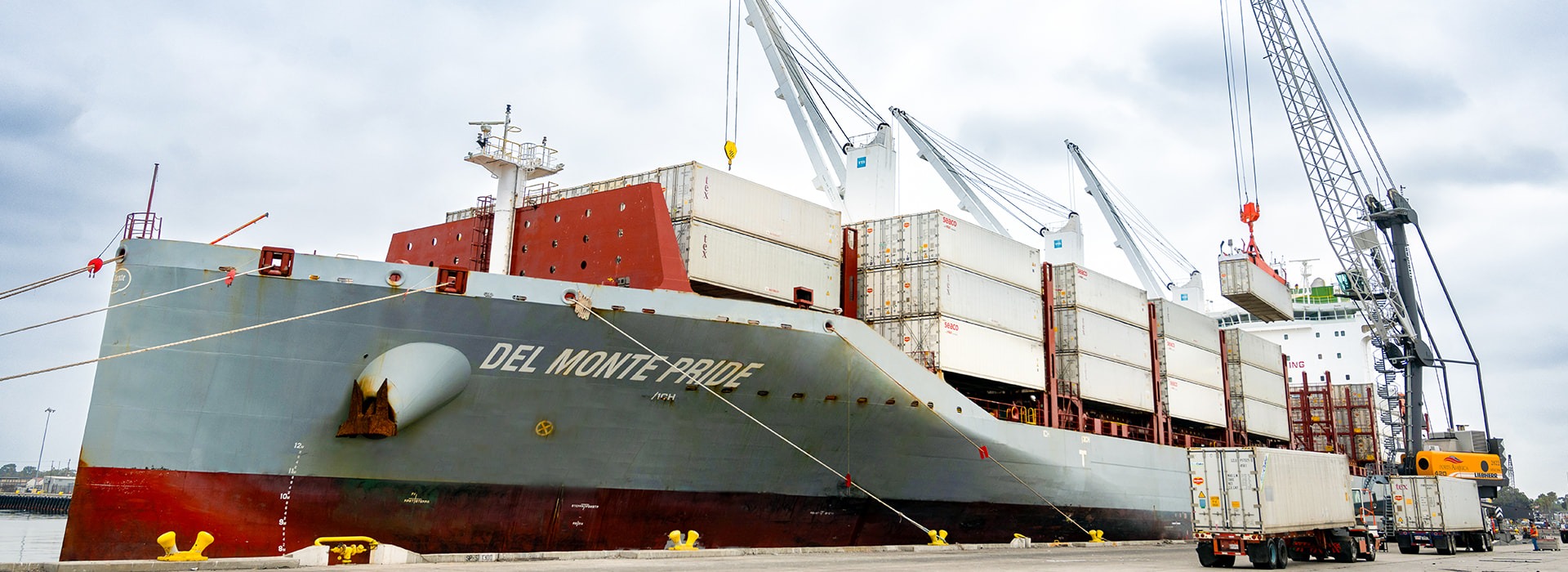
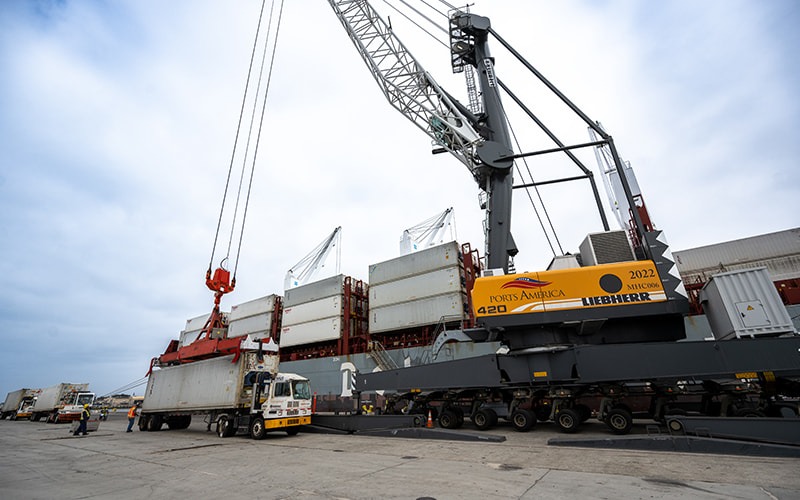
Today, the Port of Hueneme is a leading trade gateway for automobiles and refrigerated goods. “We’re the 16th largest container port,” Decas shares. “We are number five in the nation for refrigerated cargo, and we’re number five in the nation for cars.” The port handles approximately 400,000 vehicles annually and supports the distribution of fresh fruit, including bananas and blueberries, across 15 states. “That’s the significant business for us,” she notes.
Leading with Sustainability
Over time, Hueneme has adopted a sustainability framework that addresses air and water quality, soil conditions, marine ecosystems, energy use, and climate impacts. In 2016, it also became the first port in California to achieve Green Marine certification. Director of Environment and Sustainability, Giles Pettifor, expands, “Green Marine is an international verification society for maritime facilities to measure their performance on a scale that is verified against an international set of standards and key performance indicators.” Hueneme has continued to maintain that status, meeting increasingly complex requirements.

Building on that foundation, the port took another step forward, with the development of its Zero Emission Blueprint, supported by state funding. “We are planning and setting realistic goals for how we can eliminate that fossil fuel signal, but continue to move the volumes of cargo, continue to be a powerhouse for our workers and our community, and continue to lead in this space,” Pettifor says. “There’s a variety of flavors of energy carriers of the future, but for us in the next five to ten years, electricity is going to be that solution.”
In line with this, Hueneme is investing in infrastructure that will enable a full transition. “We are pivoting, with a significant chunk of federal and state funding to redevelop the port from an infrastructure side,” Pettifor details.
“Our partners in cargo, the stevedores, the shipping companies, the drayage truck companies, they own all of the equipment that operates on the port that we own. So we have to work in concert with them by providing the energy through this infrastructure and facilitating funding access for the equipment. We hope to complete all of this by 2030.”
Through these efforts, the port was able to secure a $43 million grant from the Environmental Protection Agency. “That’s going to convert about 95% of our cargo handling equipment through sub-agreements to our stevedore companies for electrification equipment,” Decas outlines.
“We’re also investing in drayage trucks to help our partners who work outside the gate. The Port of Hueneme is a bit unusual in that our container yards are privately operated off the premises, while inside the gate, we function as an operating port.”
Turning Setbacks into Innovation
A major climate change-driven rain storm in December 2023 underscored the importance of resiliency. “We had about six and a half inches of rainfall in less than a day; this was unprecedented rainfall,” Pettifor describes.
“Within about an hour of the storm starting, our power system was under almost two and a half feet of water, and unfortunately, it shorted out and blew up. It was destroyed in 45 minutes.”
Hueneme used this unanticipated event as a catalyst for innovation. “It made us realize that ports are really uniquely at risk,” he recounts. “You’re getting more rain from climate-driven storm events, and the ocean is rising with sea level rise. So, now we have to figure out how to re-engineer the way the port is built in the future. It is millions and millions of dollars in chargers and equipment. We have to make sure this doesn’t happen again.”
The good news is that the California Office of Emergency Services is providing the port with 75% of the funding required for the new shore-side power system. In the interim, Hueneme is using t STAX Engineering’s emissions capture and control system to manage emissions. “It is a barge with a big hose that comes over the stack of the ship, and much like a catalytic converter, it sucks the emissions up, and it makes that vessel about 95% emission free while it’s at dock,” Decas says.
Workforce Development and Community Impact
At the Port of Hueneme, sustainability also includes people, partnerships, and long-term opportunity. “We’re not only delivering on economic vitality for the community, but we’re making the community better,” Pettifor conveys.
Four years ago, Hueneme developed an equity plan, designed to better connect port initiatives with community needs. “The port doesn’t just get to do what it does because we’re bigger or more powerful than the community. We do it because the community buys into where we are going and provides the port social license,” he asserts.
With this in mind, the plan links workforce development efforts with local input, strengthening relationships with educational institutions and community groups while opening up access to careers in logistics, maritime, and STEM fields.
The port has also launched its Sustainability, Prosperity, Education, Equity- Driven (SPEED) workforce development initiative, backed by approximately $2 million in state funding, with matching support from the Oxnard College Foundation. Delivered through partnerships with organizations including Oxnard College, local universities, and nonprofit groups, the program creates a full pipeline of opportunity, from early education through to career entry.
“It’s creating internships, apprenticeships, and programs to empower people in our community with access to hands-on learning opportunities,” says Decas. “It’s a pretty unique program, to really uplift those around us and bring true social equity.” The program also includes adult education, language training, and certification pathways.
In addition, Hueneme continues to invest in its workforce through a Project Labor Agreement implemented five years ago. “That basically committed the port to utilize union work and pay prevailing wage for projects over a quarter million dollars in value,” Pettifor reports.
“In five years, the PLA has developed an entire local workforce of pipe fitters, carpenters, electricians, painters, and other trade skills. The catalyzing energy of those dollars is creating that workforce right here in Ventura County, and almost all of those people live in our community.”
Growing with Purpose
Looking ahead, the Port of Hueneme is focused on growth that aligns with its sustainability and community goals. “We’re grateful to the many grant agencies that are bringing all this funding to the Port. With it, we’re able to improve our infrastructure, grow our business, and continue to pursue projects that are making us one of the greenest ports in the world, “Decas emphasizes.
One key opportunity lies in expanding export capabilities after years of growing imports. “We’ve experienced healthy growth in both our container and automotive businesses,” says Decas. “When I started, we processed around 250,000 cars a year, and today we move over 400,000 autos. We’ve more than doubled our refrigerated cargo volumes, making us the 16th largest container port.”
By growing these operations, the port aims to reconnect local agricultural producers with global markets. “That’s a big project we’re working on, and we have other exciting developments both inside and outside the gate,” Decas shares. At the same time, the port is mindful of the need for balance.
“We’re forecasting somewhere around 30% growth over the next decade. That would be our legacy. We don’t want to overwhelm the community, we want to do what’s right, what makes sense, and what’s sustainable.”
AT A GLANCE
Who: Port of Hueneme
What: A leading U.S. seaport specializing in automobiles and refrigerated cargo, advancing toward zero emissions operations
Where: Ventura County, California
Website: www.portofhueneme.org
PREFERRED VENDORS/PARTNERS

ADP: www.adp.com
ADP® Comprehensive Services connects HR essentials like payroll, talent strategy, compliance and benefits into one seamless experience so your business can move faster, make smarter decisions and focus on growing with confidence.

Proforma Color Press: www.proformacolorpress.com
Proforma Color Press is a full-service printing and promotional product marketing firm delivering high-quality commercial print, branded merchandise, packaging, and marketing solutions. We are a Certified Green company that is committed to superior customer service, our company helps businesses strengthen their brand through eco-friendly materials, creative expertise, and efficient production tailored to meet unique needs and goals.
Aegir Port Property Advisers: www.aegirports.com
Aegir Port Property Advisers, the first real estate consultancy exclusively focused on meeting the unique property challenges faced by seaports and related logistics industries, pioneers unorthodox and innovative, practical and actionable, market driven solutions to increase revenues and enhance port values. Aegir – helping you navigate the world of port properties.

California Class: www.californiaclass.com
California Class is a Joint Powers Authority (JPA) Local Government Investment Pool sponsored by the California Special Districts Association and the League of California Cities. It offers both short-term and medium-term cash management services to public agencies in California. The Pool offers daily liquidity, a AAA rating from S&P and a state of the art participant portal.