A River City Building with Purpose
Downtown Energy, Major Infrastructure, Housing Momentum, and Strategic Civic Investment Define the Future
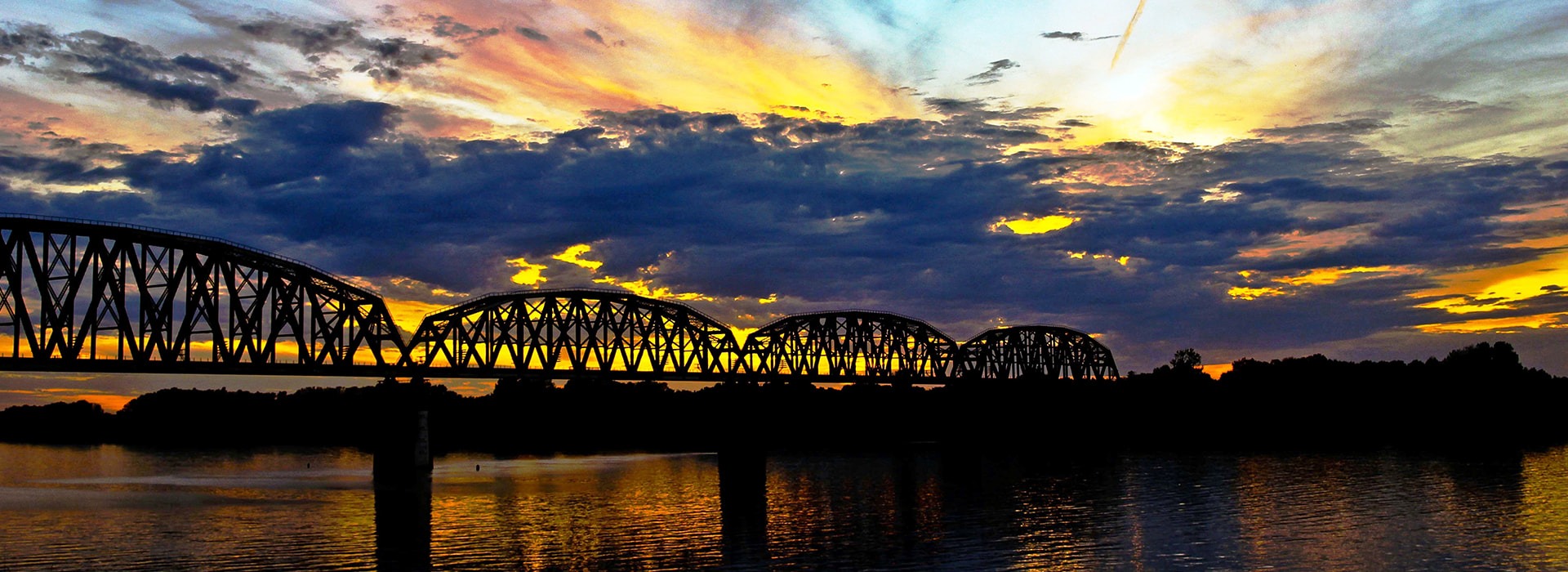
Set along the Ohio River, Henderson, Kentucky, has long embraced the identity of a welcoming small river city. Today, however, that identity is being strengthened by something more: a clear, strategic vision for growth.
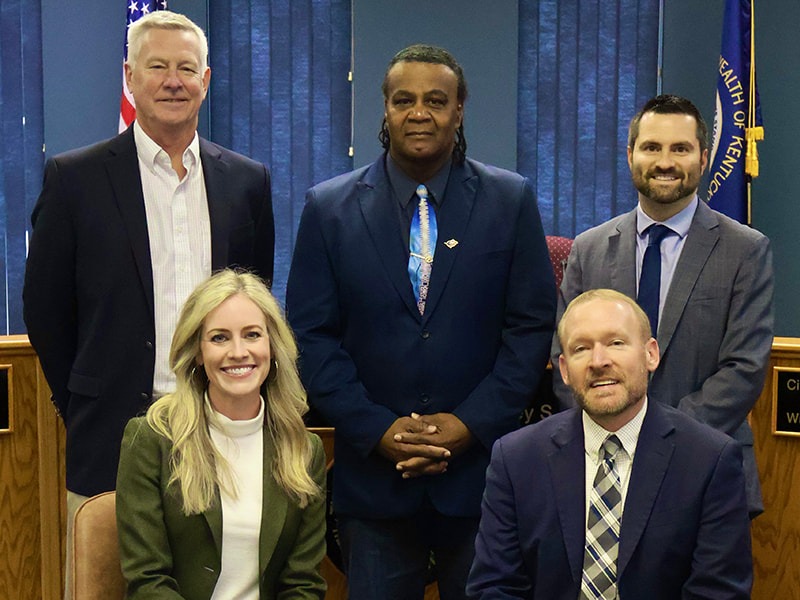
Under the leadership of Mayor Brad Staton and City Manager Dylan Ward, Henderson is advancing a broad range of initiatives designed to improve quality of life, stimulate economic development, expand housing, strengthen infrastructure, and position the city for the future.
From a thriving downtown and a new fire headquarters to a growing sports tourism strategy and plans for a conference center, Henderson is moving with purpose on multiple fronts.
At the heart of it all is a collaborative mindset and a commitment to building a stronger, more connected community.
A Small River City with Big Momentum
When asked to describe Henderson in simple terms, Mayor Brad Staton does not overcomplicate it.
“We’re a small, welcoming river city,” he says.
That sense of welcome is central to Henderson’s character, but it is also backed by tangible growth. The city is seeing progress across numerous sectors, with civic projects, private development, retail recruitment, housing expansion, and major infrastructure investments all contributing to a new era of momentum.
For Henderson’s leadership, growth is not happening by chance. It is the result of planning, partnership, and a willingness to think ahead.
Downtown Development Continues to Deliver
One of Henderson’s strongest assets is its downtown core. Guided by a downtown master plan that has been in place for several years, the city has steadily worked to improve the area’s vitality, walkability, and business mix.
While not every component of the downtown plan has yet been completed, the results so far have been significant.
“Back in 2017, we were running about 60 percent occupancy in our downtown storefronts,” Mayor Statin explains. “Today, in 2026, we’re running about 90 percent occupancy, maybe even a little higher.”
That jump reflects a remarkable turnaround and speaks to the city’s success in attracting and supporting new activity downtown. Henderson’s business base includes a healthy mix of traditional local enterprises and newer entrepreneurial ventures, with restaurants, apartments, storefront redevelopments, and destination-oriented businesses all helping to animate the district.
Among the most anticipated additions is Rhythm River Distillery, a bourbon distillery located adjacent to downtown and expected to open soon. The city partnered with the project team to help secure the property, seeing the distillery as both an economic asset and a tourism draw.
The investment fits naturally with Henderson’s efforts to build downtown as a place where commerce, entertainment, community events, and culture all converge.
Walkability and Placemaking Strengthen the Core
Henderson’s downtown gains are not solely about occupancy. They are also about experience.
For more than a decade, the city has placed a strong emphasis on walkability and placemaking. One of the earliest major efforts was the development of a roughly three-mile walking trail along the river, funded through grant dollars. Since then, the city has added a range of enhancements that make downtown more attractive and usable.
A pocket park built in 2018 now provides seating, a small performance stage, a pergola for shade, and a striking mural. Decorative planters, seasonal flowers, and prominent holiday lighting further enhance the district’s atmosphere.
That visual appeal has not gone unnoticed. In fact, Henderson’s festive downtown character has helped attract interest from a production company planning to film in the city.
More importantly, the downtown has become a true civic gathering place. Henderson hosts several major music festivals each year, with one event alone drawing more than 40,000 visitors annually. For a city of Henderson’s size, that level of downtown activation is a major strength.
A New Fire Headquarters Enhances Public Safety
Among the city’s most important civic investments is a new headquarters fire station, designed to replace an aging and inadequate existing facility.
The current Fire Station No. 1 has long served as the central hub for Henderson’s fire department, housing administration, and critical response capacity. But over time, the facility has become increasingly unsuited to modern operational needs.
“The ladder truck just barely fits in the main door,” Ward notes. “Our old station is just not equipped for the needs of today and the needs of our growing community.”
The new fire headquarters will be built from the ground up as a brick and limestone structure located along one of the city’s major corridors. Beyond its functionality, the building is also intended to contribute visually to one of Henderson’s gateway areas, creating a stronger entrance into the downtown.
The station will include a training tower, allowing firefighters to conduct more in-house training while maintaining better coverage across the city. It will also house the county’s first Safe Haven Baby Box, giving parents in crisis a secure, monitored option for voluntarily surrendering an infant.
For Mayor Staton, the move also has a direct public safety benefit: improved response times.
The former station’s location at a particularly busy intersection created delays for emergency response. The new facility, positioned on a main route but outside the traffic bottleneck, will provide better access to key service areas and help reduce call response times.
The Sports Complex Becomes a Civic and Economic Asset
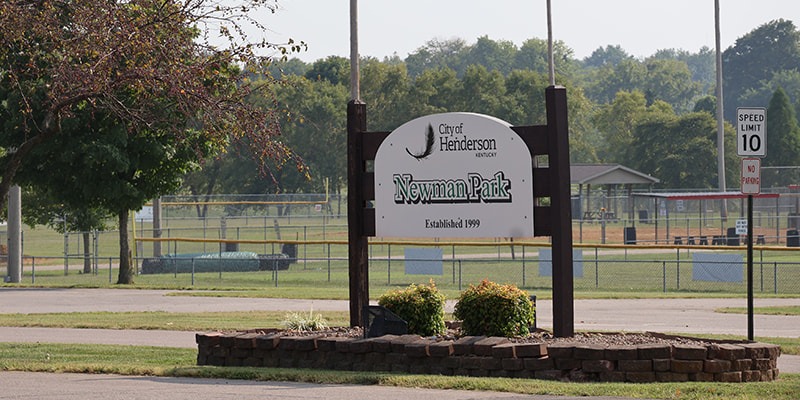
Another major success story for Henderson is its new sports complex, which opened roughly a year ago and is already proving to be both a community amenity and an economic engine.
The city’s vision for the complex has always had two dimensions. First, it was designed to serve local families by providing high-quality facilities for youth soccer, baseball, football, and softball. Second, it was built to attract tournaments and out-of-town visitors.
That strategy is working.
“We’ve already booked over 25 tournaments for 2026,” Staton says. “Each tournament is going to bring in roughly 30 teams and well into the thousands of people.”
That influx supports more than the complex itself. It benefits restaurants, hotels, retailers, and other local businesses while increasing Henderson’s visibility as a regional destination.
The sports complex is a prime example of the city’s belief that strategic civic investments can have ripple effects across the local economy.
Infrastructure Is Reshaping Henderson’s Future
If there is one theme that ties many of Henderson’s current efforts together, it is infrastructure.
Mayor Staton points to nearly $1 billion in infrastructure activity that is either underway or planned through 2032, much of it centered on the broader I-69 corridor and related road improvements.
A new phase of I-69 has already opened, and plans include a bridge spanning the Ohio River that will create a more continuous interstate connection through the region. For Henderson, that matters both nationally and locally.
By making the route more efficient for through traffic, the project increases Henderson’s role as a strategic connection point. It also opens the door to additional growth opportunities along newly accessible corridors.
One of the city’s biggest priorities is leveraging that changing transportation landscape to support future development. Plans for a loop road near Barrett Boulevard would create improved connectivity and open approximately 200 acres for mixed-use, retail, commercial, or residential development.
At the same time, Henderson is investing heavily in critical local systems. Because the city owns its own electric, gas, and water utilities, it has an unusual degree of flexibility and control when preparing sites for development.
Recent work has included replacing more than a mile and a half of water and sewer mains in the city’s East End, installing new gas lines, and planning for a future substation in one of the city’s anticipated growth areas. Henderson’s electric utility has also expanded into fiber internet service, with the city nearing complete rollout of high-speed service throughout its territory.
That utility ownership gives Henderson a competitive advantage. It allows the city to not only incentivize projects directly but also tailor utility infrastructure to meet the needs of incoming development.
Economic Development Becomes More Intentional
In recent years, Henderson has become far more proactive in its economic development approach.
Rather than waiting passively for developers to bring opportunities, city leadership is now actively targeting the kinds of businesses and projects it wants to attract.
That intentionality has already paid off.
One major recent example is Pratt Industries, which opened a major paper and corrugation operation in Henderson. The investment brought hundreds of jobs and hundreds of millions of dollars in capital investment, while also helping reinforce the city’s industrial base.
The project required extensive infrastructure preparation, and the city’s partnership with its utilities was essential in getting the site development-ready. That experience now positions Henderson well for future industrial recruitment on adjacent land that already has some of the needed infrastructure in place.
On the retail side, the city is focusing on projects that improve the quality of life and better meet community needs. Henderson is also becoming more aggressive in attending trade shows, meeting with developers, and presenting city-owned or city-controlled land as part of recruitment efforts.
The result is a more strategic and market-aware economic development posture.
Housing Growth Supports the Next Phase
Residential development is another major component of Henderson’s growth trajectory.
A significant new housing project by Jagoe Homes is already moving quickly on land the city helped assemble near Barrett Boulevard. The city purchased more than 120 acres in the area, sold a large portion to the developer at cost, and retained about 35 acres for future retail and multifamily development.
Originally expected to build out over five to seven years, the housing development is now moving ahead faster than anticipated, with city leadership believing it could be completed in under five years.
The project could bring roughly 300 homes to the area, creating a major boost to housing availability while also supporting adjacent retail and service growth.
Downtown housing opportunities are also being explored. Henderson has developers looking at apartment, condo, and potentially mixed-use projects within or near the downtown area, further reinforcing the city’s push toward walkable urban growth.
According to city leadership, interest from developers is stronger than it has been in years.
“Success feeds success,” Staton says.
That dynamic is becoming increasingly visible in Henderson, where earlier wins are helping attract new attention and new ideas.
Conference Center Plans Could Unlock Another Tier of Growth
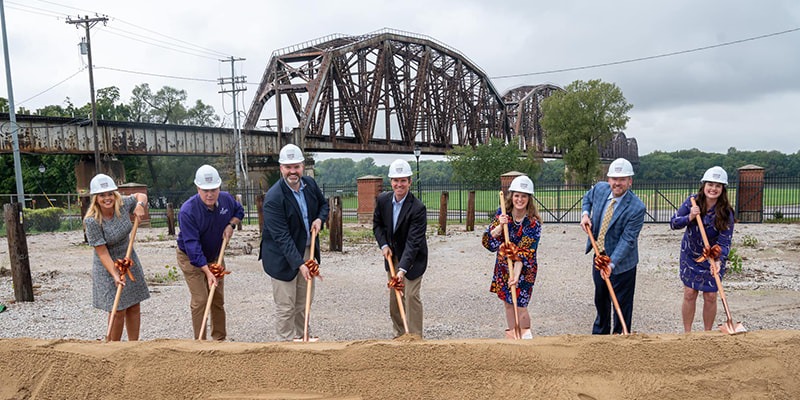
One of Henderson’s most transformative projects on the horizon is a new conference and event center.
Planned as a 20,000- to 25,000-square-foot facility overlooking a scenic lake in the local state park, the center is designed to host up to 400 people in its main room and serve as a long-term regional asset.
The project is being funded through a unique partnership between the city, the county, and the state of Kentucky. Together, those partners have already assembled the majority of the needed funding, with only a relatively small gap left to close before groundbreaking can begin.
Once underway, the center is expected to drive significant additional visitation to Henderson—supporting hotels, restaurants, retail, and tourism-related businesses.
City leaders believe it will also strengthen the case for new hotel development, both downtown and elsewhere in the community.
A Commitment to Inclusive Progress
Even as Henderson pursues high-profile projects, city leadership is determined to ensure that growth is shared across the community.
One of the most important examples of that commitment is the city’s Inner City Improvement Plan, a multi-year initiative focused on engaging residents, nonprofits, city staff, and other partners in addressing needs within Henderson’s inner-city neighborhoods.
The effort organizes teams around topics such as economic development, beautification, and public safety, allowing residents and local leaders to identify priorities and act on them collaboratively.
Among the notable outcomes is a new partnership with Habitat for Humanity that will direct $1 million over five years toward acquiring blighted properties, removing deteriorated structures, and building attractive, affordable housing in the inner city.
For Mayor Staton, that work is essential. As Henderson experiences success in multiple areas, he wants residents across the city to feel that progress in their own neighborhoods as well.
Collaboration Drives the City Forward
If there is a defining feature of Henderson’s approach, it is collaboration.
City and county governments work closely together. The city partners with its utilities, school system, chamber, tourism leaders, nonprofits, and private developers. Major projects are rarely pursued in isolation.
That collaborative culture is helping Henderson move with confidence at a time when many communities are struggling to align public priorities with private opportunity.
The city knows what it wants: a vibrant downtown, stronger neighborhoods, modern infrastructure, expanded housing, enhanced public safety, and thoughtful economic growth. Just as importantly, it knows that achieving those goals requires broad partnerships and sustained commitment.
A River City with a Clear Vision
Henderson is not trying to become something it is not. Its leaders remain grounded in the city’s identity as a welcoming river community. But they are also clearly focused on the future.
With strong downtown momentum, major civic investments, a targeted development strategy, and a growing pipeline of projects, Henderson is positioning itself for long-term success.
This is a city building not only for today’s residents, but for the next generation of families, businesses, and visitors who will shape its future.
In Henderson, that future appears to be taking form with both energy and intention.
AT A GLANCE
Who: Henderson, Kentucky
What: A vibrant and growing community that is steering a clear path for its residents
Where: Henderson County, Kentucky
Website: www.hendersonky.gov
PREFERRED VENDORS/PARTNERS

Henderson County Public Library: www.hcpl.org
We are the welcoming heart of Henderson County, offering hospitality, community, possibilities, and learning for all. Since our doors opened in 1904, we have grown from just 500 books to more than 209,000 items. We work to empower everyone to explore and grow by ensuring equitable access to materials and services.