Tradition, Quality, and Community at the Core
This Family-Owned Kansas Meat Processor Is Blending Legacy, Local Support, and Strategic Growth for the Future
In rural Kansas, businesses often serve as more than economic engines. They become part of the daily rhythm of the community—supporting local producers, supplying area restaurants, helping schools and civic groups, and stepping up when neighbors are in need. That spirit is clearly reflected at Grinnell Locker.
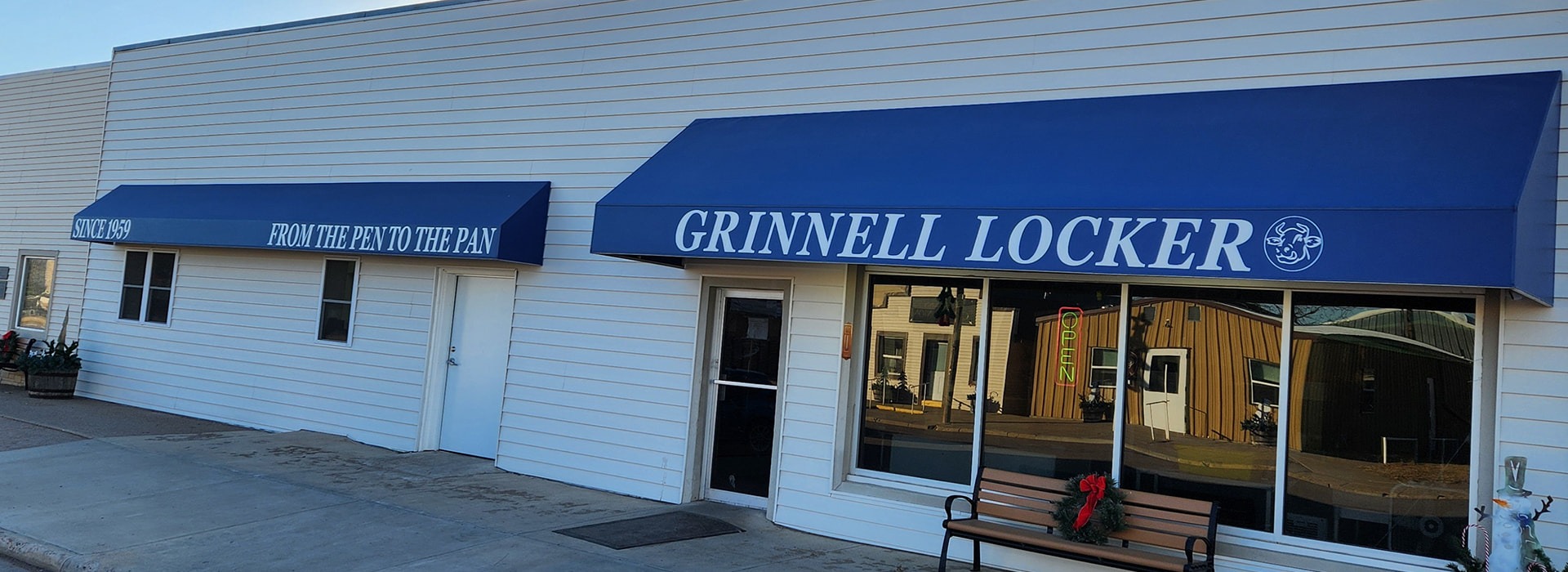
Located in Grinnell, Kansas, Grinnell Locker has long been a trusted name in custom meat processing. Today, under the ownership of Mark and Grace Schippers, the company is carrying that tradition forward while introducing thoughtful upgrades designed to improve efficiency, expand retail opportunities, and strengthen its role as a regional agribusiness asset.
For the Schippers, the goal is not to reinvent what has made Grinnell Locker successful for decades. It is to preserve the best of the business’s longstanding reputation while building a modern operation capable of serving more customers and supporting future growth.
Built on Custom Processing and Local Relationships
At its core, Grinnell Locker is a custom meat processing operation serving local producers. The company’s primary business is processing beef and hogs for customers—typically individuals and families who raise their own animals and want meat cut and packaged to their exact specifications.
“Predominantly, most of our business would be the custom processing,” Grace Schippers explains. “That would be for local producers of animals.”
That custom focus remains the foundation of the business. It is a model rooted in trust, consistency, and relationships with area producers who value high-quality processing and personalized service.
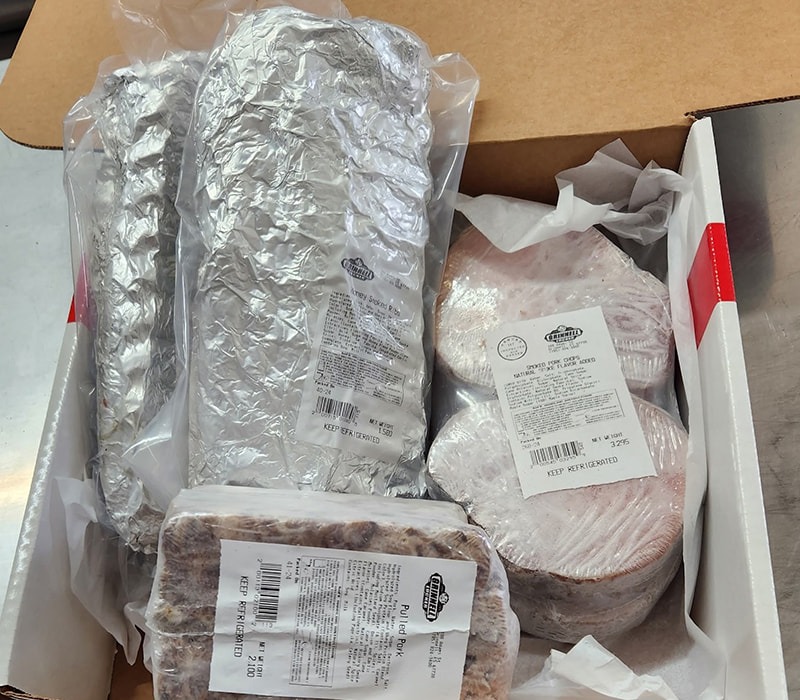
Alongside its custom work, Grinnell Locker also maintains a growing retail component. Customers can stop in and purchase products directly from the company’s storefront, including hamburgers, jerky, pork chops, bacon, and other meat selections.
This dual structure—serving both custom processing clients and retail customers—gives the company a stable base while also creating opportunities to broaden its reach.
Growing a Retail Footprint
While custom processing is still the dominant part of the business, retail expansion is very much on the horizon.
Grinnell Locker currently serves both walk-in customers and a select group of area restaurants and food businesses. Among those customers are Aunt Shannon’s in Selden, Oscar’s in Hoxie, and Center Pivot in Colby, along with other local foodservice partners.
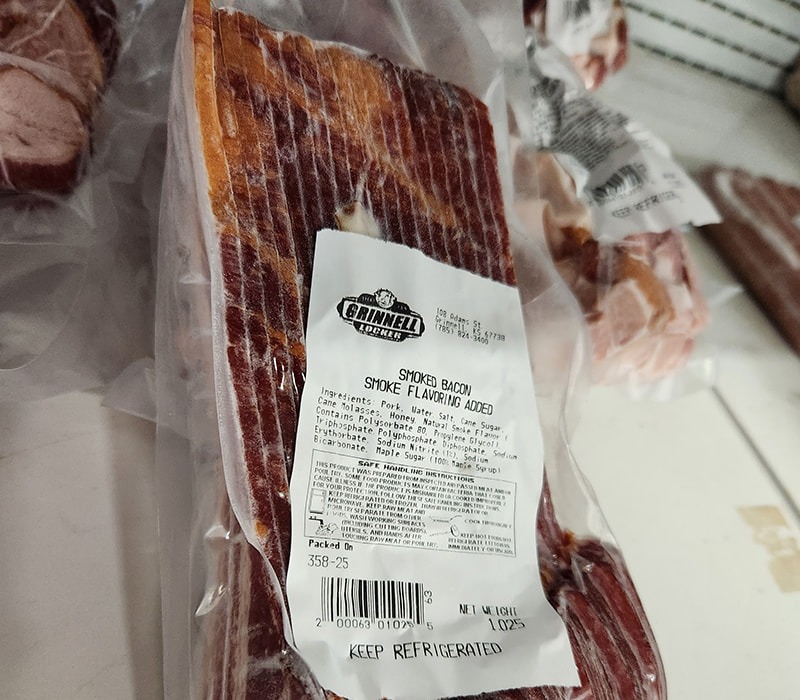
The products sold to these businesses vary based on customer need, but include items such as sausage, hamburger, corned beef, minute steaks, and other cuts that fit small restaurant and café operations in the region.
This local restaurant distribution reflects the company’s broader role in the regional food economy. In a rural market, being able to supply nearby businesses with locally sourced, quality meat products creates value on multiple levels. It strengthens local commerce, supports independent food establishments, and gives consumers another connection to area agriculture.
The Schippers see even more opportunity ahead. They are exploring ways to expand into additional restaurants, schools, and smaller grocery outlets—an effort that would give Grinnell Locker an even larger retail and wholesale presence.
Modernizing Operations for Efficiency and Safety
A major part of Grinnell Locker’s next chapter centers on operational improvements—particularly significant renovations to its kill floor and processing areas.
The company operates in an older building, and Mark and Grace have been actively updating critical parts of the facility to create a safer, more efficient, and more modern working environment.
Among the improvements already underway are additions such as a head dropper to reduce manual handling and other upgrades designed to streamline the slaughter process. The new kill floor will incorporate better winching systems, more updated equipment, larger work areas, and features that reduce physical strain on employees while improving safety and consistency.
“It’ll be a lot smoother process,” Mark Schippers says. “It’ll be more efficient and safer and a better work environment for everybody, as well as just easier on everybody’s bodies.”
The upgrades are practical and targeted. Rather than focusing on automation for its own sake, Grinnell Locker is investing in equipment and layout improvements that directly support employee well-being and better workflow.
That approach reflects the realities of meat processing. While some digital tools may eventually assist in peripheral functions such as order handling or recordkeeping, the physical nature of the work still requires skilled people doing highly specialized, hands-on tasks.
Preserving Legacy While Moving Forward
Grinnell Locker’s history stretches back decades. The business was established in 1959 and remained in the hands of the Beckman family until Mark and Grace Schippers purchased it in March 2022.
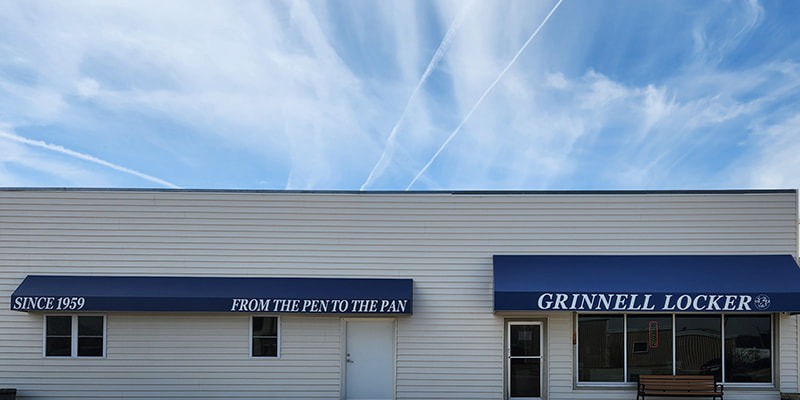
Taking over such a longstanding business came with both opportunity and responsibility. For the Schippers, it was important to honor the elements customers already valued while also making improvements that would position the company for future success.
“We’ve kept the things that the previous family had since the ’50s—we’ve kept the things people liked, like certain recipes on products,” Mark says. “And we’ve added more new things that people liked. We’ve kind of blended the best of both worlds.”
That balance between tradition and change is a defining theme of the company’s evolution.
Since taking ownership, the Schippers have focused on practical improvements across the business. Packaging has been updated. Freezer space has been expanded to accommodate more volume. Cooler improvements are underway to ensure meat is stored at better temperatures. Plans are also in motion for a larger retail room to support a broader product offering.
These are not flashy changes, but they are meaningful. Together, they create a stronger operational base and improve the customer experience without sacrificing the legacy customers have come to expect.
A Family Business in the Truest Sense
Grinnell Locker is very much a family-centered operation, and that identity is not simply symbolic. It is built into the structure of the business itself.
Mark and Grace own and operate the company together, with Grace’s father, Jess Randel, also playing an active role. He helps on the kill floor, supports renovation work, and supplies much of the beef used for retail sales. Jess has been a crucial part of the running and expansion of Grinnell Locker. That arrangement gives Grinnell Locker a notable farm-to-finish connection within its own family network.
“We have it kind of from the farm to finish here,” Grace says.
That close involvement is part of what makes the company’s business model feel authentic and grounded. In many rural communities, customers want to know who is behind the products they buy and where those products come from. Grinnell Locker offers that clarity.
It also reinforces the company’s role as a local agribusiness that is directly tied to the agricultural economy around it.
Deep Roots in the Community
For Grinnell Locker, community support is not an afterthought. It is woven into the company’s identity.
The Schippers make a point of supporting local schools through donations of both meat and money, helping ensure that school programs and food operations have access to quality products. They also support the local Veterans of Foreign Wars post by providing meat for its monthly dinners, helping that organization generate funds and continue its work.
The company also contributes to local groups such as the Knights of Columbus and participates in fundraising efforts tied to Gove County Economic Development.
Perhaps most notably, Grinnell Locker played an important role in the community’s response following the tornado that struck Grinnell in May. When residents lost homes and freezers full of food, the company stepped in to store meat for affected families. It also assisted with food distribution efforts connected to local relief activities.
These actions reflect the broader role small businesses often play in rural towns. They are not simply vendors or employers. They are support systems, gathering points, and problem-solvers when the community needs them most.
Local Hiring and Rural Workforce Commitment
As Grinnell Locker grows, hiring locally remains an important part of the company’s outlook.
The business’s workforce is already highly local, with employees coming from Grinnell, nearby communities in Gove County, and close neighboring towns such as Oakley. In practical terms, that means nearly everyone on staff lives within a short distance of the plant.
That local workforce model makes sense for both the company and the community. It keeps jobs close to home, supports the rural economy, and helps preserve the kind of community-based employment ecosystem that smaller towns depend on.
Grace notes that local schools are also doing more to promote agricultural and agribusiness career paths, encouraging younger people to stay in the area and pursue meaningful work tied to agriculture and rural industry.
In regions like western Kansas, where agriculture remains central to the economy and local identity, that kind of workforce development is especially important.
An Agribusiness Supported by Local Loyalty
One of the more encouraging themes from the Grinnell Locker story is the level of local support that still exists for rural businesses.
Mark points out that many customers are willing to buy locally even when large chain alternatives are available. Whether it is meat, fertilizer, fuel, or tire service, many residents in the region make a conscious effort to keep their dollars close to home.
That same mindset benefits Grinnell Locker. Customers come not only from Grinnell and Gove County, but from a broad surrounding area, often traveling considerable distances to purchase meat or have animals processed.
This regional draw reflects both product quality and trust. It also highlights the enduring value of businesses that are known personally within their communities and that maintain a reputation built over time.
Looking Ahead: Capacity, Retail, and a Bigger Footprint
As the Schippers look toward the future, their priorities are clear: complete the kill floor renovation, increase processing capacity, and use that expanded capability as a springboard for broader retail growth.
The kill floor project is central to everything that comes next. Once completed, it will allow Grinnell Locker to process more animals, serve more producers, and improve overall workflow. In turn, that should increase traffic through the business and create more opportunities for customers to purchase retail products at the same time they pick up custom orders.
That relationship between custom processing and retail sales is a key part of the company’s growth strategy. More custom clients can naturally lead to more store traffic, more word-of-mouth awareness, and more demand for packaged products.
The Schippers also want to increase sales to restaurants, schools, and other institutional buyers, building on the business-to-business relationships they already have in place.
In many ways, the future vision for Grinnell Locker is a practical extension of what the company already does well. It is not about changing direction. It is about building capacity, strengthening retail, and continuing to serve the region with the same local commitment that has defined the business for generations.
A Rural Business with Lasting Value
Grinnell Locker represents the kind of company that is essential to rural economic life. It supports producers, supplies local businesses, provides jobs, contributes to community organizations, and keeps value circulating within the local economy.
Under Mark and Grace Schippers’ leadership, the business is evolving with care—modernizing where needed, expanding thoughtfully, and staying rooted in the traditions and relationships that made it successful in the first place.
In an era when so much commerce is being centralized and scaled outward, Grinnell Locker offers a powerful reminder of the importance of local industry, family ownership, and community-minded business practices.
For Grinnell and the surrounding region, that is more than good business. It is part of what helps keep rural Kansas strong.
AT A GLANCE
Who: Grinnell Locker
What: A leading and long-time meat processing company with innovation at its fingertips
Where: Grinnell, Kansas
Website: www.grinnell-locker.com
PREFERRED VENDORS/PARTNERS

Custom Meat Solutions LLC:
www.cutmoremeat.com
www.custommeatsolutions.com
Custom Meat Solutions provides an integrated software and hardware platform built for meat processors, retailers, and farm-to-table businesses. It unifies your operations into one seamless system, eliminating manual tasks, reducing errors, and improving efficiency. With innovative technology and full support, CMS helps processors enhance quality, streamline workflows, and increase profitability.