A Clear Vision and Student-Centered
Purpose, Pathways, and a Future-Ready Mindset in the Rio Grande Valley
In the Rio Grande Valley, Vanguard Academy is building something that feels both ambitious and personal: a fast-growing public charter network that refuses to lose the “small school” connection while preparing students for a workforce being reshaped in real time.
“Our mission statement is simple,” says Superintendent Dr. Rocha. “A purpose in life, a reason for learning.”
Since stepping into the role roughly a year and a half ago, she has centered the organization’s strategy on equity and access—ensuring that every student, across every campus, can benefit from the programming that has helped Vanguard earn strong performance outcomes and a reputation for results.
That focus is reflected in the metrics the district is proud to share. Vanguard Academy has achieved a 100% marker on its CCMR (College, Career, and Military Readiness) indicators, while continuing to expand opportunities that connect rigorous academics with real-world relevance. But Dr. Rocha is equally candid about what’s driving the next phase of the work: preparing students for jobs—and a world—that even educators can’t fully predict.
“We’re preparing students for a future we have no idea about,” she explains. “AI has really set everything on its head. So we have to make sure our students aren’t only workforce-ready, but problem-solving ready.”
A Charter Network with a Community Feel
Vanguard Academy’s growth story is striking. What began 24 years ago with 32 students has evolved into a network serving approximately 6,700 students today, spread across four cities. And yet, leadership consistently returns to one theme: relationships.
Dr. Rocha believes this commitment to connection is a major reason the organization’s culture has remained strong through expansion. With four high schools collectively graduating a senior class of roughly 248 students, Vanguard is able to offer many families what they value most—support, responsiveness, and a sense that their child is genuinely known.
She points to everyday examples that illustrate the culture. When a dual-credit senior struggled late at night with a technical barrier while studying for finals, Vanguard’s team responded immediately, arranging remote support to resolve the issue. It’s a small moment, but it reflects the district’s operating mindset: barriers to student success get addressed quickly, and no one is left to navigate alone.
Advising with Labor-Market Reality in Mind
For Vanguard, workforce readiness is not a slogan. It is informed by labor market data, regional economic trends, and ongoing stakeholder feedback.
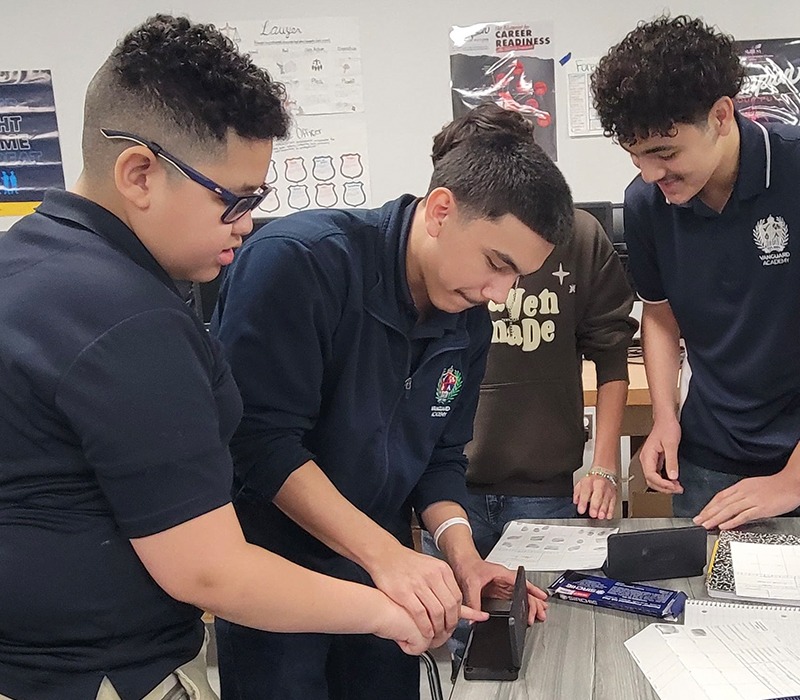
The organization works with partners such as RGV LEAD and other regional groups to analyze labor market reports and use that data to guide advising and program decisions. Dr. Rocha is direct about why this matters. Too often, she says, K–12 systems inadvertently prepare students for oversaturated job markets or steer them toward pathways without a clear understanding of regional demand.
“Our parents trust us to advise,” she says. “If we’re preparing students for jobs that are oversaturated, or there are no jobs available… shame on us.”
That data-driven perspective also includes a nuanced understanding of the Rio Grande Valley itself. Leadership recognizes that many families prefer students remain close to home, and they’re actively working to broaden awareness of opportunities both within and beyond the region. In Vanguard’s view, experience gained elsewhere can still translate into long-term community benefit when graduates return with credentials and expertise.
Building Pathways Through Partnership
Diana Ibanez, Director for CTE and CCMR, describes a strategy rooted in networks—higher education, workforce organizations, and direct industry exposure.
Vanguard maintains strong partnerships with South Texas College and the University of Texas Rio Grande Valley. Beyond dual enrollment, the district collaborates with continuing education teams to explore industry certifications that can make students more competitive in the workforce. They also engage regularly with regional workforce meetings, reviewing data not only locally but across South Texas, statewide, and nationally, to ensure pathways remain aligned to evolving demand.
Healthcare is a natural point of emphasis in the region, and Vanguard has established relationships with key providers, including DHR (Doctor’s Hospital at Renaissance) and South Texas Health System, with hopes of building additional engagement with Driscoll Hospital, newly opened in the Valley. But the district is equally intentional about expanding beyond one sector.
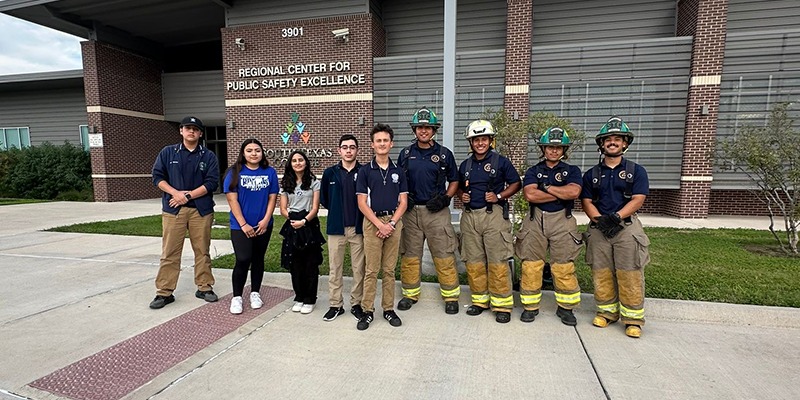
Welding is a standout example—particularly with SpaceX located nearby, influencing local demand and student interest. Vanguard also offers pathways tied to business and entrepreneurship, engineering, and a growing criminal justice and law enforcement track, supported by the organization’s footprint in Edinburg, home to the Hidalgo County Courthouse.
In that pathway, exposure goes beyond the expected. Students may visit the courthouse and meet professionals working in probate, child protective proceedings, and other specializations—broadening their understanding of where that career track can lead.
Across programs, Vanguard aims to create “aha” moments—when a student realizes a pathway is larger than the stereotype of a single job title. Ibanez notes that students begin to see how careers intersect: engineering with healthcare, robotics in labs, and technology embedded in nearly every sector.
Dual Enrollment That Starts Early
One of Vanguard Academy’s defining features is how early it begins preparing students to take advantage of advanced opportunities.
Students begin exploring dual enrollment and career pathways as early as seventh grade in CTE courses. By eighth grade, they can begin “principles” courses tied to fields like health science, business, education, and more—helping them make informed decisions before high school begins in earnest. As students enter ninth grade, they take the Texas Success Initiative (TSI) assessment, an important step toward qualifying for dual enrollment coursework.
The goal is ambitious and measurable: students can earn up to 60 college credit hours while in high school—tuition-free. The results are already significant. Vanguard leaders noted that just over 40% of recent graduates earned an associate degree before high school graduation, a milestone that represents both cost savings for families and accelerated momentum into postsecondary and career options.
That outcome is supported by a full system of monitoring and intervention. Vanguard offers college readiness coaches, early college directors, structured degree audits, and proactive outreach when red flags appear—missed classes, slipping grades, or signs that a student may be falling off track. Students are also coached to use the extended support systems available through higher education partners, including libraries, writing labs, and other academic resources.
Funding with Direct Student Impact
Like many education organizations, Vanguard must stretch finite dollars across large goals. The district leverages state CTE funding, federal Carl Perkins funding, CCMR outcomes bonus funding, and related sources—then directs those resources as close to student experience as possible.
One recent example illustrates the district’s creativity: Vanguard renovated a portable building into a cosmetology lab, designed with both classroom instruction space and a visible, glass-separated lab area equipped with stalls for hands-on training. It’s a practical investment that leads to practical outcomes—students earning credentials with direct workforce value.
Funding also supports core pathway needs such as equipment and technology. In engineering and computer science, for instance, students require specific laptops capable of running specialized programs, far beyond what a standard device can support. Vanguard’s goal is to remove those barriers so students can fully participate in advanced learning without cost becoming a limiting factor.
“Those dollars go very, very fast,” Dr. Rocha notes, emphasizing that additional funding would primarily expand student exposure—more tours, more industry visits, and more firsthand workforce experiences that deepen understanding beyond the classroom.
Social-Emotional Support as a System, Not a Service
Vanguard’s approach to student support begins with culture—relationships, responsiveness, and a consistent promise to families that growth will not dilute connection. But the district has also put structure behind that promise.
A social-emotional learning curriculum has been implemented across all grade levels, from pre-K3 through 12th grade. The intent is not to isolate support within counseling offices, but to build Tier 1 capacity across the organization—training teachers to recognize needs early, create supportive environments, and make consistent check-ins part of the school experience.
The approach extends to staff as well, especially within CTE and dual enrollment, where teachers can sometimes feel peripheral to traditional instructional planning cycles. Under Ibanez’s leadership, Vanguard has placed renewed emphasis on professional development that is tailored, ongoing, and collaborative. Teachers are supported through strategic networking by a program of study, shared alignment on curriculum and lesson planning, weekly communication that addresses common questions, and hands-on coaching that includes modeling and real-time support.
The message is straightforward: Vanguard doesn’t operate with the central office on the sidelines. The team shows up—sometimes even handling the practical details—because the work is shared, and the mission is collective.
Looking Ahead: Strategic Growth and Continued Innovation
As Vanguard Academy plans for the future, its priorities reflect both ambition and realism.
The organization is building its “Vision 2036,” a long-range framework to guide programming, growth, and workforce alignment over the next decade. Vanguard has also recently completed its charter renewal process, earning authorization to operate for the next 10 years—an endorsement leadership views as both validation and responsibility.
One of the district’s clearest strategic priorities is refining programming by campus and city. Because funding is finite, Vanguard wants to be intentional about where certain pathways are strongest—aligning offerings to the economic drivers and partnership opportunities available in each community.
“We can’t offer everything at every campus,” Dr. Rocha explains, “but we can be strategic—healthcare here, welding here, culinary here, and business and criminal justice here.”
The second major priority is innovation. As a charter network, Vanguard is challenging itself to remain a trailblazer—to identify what else is emerging in K–12 education and ensure Vanguard is not simply keeping pace, but setting the pace. That includes expanding practicum design and student exposure earlier than the traditional senior-year model, integrating workforce experience throughout the student journey rather than as a capstone.
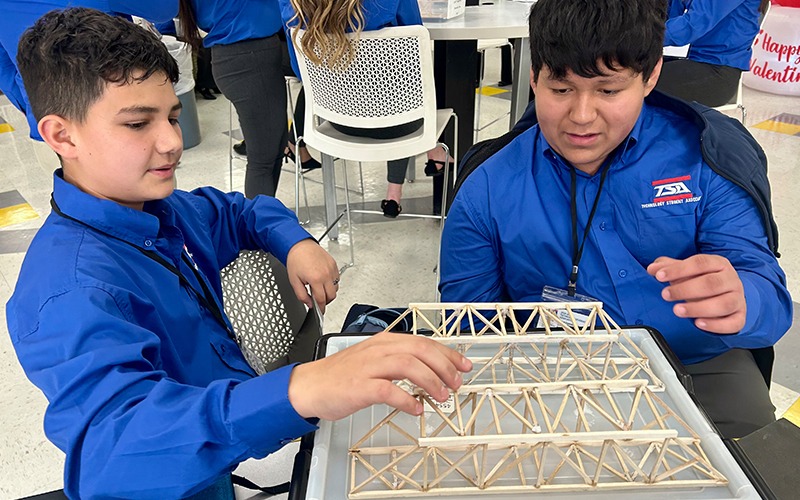
Growth remains part of the plan—but not “growth for growth’s sake.” Vanguard leaders describe expansion as a path to stabilizing the organization and delivering the facilities and learning environments students will need to compete in the next five to ten years. Looking ahead, the district expects to open a fifth high school campus in Mission by 2028.
In the Rio Grande Valley, Vanguard Academy is demonstrating what happens when strong outcomes are paired with a clear moral purpose: equity, access, and preparation that is grounded in real labor market demand. With a mission built around reason for learning—and a strategy built around partnerships, credentials, and student-centered support—the district is positioning its graduates not just to succeed in today’s economy, but to adapt to whatever comes next.
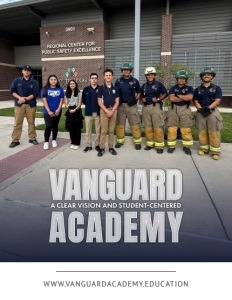
Click The Cover To View Or Download The Brochure
AT A GLANCE
Who: Vanguard Academy
What: A dynamic charter school network focused on equity, access, and providing students with the skills needed in the new economy
Where: Edinburg, Texas
Website: www.vanguardacademy.education
PREFERRED VENDORS/PARTNERS

College 1st Program: www.college1st.org
Since 2013, College 1st has delivered high impact, hands-on CAMP experiences that ignite student purpose and expand college and career possibilities. Through immersive career exploration, real-world mentorship, and turnkey implementation, we partner with visionary leaders to create unforgettable moments that build confidence, elevate engagement, and inspire students to design their future with clarity.