Building a Workforce for Jobs That Don’t Exist Yet
How South Carolina’s Third-Largest District Is Turning Literacy and Career Pathways into a Future-Proof Competitive Advantage.
Most people know Horry County for its 60 miles of Atlantic coastline and the 14 million tourists who descend on Myrtle Beach each year. Fewer know that tucked behind the beachfront sprawl sits South Carolina’s third-largest school district, one that employs 6,600 people, and is quietly producing some of the strongest academic results in the state.
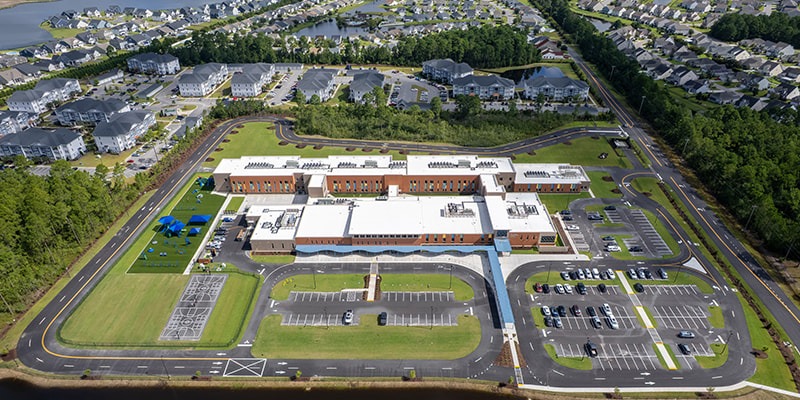
Horry County Schools serves more than 48,000 students across 58 schools and nine attendance areas, from the rural tobacco roads of Aynor and Green Sea Floyds to the fast-growing subdivisions of Carolina Forest. In the 2025 state report cards, 38 of 57 rated schools earned Excellent or Good, while no school in the district received an Unsatisfactory rating. Statewide, only 47.6% of schools cleared that same bar.
Superintendent Clifford “Cliff” Jones, who took the reins in February 2025 after 23 years in Georgia’s Fulton County Schools, distills the district’s mission into two words. “We try to inspire possibilities,” Jones says. “We’re really looking at literacy and career pathways to create schools of excellence, not only in the region, but in the nation.”
The numbers are beginning to back up that ambition. The district posted a record on-time graduation rate of 89.6% in 2025, up from 86.3% the previous year and comfortably above the state average of 86.7%. Among its graduates, 82.5% were identified as collegiate- or career-ready, a jump from 77.6% just twelve months earlier.
Jones adds that Scholars Academy High School, the district’s program school for its highest-performing students, scored 99.7 out of 100 on the state report card, ranking it first among all 1,309 schools in South Carolina. “That’s what we do here,” he says.
Supporting the Whole Student — And the Teachers Behind Them
In January 2025, Horry County Schools went cell phone-free. The board voted unanimously to ban all personal electronic devices from entry to dismissal, covering everything from smartphones to smart watches and earbuds. The policy, enacted under South Carolina’s “Free to Focus SC” mandate, landed in a state where 92% of K–12 teachers had reported supporting limits on student phone use.
Jones frames the decision in terms broader than classroom discipline.
“That’s been an important piece of taking that screen anxiety away from our students and really trying to focus them on what’s important, but more importantly, focusing them on each other,” he says.
The district also understands the importance of recess at both the elementary and middle school levels, a move Jones ties directly to the value of unstructured time. “I think it’s really important for that unstructuredness of the day for them to be with each other.”
On the clinical side, the district maintains a student-to-counselor ratio of roughly 1 to 300, with on-site counseling through RBHS. Rehabilitative Behavioral Health Services at every school. It also offers Care Solace, a complimentary 24/7 service available in any language that connects students, staff, and families to mental health and substance-use providers. Care Solace currently serves over 24 million people nationally and provides access to more than 700,000 verified providers.
Jones sees teacher wellbeing as equally non-negotiable. “We offer some of the highest salaries for our teachers, so we treat them as professionals,” he says. Beginning teachers now start just above $52,000, roughly $16,000 more than a decade ago. “We also provide professional learning communities so they can not only interact with their co-teachers but also with their peers. It’s not something they’re having to do on their own.”
#RiseWithReading Literacy Movement
National reading scores have been sliding for years, and public scrutiny of school districts has sharpened in response. Jones does not dodge the issue. “When the public looks at the NAEP scores and the NAEP scores have been going down, they really start to question what systems like Horry County are doing related to fundamental education,” he says.
His answer is #RiseWithReading, a K–12 literacy plan built on the science of reading, with a target of 95% of students reading at or above grade level by 2030. The district currently sits at roughly 74–75%. Research suggests a child who cannot read proficiently by third grade is four times more likely to drop out, and Jones has called the 95% figure a “reading guarantee,” a term he acknowledges is rare in public education.

The plan is tiered by grade band. Early reading teachers are trained through LETRS, a program piloted at Palmetto Bays Elementary and Loris Elementary two years ago and now being rolled out district-wide. “We’ve had curriculum changes to make sure we have both phonemic awareness, what the letter sounds sound like, and phonics, what the letter names are, in early literacy,” Jones explains.
At the middle school level, the emphasis shifts to vocabulary, background knowledge, and writing. High schoolers focus on discipline-specific literacy, learning to read differently across science, social studies, math, and English.
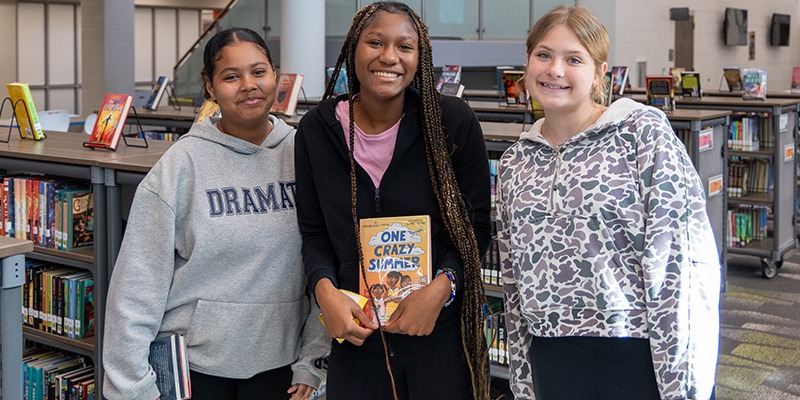
“It’s not an initiative, it’s a movement,” Jones says. “The business community, the faith community, everyone has really bought into it.” The Superintendent’s Reading Challenge asks each student to log and report the 1,000 pages per quarter they have read into Beanstack, and the uptake has been strong. Over 7,000 students logged pages they had read during the winter break, with local partners like HTC stepping up to recognize those who completed the challenge.
Technology, AI, and the Modern Classroom
Lee James, the district’s Chief Academic Officer, is careful about how he talks about technology. “It’s important that our parents and community understand that this is simply a tool we use to deliver different sources of content,” he says. “The technology in the classroom certainly can never replace the teacher.” That distinction matters in a district that has blocked generative AI programs like ChatGPT on all school Wi-Fi and devices.
Instead, Horry County Schools has partnered with MagicSchool, a FERPA and COPPA-compliant AI platform built specifically for education. Both AI and digital content are backed by nearly $3 million in the 2025–26 budget. Teachers use it to design lesson plans and differentiate instruction across ability levels. For students, it functions as a one-on-one writing tutor.
“It will look at what they’re doing, what the expectations are, and coach the student on how they can improve their writing,” James explains. “It’s not going to do the writing for them.”
The broader career and technology education program leans heavily on industry-standard tools. In the engineering pathway, students use computer-aided drafting software that produces blueprints usable in real construction. “We prioritize utilizing the tools that are actually used in industry,” James says. “Students can get an early start on learning those tools.”
Robotics is another growth area, combining hardware engineering with software programming in a competitive environment. “Students gain knowledge not just of building an actual robot to accomplish a task, but also the software side and programming the computer that ultimately turns the gears and motors to make this creation come to life,” he says. Many of the district’s high schools now compete in formal robotics competitions.
Career Pathways and Workforce Readiness
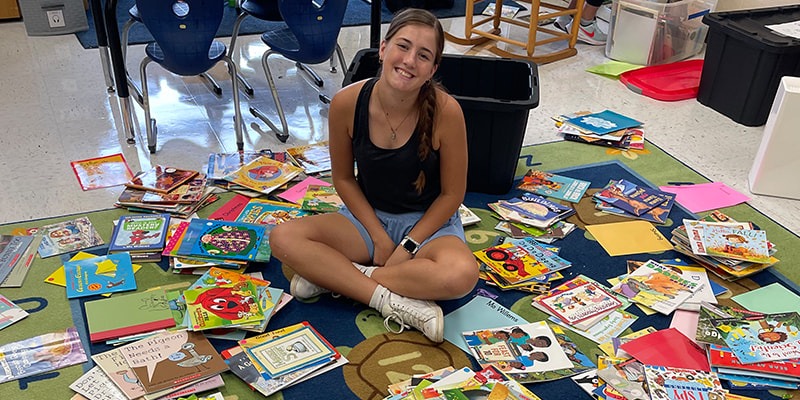
Roughly 2,000 Horry County students are currently earning college credits before they leave high school. The district’s PACE program partners with Horry-Georgetown Technical College and Georgetown to offer dual enrollment, and the pipeline is expanding. HGTC reported a 12.6% enrollment surge in fall 2025. Two program schools sharpen the offering further. Early College High School, ranked second in the county and twelfth statewide, allows students to earn an associate’s degree alongside their diploma, with a specific focus on those underrepresented in post-secondary education. Scholars Academy, partnered with Coastal Carolina University, caters to the district’s highest-performing students and earned College Board AP Honor Roll Platinum status in 2025.
Healthcare is among the strongest career pathways. “Students can become certified nurse assistants, pharmacy technicians, or go into programs designed for pre-med,” James says. “We have partnered with all of the local area hospitals: McLeod, Tidelands, and Conway Medical, who are actually eager to host our students and give them that hands-on experience.”
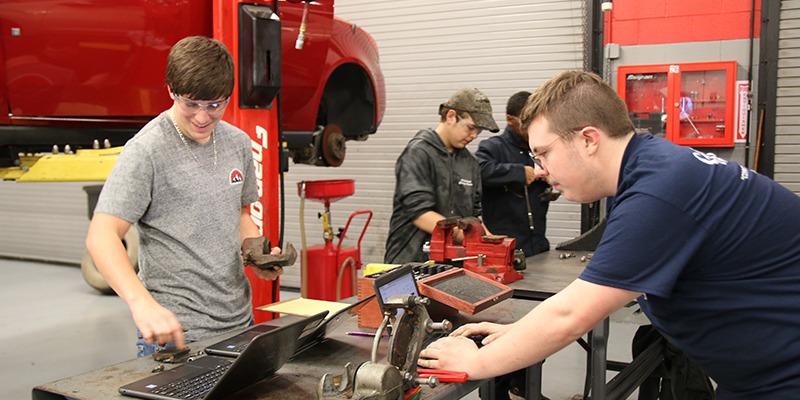
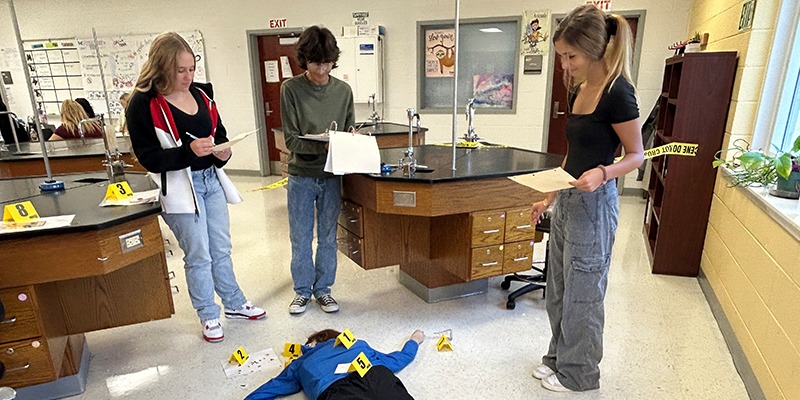
The skilled trades carry equal weight. James points to HVAC, building construction, and electrical programs that prepare students either for employment or to open their own businesses. “Students go in and learn those hands-on skills and actually get that experience in high school,” he says. The district also offers course credit for internship placements in local businesses.
Lisa Bourcier, the district’s Director of Communications, adds a surprising detail: “We actually hire our own students in the summer through our building facilities department,” she says. “We work them 40 hours a week, and we’ve hired them after they’ve graduated too.” The district also partnered with Habitat for Humanity to have students build a home on school grounds for a district employee, which was then transported to its permanent site.
Growing with the Community
Horry County’s economy is diversifying fast. Average wages have climbed from $14.50 an hour in 2014 to $25.52, and the number of industries operating in the county has more than doubled, from 79 to 162 over the same period. Jones has positioned himself at the center of that shift. “I sit on the Myrtle Beach Regional Economic Development board, and that allows me a firsthand listen to what businesses need from their workforce, both now and in the future,” he says.
He also sits on multiple regional chambers. Recent wins for the county include Ocean Craft Marine, a Dubai-headquartered boat manufacturer investing $10.8 million in a new U.S. headquarters at Bucksport Marine Park, and Coastal Ready Mix, bringing a $4.6 million concrete facility to Conway. The Myrtle Beach Regional Economic Development Corporation (MBREDC) reported $225 million in new capital investment in its most recent year alone.
Jones is frank about the limits of workforce alignment. “This year’s kindergarten class is the class of 2035,” he says. “Tomorrow’s workplace can’t be predicted quite yet. So how do we in education ensure that our kids are ready?” His answer prioritizes foundational and transitional skills over narrow job training, with ethical AI use as a guiding example. “It’s not just about programming AI. It’s about using it ethically so that whatever comes their way in the future, they can use it with proficiency and effectiveness, but also within the grounds of ethics.”
On the capital side, the district’s penny sales tax gives it unusual flexibility. First approved by voters in 2008 and renewed in 2022 with 68% support, the 1% sales tax generates roughly $100 million per year and is expected to produce nearly $2 billion through 2039. Over 60% of the revenue comes from tourists. Jones notes that the district’s last two construction projects, including the new St. James Elementary, came in on time and under budget. “Like, when was the last time that happened in this world?” he says.
Priorities for 2026 and Beyond
Jones does not reach for strategic jargon when asked about the district’s near-term priorities. “I want kids to put down the phone and pick up a book,” he says. It is a simple statement, but one that connects directly to two of his biggest plays: the cell phone ban now in its second year and the #RiseWithReading campaign working toward 95% grade-level literacy by 2030. His second priority is relational.
“I want parents and kids to have robust discussions about not only the experience they’re having in their schools now, but also, with us as partners, what they want to see in the future,” he says. He has been putting that into practice through “Coffee and Conversation with Cliff,” a series of informal open-door listening sessions held at schools across the county throughout the year, requiring no registration or appointment.
His third priority may be the most telling. Jones does not benchmark Horry County against other South Carolina districts. “Horry County Schools is unlike any other district in South Carolina,” he says. “Our comparison districts are Alexandria, Virginia, and Boulder, Colorado.” The Boulder reference carries a quiet footnote: Dr. Rob Anderson, who preceded Jones as Chief Academic Officer in Fulton County, left Georgia to become superintendent of the Boulder Valley School District. Jones knows exactly what he is measuring against.
“It’s seeing that we have something special here that would really make people feel energized about public education and the work of the public sector on behalf of all children,” he says. “I’m really, really excited about that.”
For a district that adds an average of 1,000 new students each year in one of the country’s fastest-growing counties, the pressure to simply keep pace is real. But Horry County Schools, under a superintendent who spent two decades learning his craft in a district nearly twice its size, appears less interested in keeping pace than in setting it.
With record graduation rates, a billion-dollar budget approved without a tax increase, and a community that voted overwhelmingly to tax itself for better school buildings, the raw materials are in place. What happens next will depend on whether the ambition matches the execution, and in Horry County, they seem to like those odds.
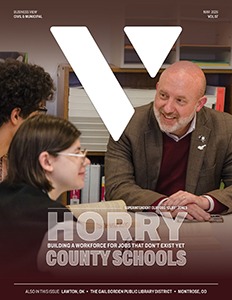
Click The Cover To View Or Download The Brochure
AT A GLANCE
Who: Horry County Schools
What: Public school district serving over 48,000 students across 58 schools and nine attendance areas, operating on a $1.14 billion annual budget
Where: Horry County, South Carolina
Website: www.horrycountyschools.net
PREFERRED VENDORS/PARTNERS

Edmentum: www.edmentum.com
Edmentum’s comprehensive, research-backed learning acceleration solutions—including Exact Path, Courseware, MajorClarity, and EdOptions Academy—help schools expand opportunity and pathways to graduation, enhance college and career readiness, and advance personalized achievement in all 50 states and around the world. Learn about standards-aligned solutions to drive SC READY outcomes on our website

Carolina Filters: www.carolinafilters.com
Carolina Filters, Inc. delivers comprehensive indoor air quality solutions for school districts, healthcare, and commercial facilities. Services include turnkey air filtration programs, duct and coil cleaning, air handling unit cleaning, and fire damper inspections; helping organizations maintain safe, compliant environments while improving HVAC performance and operational reliability.

GFL Environmental: www.gflenv.com
GFL Environmental is a leading North American diversified environmental services company providing sustainable environmental solutions to residents, businesses and industries. We believe that, by providing safe, reliable, and cost-effective solutions, we encourage greater environmental responsibility and allow our customers and the communities we serve to be Green For Life.
Horry-Georgetown Technical College: www.hgtc.edu
HGTC offers college transfer and skilled associate degree programs in more than 80 fields of study, and many with online options. Nearly all programs feature internships that lead to jobs. Ninety-one percent (91%) of students either transfer to earn advanced degrees or start careers in their respective fields of study.
Sharp Energy: www.sharpenergy.com
Sharp Energy delivers reliable propane service with a hometown personal touch and the strength of a larger energy company. A Chesapeake Utilities Corporation subsidiary, we provide strong supply capabilities, serve 90,000 customers across multiple states, and fuel more than 1,300 AutoGas vehicles to help reduce emissions for communities we serve.

Beyond the Classroom: www.beyondtheclassroomonline.com
Whether you need a powerful one-day in service or a year-long partnership, Beyond The Classroom Educational Services helps educators elevate instruction, boost student engagement, and increase achievement across the mathematics curriculum. Our targeted support strengthens teaching practices, builds confidence, and delivers measurable results that impact classrooms immediately and sustainably.

Scholastic: www.scholastic.com/knowledgebuilding
For more than 100 years, Scholastic Education has helped children reach their full potential through literacy. Today we help districts drive successful outcomes through evidence-based literacy programs and professional learning in structured literacy, early learning, family engagement, and more.

Burr & Forman LLP: www.burr.com
Burr & Forman’s experienced legal team serves clients at the intersection of business and government with local, national, and international interests in numerous industries and practice areas. The firm of over 390 attorneys throughout the Southeast, DC and Chicago helps clients achieve their goals and address their complex legal needs.

Contract Construction: www.contractconstruction.net
Contract Construction is a South Carolina based contractor specializing in K-12, higher education, recreational, and community facilities. Since 1984, we have delivered complex projects through collaborative partnerships, with a commitment to safety, quality, budget, and schedule. Our experienced team provides preconstruction and construction services focused on value, transparency, and client satisfaction.
Horry Electric Cooperative: www.horryelectric.com
Horry Electric Cooperative is a non-profit, member-owned organization providing information and energy-related services on a fair and equitable basis. Organized in 1940 and energized in 1941, it serves more than 86,000 members (103,000 meters) across Horry County. A nine-member board of trustees, elected by the members, governs the Cooperative.
Johnson Controls: www.johnsoncontrols.com
Johnson Controls delivers smart, sustainable building solutions using AI and data to improve health, performance and efficiency. With 140+ years of innovation, its OpenBlue platform supports industries worldwide through connected technologies, offering the world’s largest portfolio of building systems, software and services to help customers meet sustainability and operational goals.
Student Group Tours Inc: www.studentgrouptoursinc.com
Student Group Tours creates unforgettable travel experiences for students. From custom itineraries to seamless trip logistics, we handle every detail so educators can focus on learning and adventure. Trusted nationwide for safe, inspiring, and affordable student travel—your journey starts here with Student Group Tours.
Dodson Pest Control: www.dodsonbros.com
Termites do not announce themselves. They quietly feed on wood and can damage beams, floors, and framing before most homeowners notice anything is wrong. That is why prevention and early detection matter. A detailed inspection, the right treatment plan, and routine monitoring help protect a home’s structure, safety, and value over time.
SMHa: www.smha.com
SMHa is a full-service architecture, planning, and interiors firm dedicated to designing for coastal South Carolina. Understanding the region’s architectural vernacular, history, complex site and climate conditions, building and zoning requirements, and local economic climate, we serve as your trusted advisor, collaborating to bring about successful outcomes.