Reading the Community’s Vision
A Community Hub Evolving Beyond “Books” Through Outreach, Technology, and Civic Necessity
In Elgin, Illinois, the Gail Borden Public Library District has become something larger than a traditional library system. It remains rooted in reading, literacy, and collections, but its purpose has expanded over time into a civic engine—one that meets community needs that increasingly fall outside the walls of government offices and beyond the reach of many residents.
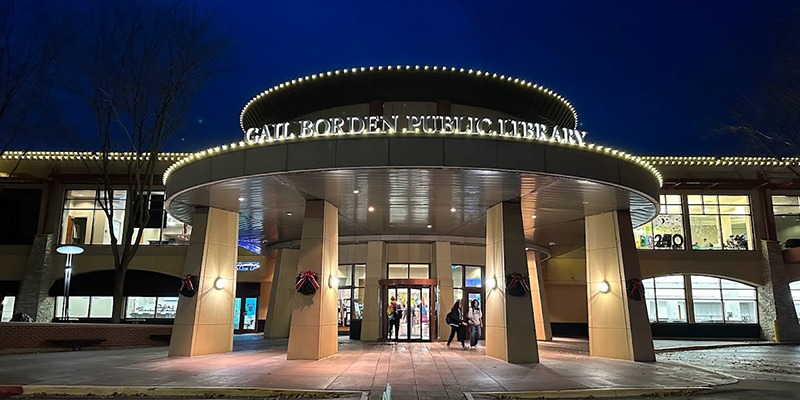
Led by Chief Executive Officer Carole Medal and Chief Operating Officers Sara Sabo and Dave Considine, the district serves a population of just under 150,000 across 65 square miles. It operates as its own taxing body, guided by an elected board, and includes a 150,000-square-foot main library building alongside two branches—one on Elgin’s west side and another in the Village of South Elgin.
The district also runs a robust mobile services operation, extending library access through a bookmobile and a Tech Mobile that delivers technology and instruction directly into the community. The district’s growth is also not only geographic. It reflects an intentional shift in how the library defines its role.
“Books are our brand, but not solely our business,” Medal explains. “We encompass so much more in our service to the public.”
A Legacy Built Through Buildings and Independence
The library’s modern footprint is the result of long-range thinking shaped by both history and community demand. Gail Borden Library’s story begins with a gift: the Church brothers, stepsons of Gail Borden of Borden Dairy fame, purchased and donated a mansion to establish the Gail Borden Public Library for the community. The earliest library building—an elegant structure that still holds symbolic weight—was followed by a mid-century facility that served the area for decades.
In the early 1970s, the library became a district, creating the independence that has allowed Gail Borden Library to operate as its own taxing body. That shift strengthened stability and long-term planning capacity. In 2003, the district opened its current main library building, designed as a generational facility that could support the community for decades.
That focus on facilities continued under Medal’s leadership. Shortly after arriving in 2004, she faced a challenge that many public organizations know well: a referendum had passed for new buildings, but an operating referendum did not. The community wanted the expansion, but did not want higher operating taxes. The district proceeded anyway, designing solutions that balanced growth with sustainability.
The result was the Rakow Branch, which opened in 2009 as a high-efficiency, largely self-service branch. It utilized RFID and self-check, and even reimagined how the collection was organized—by subject rather than traditional classification systems—so customers could browse more intuitively without needing as much staff support. Over time, that branch became far more than a “satellite.” It evolved into the primary library location for Elgin’s west side, requiring additional services, staffing, and eventually a future expansion plan.
The district’s second major geographic expansion came through South Elgin. For years, residents in that area voiced a recurring barrier: travel time to the main library.
Then an opportunity appeared. South Elgin’s economic council offered the district building space in an office park. The library moved in and ultimately purchased the remainder of the building below market rate. While the pandemic delayed full buildout, the district completed and reopened the finished facility in 2025, creating another roughly 11,700-square-foot anchor site for library service.
Leaving the Walls of the Library
While buildings matter, Gail Borden Library’s most significant shift has been the deliberate decision to leave the four walls of the library and embed service directly into the community.
This philosophy accelerated in the mid-2000s, as the district recognized that community needs were evolving faster than traditional library models. In some cases, the shift was strategic. In other cases, it was a civic necessity. As government offices moved services online or reduced local access points, residents still needed help completing essential tasks, navigating forms, and accessing basic services. The library stepped in.
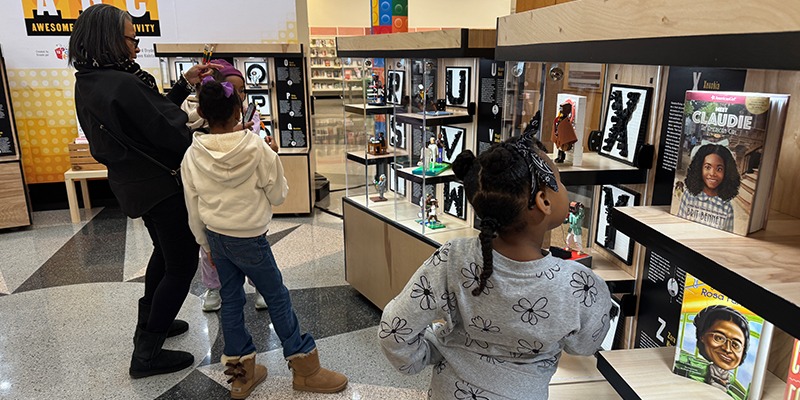
That evolution now includes services such as passports, license plate renewal, and a social services department, along with large-scale museum-quality exhibits that draw thousands of visitors and position the library as a cultural destination. The district also hosts events through its facilities and continues building programming that functions as both entertainment and education.
Over time, partnerships became central to this expansion. Rather than attempting to grow by adding significant staffing, the library deliberately grew by adding partners.
“We can’t add 200 staff members because we want to do more programming,” Sabo says. “But we can add 200 partners.”
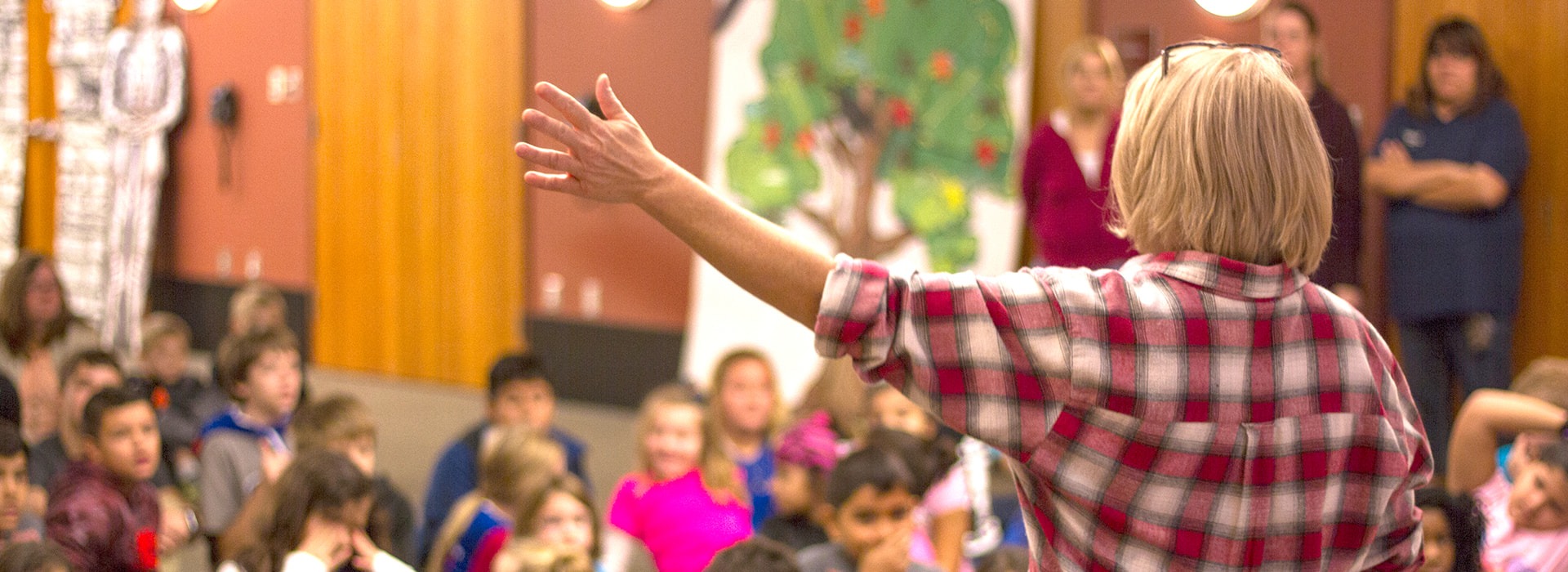
That approach has transformed the district’s capacity. The library’s relationship with the Elgin Symphony Orchestra is one example, leading to listening clubs and musical programming that bring professional-grade arts experiences into a library setting. Over the years, the district has grown to work with more than 200 community partners. The result is that many organizations now come to the library asking to collaborate—an evolution from the early days when the library needed to seek partners out.
As Sabo notes, the goal was to have a seat at the table.
Mobile Service as Access, Not Convenience
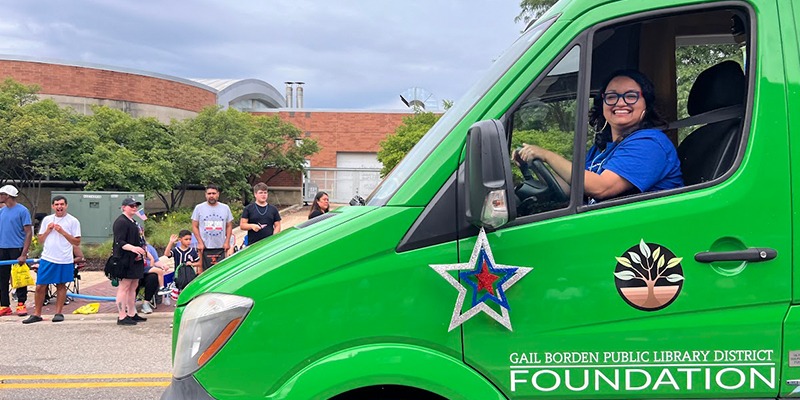
Because the district is geographically large, mobile service has become essential—not simply a nice amenity. The bookmobile, launched intentionally as a “back to basics” service, functions like a moving branch—particularly for residents who face transportation barriers. Over time, it has become one of the district’s most impactful outreach tools.
The Tech Mobile extends that same logic into the digital realm. It supports technology distribution, instruction, and access, especially for residents who face poverty-related challenges or lack reliable devices. The library distributes Chromebooks and hotspots, and staff provide instruction and assistance that help residents not only access technology but also use it effectively.
The district has also built targeted outreach programs for seniors. A dedicated team services more than two dozen senior communities, ranging from assisted living and nursing homes to 55-plus developments, ensuring that older residents remain connected to reading materials, services, and resources. The library also supports schools across the district, coordinating services that complement school librarians and expand student access to learning tools.
Technology and the Next Shift: AI
Like every sector, libraries are now facing the rapid acceleration of AI. For the Gail Borden Library, the approach is both practical and cautious. Leadership believes strongly in being on the cutting edge, but not the bleeding edge—ensuring that technology investments are sustainable and aligned with real community use.
The district is already deep into studying the strengths and weaknesses of AI tools, building internal communities of practice, evaluating how vendors are integrating AI into platforms, and addressing accessibility questions tied to emerging technology.
But the district’s role is not just internal adaptation. It is public education. Leadership sees it as part of the library’s classic mission: helping the public navigate new information systems, avoid misinformation, and use tools ethically and effectively.
AI programs are already beginning, and leadership anticipates many more. The district is also continuing its longstanding one-on-one support model through services like Device Advice, where residents can bring phones, tablets, and laptops for personalized help. In leadership’s view, AI will require the same approach: learn first, then teach.
“We have to put the oxygen mask on first,” Sabo notes. “We need to learn a bit to be able to help the community.”
Workforce Development: Manufacturing, Careers, and Community Alignment
Workforce development has become another key area where the library’s role expanded beyond traditional expectations. The district participates in job fairs and hosts business and career programming, often in collaboration with the Chamber of Commerce and local community colleges. One major effort—Manufacture Your Future—was designed to show young people that strong careers can exist outside the four-year college path, particularly in manufacturing and skilled trades.
What began as a targeted program for older students grew into something larger. Following the 2008 housing crisis and employment disruption, community leaders began focusing more intentionally on the regional labor shed and future workforce pipelines. The library became a founding member of a broader education and workforce initiative called the Alignment Collaborative for Education. The aim was to encourage earlier career awareness and support stronger career and technical education pathways across multiple school districts.
Today, that effort has expanded into a large-scale initiative known as Explore, where every eighth grader in the local and surrounding school districts visits a major workforce event hosted in a regional arena. Students engage directly with employers, unions, and skilled industries so they can shape their high school course planning around real career interests. The shift reflects a core insight: if students need strong pathways by graduation, they need exposure earlier than high school.
Capital Improvements That Never Stop
For a district with three major facilities, a bookmobile and tech mobile program, and constantly evolving service demands, capital planning is ongoing. Since 2009, the main building has been methodically retrofitted section by section to meet changing community needs and modern service design.
A new staff workspace and expanded meeting room capacity were early priorities, reflecting Elgin’s strong demand for convening space. The district reimagined how media is accessed through a transformation of its marketplace area, upgraded the computer center, and has been actively redesigning its youth spaces for long-term early literacy impact. The next major focus is the second floor of the main library—approximately 75,000 square feet—requiring both physical upgrades and service redesign, including modern power and outlet infrastructure that simply wasn’t anticipated in 2003.
The district recently received a major boost to this work through a $100,000 donation from the Izaak Walton League of Elgin, which helped kick-start the next phase of youth space redevelopment and demonstrates strong community belief in the library’s mission.
What Comes Next
Looking ahead into 2026 and early 2027, Gail Borden Public Library District has several priorities that reflect both scale and evolution. The second-floor redevelopment of the main library is one of the largest capital planning challenges ahead, requiring careful design for how services will function over the next 15 to 20 years.
At the same time, the district is beginning a new strategic planning cycle, with leadership considering whether annual planning may better match the pace of change than a traditional three- to five-year model.
Perhaps most notably, the district has launched a new division dedicated specifically to programming—elevating programs to one of three equal pillars alongside collections and exhibits. The move reflects a reality: programming is no longer supplemental. It is a core method of educating, engaging, and serving an entire community across life stages, from early literacy to workforce readiness to adult learning and senior engagement.
For the Gail Borden Library, the story is not simply one of expansion. It is a story of purpose. The district has grown into the role the community needs it to play—sometimes by design, sometimes by necessity, and always with an eye on access. In an era when many civic services have moved away from physical presence, Gail Borden Library has remained—and expanded—as the place where the community can still walk in, ask for help, and leave stronger than when they arrived.
Ultimately, the Gail Borden Library serves as much more than a repository of information. As stated in their mission statement, it is the essential landscape “where imagination and transformation flourish,” ensuring that the district’s future remains “fueled by the power of community.”
Click The Cover To View Or Download The Brochure

AT A GLANCE
Who: The Gail Borden Public Library District
What: A network of libraries to serve the community, educate, help with workforce solutions and capture the community spirit
Where: Elgin, Illinois
Website: www.gailborden.info
PREFERRED VENDORS/PARTNERS
The Davey Tree Expert Company: www.davey.com
Since the founding in 1880, The Davey Tree Expert Company has remained committed to science-based practices, skilled craftsmanship, and responsible environmental stewardship. As one of the largest employee-owned companies in North America, Davey’s success is rooted in long-term relationships with clients, employees, and the landscapes we serve.