Cementing the Future
A Dealership Model Built on Consistency, Training, and a New Era of Product Innovation
Concrete Technology Industries (CTI) has spent more than three decades building its position in decorative concrete by doing something fundamentally different from much of the market: pairing high-performance overlay and coating systems with a dealership model designed to help independent entrepreneurs succeed without royalties or franchise fees.
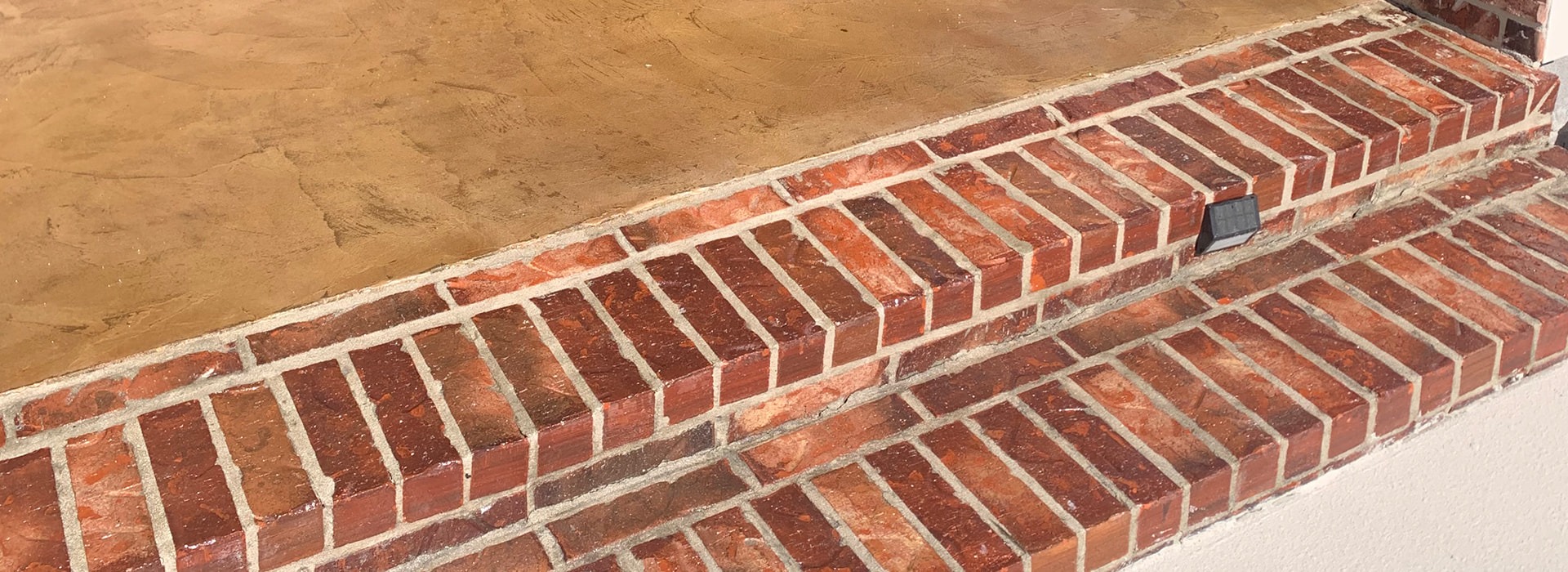
Director of Sales and Marketing Ron Nezat describes CTI as a company that was ahead of the curve from the beginning. Founded in 1991 in Largo, Florida, CTI entered the market through decorative overlays—specialized applications installed on top of existing concrete to create attractive, durable finishes for residential and commercial spaces.
While the industry has expanded significantly since those early days, CTI’s approach remains distinctive. Instead of franchising, the company certifies dealers through training, product access, and ongoing support, making money only when those dealers succeed.
“We don’t have royalties or franchise fees,” Nezat explains. “We simply enter into an agreement with a dealer to be a certified CTI dealership. They get the training through us, and we provide the support system and the brotherhood so they’re not out there by themselves trying to figure it out.”
A Residential-First Model with Broad Application
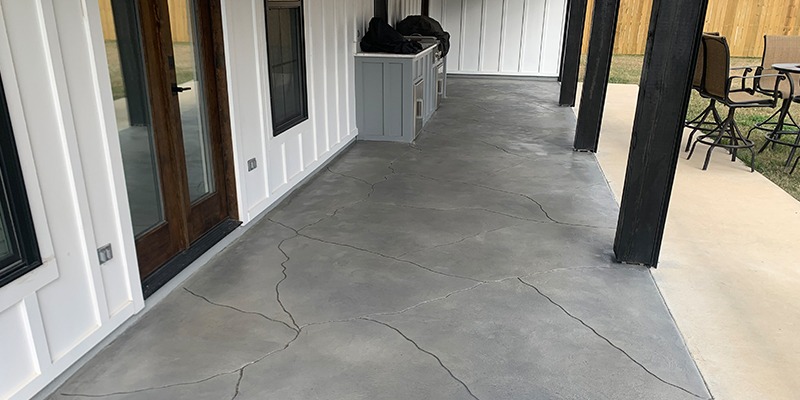
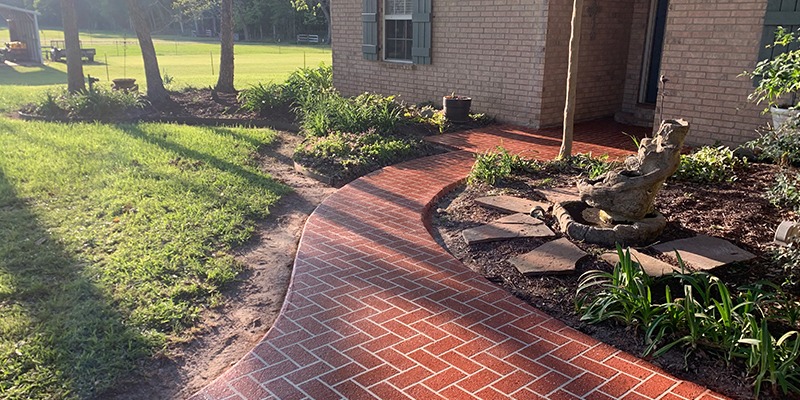
CTI’s surface systems are used anywhere concrete is found—pool decks, patios, driveways, basements, kitchens, foyers, and high-traffic commercial environments. While dealers can service both residential and commercial markets, the vast majority of CTI’s business is residential, largely because project cycles are faster and scheduling is more predictable.
Driveways, patios, and pool decks represent the bulk of dealer work, but CTI also supports highly specialized needs. The company offers FDA-appropriate coatings for commercial kitchens, along with systems built for stain resistance, chemical resistance, and cleanability. Slip resistance is another critical element, particularly for families with children around water and for an aging population that is increasingly investing in safety-conscious surface upgrades.
As Nezat notes, CTI also benefits from a unique market reality: decorative concrete tends to perform well in both strong and weak real estate cycles. When the housing market is hot, homeowners use decorative upgrades to set their property apart. When the market slows, homeowners often invest in improving what they already own.
A Cohesive Brand Through Dealer Alignment
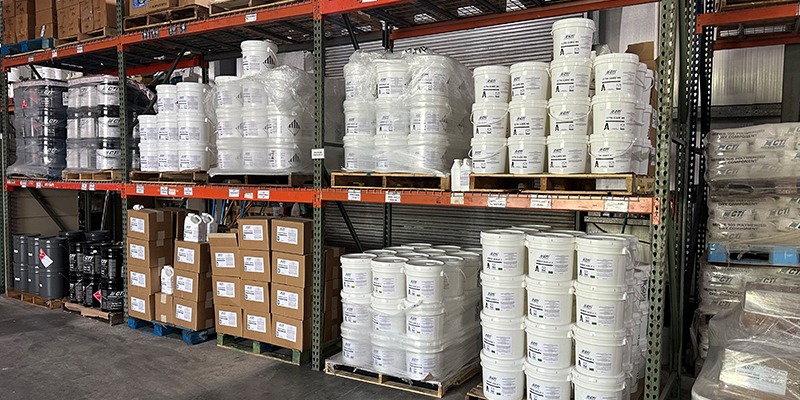
Brand consistency is a central priority in any dealer-based model, and CTI is reinforcing that focus through a major transition period. On August 1, 2025, CTI was acquired by longtime distributor and industry leader Sonny Restivo and his partner Doug Atkins, a long-time top dealer in the network. The company then officially became Concrete Technology Industries, shifting from its former name, Concrete Technologies Incorporated.
That change brought a full rebrand, updated visual identity, refreshed brand standards, and new product expansion. CTI’s challenge—and opportunity—now is ensuring every dealer delivers a cohesive experience that protects the brand reputation while supporting local entrepreneurial independence.
The company’s approach is grounded in clear expectations: product consistency, customer service standards, and dealer support structures that reinforce quality across the network.
A National Footprint with International Reach
CTI currently supports more than 400 active dealers throughout the United States. The company’s strongest concentration is in Florida, the East Coast, and the Gulf Coast, where the climate supports year-round exterior work and a longer installation season. The company maintains dealers nationwide, including cold-weather markets, though those regions often require more interior project focus during the winter months.
Internationally, CTI has expanded into more than 23 countries. The model overseas tends to be more distributor-oriented, with local partners controlling territory and market distribution, while the U.S. dealer network is managed centrally through corporate operations.
This scale reinforces the core reality of CTI’s business: the dealership model is not a loose reseller approach. It is structured, supported, and designed to operate with franchise-level marketing support—without the royalty-based financial burden most franchises require.
Product Innovation: The Titan Series and VOC-Compliant Expansion
CTI’s most significant recent innovation is the Titan Series, introduced in November 2025. This product line marked the first complete new system rollout since the company’s founding in 1991, featuring new polyaspartics, epoxies, vapor suppression systems, and more environmentally conscious formulations.
The Titan Series was built to address several evolving market realities. One is installer experience—reducing odor and improving usability. Another is regulatory expansion. VOC compliance continues to tighten across many U.S. jurisdictions, and CTI’s Titan Series was engineered to meet VOC standards nationwide, allowing broader availability across states with stronger environmental requirements.
For CTI, innovation is not simply about releasing something new. It is about releasing something stable, sustainable, and consistently sourceable long term—so dealers can trust that the product in the bucket remains the product they have trained with, installed, and built their business around.
The Training Model: From Pro Start to Long-Term Support
CTI’s training begins before a dealer ever takes their first job. All new dealers start with a Pro Start certification course, a two-day immersive program held at the National Training Center in Denham Springs, Louisiana, now home to CTI’s corporate office.
The training is hands-on by design. Dealers learn application techniques, product handling, texture systems, and installation processes directly through real practice—because decorative overlays and coatings require skill development that cannot be fully learned from manuals alone.
Dealer training is led by Chuck Brewer, CTI’s Director of Dealer Experience, who has been with the company for 30 years. Beyond initial certification, dealers gain access to ongoing training through video-based tech tips, evergreen resources they can revisit before or during installations, and support through CTI’s dedicated dealer support team.
That support is not theoretical. Dealers have real-time access to experienced personnel who answer calls and emails daily. CTI also hosts regional advanced trainings and an annual national rally, where dealers learn new techniques, new textures, and new product applications, while strengthening the camaraderie and peer support that CTI describes as “brotherhood.”
Veteran Support and the Qualities of Successful Dealers
While CTI’s dealers come from a range of backgrounds, Nezat says veterans represent a particularly strong fit for the model. In response, CTI provides a Pro Start course credit for veterans who join, reinvesting directly into those who have served.
The reasoning is practical: veterans tend to bring discipline, teachability, and work ethic—qualities that translate well into installation-based business ownership. More broadly, CTI looks for entrepreneurial drive, reliability, and a willingness to learn systems and follow process—because long-term success in decorative concrete is built on consistency, not improvisation.
CTI also attracts business owners who value flexibility and lifestyle balance. Some dealers scale seasonally, especially in regions where winter slows exterior work. Many enjoy the ability to shape their schedule while building a business that supports their family.
Technology Integration: CRM Systems, AI Support, and Dealer Enablement
CTI treats technology as a business multiplier, both internally and within its dealer network.
Dealer training includes instruction on business systems, including CRM management and pipeline development. CTI partners with Estimate Rocket, a CRM platform tailored to contractor workflows and customized with CTI-specific templates, email sequences, and customer follow-up automation.
This structure helps dealers manage leads, estimate workflows, customer communication, and long-term resale opportunities—critical in decorative concrete, where maintenance cycles create recurring revenue.
CTI’s marketing platform also integrates modern AI-driven tools. The corporate office uses AI for call funneling, lead screening, appointment booking, and automated follow-up. Calls to the corporate office are routed through a virtual assistant that recognizes whether the caller is a current dealer or a prospective dealer and directs them appropriately.
Internally, CTI is also leveraging technology to support quality control, batch management, and production consistency—ensuring that dealers receive a repeatable product experience that safeguards installation outcomes.
As Nezat notes, the pace of change is accelerating. He describes spending time daily “training” a virtual assistant through role-play style interactions—something that simply did not exist in traditional marketing roles even a year ago.
Partner Ecosystem: Supporting Dealers Beyond the Product
CTI’s dealership model extends beyond coatings and overlays. The company is actively building partner relationships that reduce friction for dealers and strengthen their ability to operate efficiently.
Estimate Rocket is one key partner, because of its responsiveness and willingness to customize platform features around dealer needs. CTI also uses GoHighLevel as part of its marketing and CRM ecosystem. Recently, the company entered a new relationship with Onfloor Technologies, offering dealers access to grinding systems that support surface prep—an optional but strongly recommended capability that improves installation results.
CTI’s approach to partnerships mirrors its philosophy toward dealers: create practical value, reduce learning curves, and support success through proven tools rather than leaving independent operators to assemble systems on their own.
The Difference CTI Believes Matters Most: Consistency
When asked what sets CTI apart from competitors, Nezat points to a growing industry issue: product inconsistency.
In many markets, he says, some competitors sell a bucket with the same name but change what is inside based on price-driven sourcing, including swapping overseas suppliers when a batch runs out. That creates unpredictable installation behavior for contractors and inconsistent outcomes for customers.
CTI has positioned itself in contrast to that approach. Its products are built for consistency, and the Titan Series rollout was handled carefully, with attention to long-term sourcing stability, ensuring the company could support dealers without creating vulnerability in supply chain continuity.
For CTI, dealer success depends on the reliability of training, of product, and of the support system behind the sale.
Priorities Ahead: Growing the Network and Scaling Responsibly
Looking ahead through 2026 and into early 2027, CTI’s focus is twofold. The first is strengthening reorders—ensuring existing dealers are supported, supplied, and growing through consistent performance and better operational systems. Even while the company intentionally slowed marketing during the transition period following acquisition and warehouse relocation, CTI still reported growth in fourth-quarter reorders year-over-year, a key signal of dealer activity and demand.
The second priority is expanding the dealer network. CTI’s target is to add 100 to 150 new dealers over the coming year, with an emphasis on recruiting entrepreneurs who may not already be in the decorative concrete industry. The logic is strategic: CTI prefers to train “green” operators into CTI standards rather than retraining habits built in less structured models.
Ultimately, CTI’s dealership model is designed to do one thing exceptionally well: build independent businesses without leaving owners isolated. With new ownership, a modernized brand, a nationwide VOC-compliant product line, and deeper technology integration, Concrete Technology Industries is positioning itself to scale—while staying true to the principle that has defined the company since the beginning: when dealers win, the company wins.
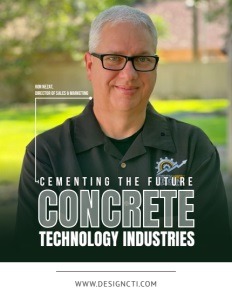
Click The Cover To View Or Download The Brochure
AT A GLANCE
Who: Concrete Technology Industries
What: Specializing in decorative overlays that put this concrete design contractor ahead of the competition
Where: Denham Springs, LA
Website: www.designcti.com
PREFERRED VENDORS/PARTNERS
Permanent Coatings: www.permanentcoatingsinc.com
Founded in 1997, Permanent Coatings, Inc. is a paint manufacturer based in Denham Springs, LA. We produce high-performance coatings, including epoxies, polyurethanes, water reducible, and acrylic systems. We also offer private labeling services, delivering reliable, customized solutions for contractors, distributors, and industrial clients.