Meet Me at the Fairgrounds
At the Center of It All
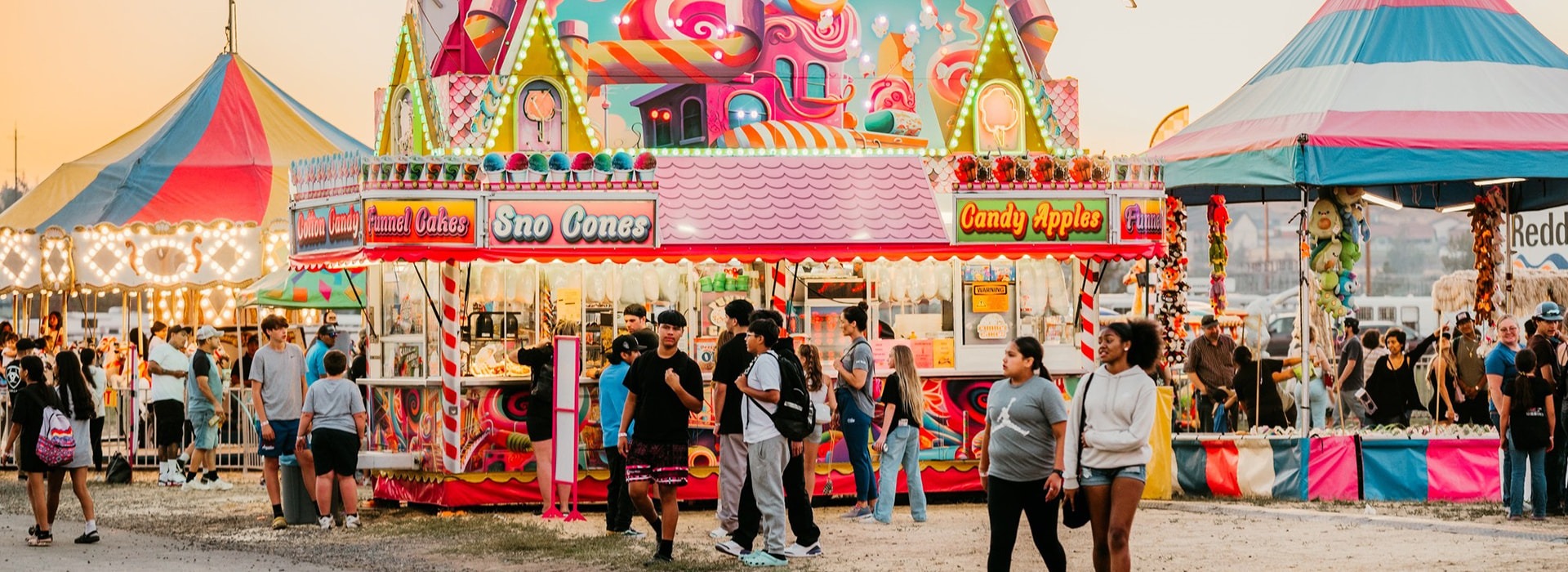
A county fair is the kind of place where nostalgia and excitement bring people together in a way that only cotton candy, agriculture, and livestock can manage. For the Jefferson County Event Complex, it is also the place where 4 days in July can ripple economic impact across an entire region.
This increasingly dynamic event complex is also far more than a traditional county fairground. It is, as Manager Bart Platt describes, “the community dinner table, where we pull everybody together and remind us that we are much more similar than we are different. We have every piece of lifestyle, from agriculture, arts and crafts, and music. It really is a snapshot of everything that is our community.”
Together, the Jefferson County Fair and Rodeo, and the year-round operations of the Jefferson County Event Complex represent a forward-looking vision that has transformed a once underutilized fairground into one of Central Oregon’s most progressive public venues.
A Tradition Approaching 100 Years
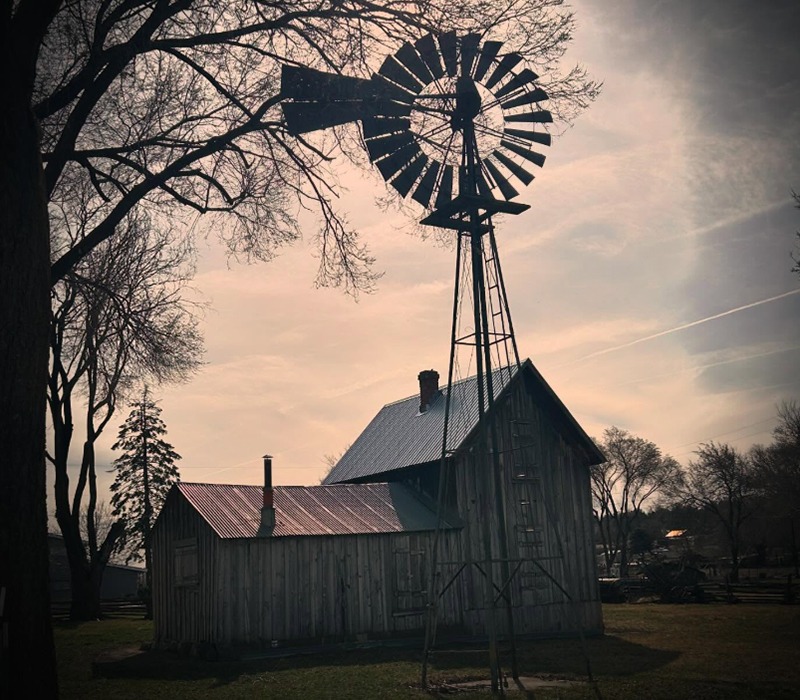
Jefferson County’s first official county fair was held in 1931. The Fair Board was established the following year, and since then, the event has become an annual tradition. The original fairgrounds were located near what is now the local high school. In 1960, the buildings were moved to the current site, where some of those early structures still stand.
“We’ve made some of them historical buildings, and some of them we actually still physically use,” Fair Board Member Chuck Patterson says. “Now we are just expanding our ability to create different revenue and ideas. And we’re still looking at how to create and utilize our space here, with what we have that was created and established in 1960.”
More Than a Week of Festivities
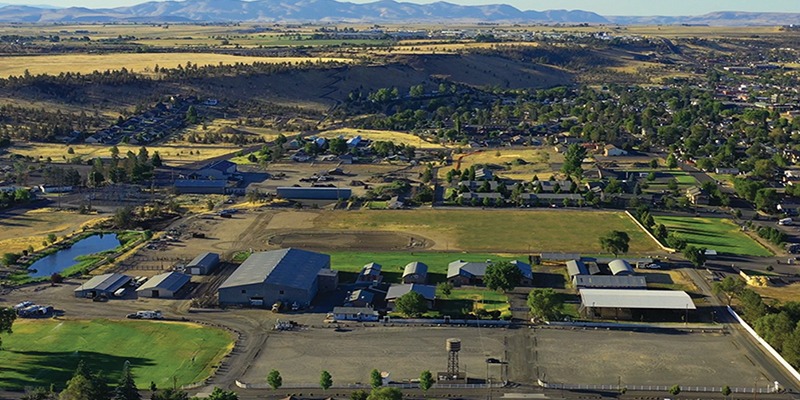
Today, the Jefferson County Event Complex spans more than 50 acres in the center of Madras and features over 20 buildings and barns. Its most visible moment each year comes during the last full week of July, when the fair and rodeo draw visitors from across the region and state.
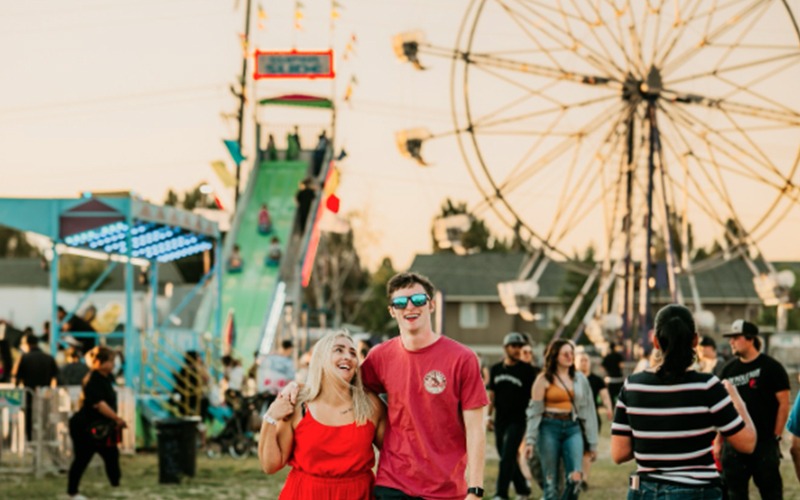
“When you close your eyes and think about a fair, you can hear the sounds of the kids and the carnival rides, you can smell the fried food and cotton candy. You can practically taste all of those senses all at the same time,” portrays Platt. “If you look at a picture of a county fair from 100 years ago, other than what people are wearing, it pretty much looks the same.” For Platt and the Fair Board, the challenge has been to preserve that magic while providing a modern experience.
Diversifying the space and maximizing its use have been key. “While you might not think of an indoor riding arena as a functional space, we have transformed that into a banquet hall for one of our larger holiday events where we seat 400 people in a banquet-like setting,” describes Platt.
“We connect different buildings with internal usage, so you can expand multiple buildings into a larger space. With our new show barn and pavilion, which allows us to still produce outdoor events, even in the shoulder seasons, when the weather might still be a bit of an issue.”
In 2024, the facility hosted 100,000 visitors and generated nearly $20 million in economic impact for the local community. That translated into more than 1,300 hotel room nights and $6.6 million in wages within Jefferson County. County Commissioner Kelly Simmelink, who serves as liaison to the Fair Board, underscores, “For our community and for our county, it’s an economic hub. Everything kind of spins off of that. This is an event center that the Fair Board has taken to a new level, as far as an economic engine in our community, on top of all the great things it does for those of us that live here 365.”
At its core, the fair remains deeply connected to agriculture and to creating opportunities for local youth. This commitment is exemplified through the efforts of the Jefferson County Livestock Association, which plays a central role in organizing the 4H and FFA livestock sale during fair week. “Our little, teeny, tiny county does 6 to $700,000 for our kids,” Simmelink highlights.
An Evolving Source of Revenue
For decades, the fairgrounds were largely static. “It was always a traditional fair. It was used every once in a while for a party, but mostly it was just used during the fair,” Patterson recalls. “They just barely kept their head above water for years and years and years.” Although statewide projections in the early 2000s suggested that many fairgrounds might shut down, Jefferson County charted a different path.
“People started thinking outside of the box and creating ways to generate revenue and make the fairgrounds more dynamic,” he recounts. “Our facility became a facility of, ‘We’ve never done that before, but I think we can make it happen.’ And since that point forward, our grounds crew and the Fair Board have figured out a way to make things happen, and that’s helped us generate more revenue.”
By pairing events strategically, the team has amplified attendance and awareness. A long-standing rock and gem show now coincides with a free concert. Holiday initiatives are bundled under a unified marketing banner called “An Event Complex Christmas,” bringing together Operation Rudolph, which distributes gifts to 900 kids in the community, a festival of trees fundraiser, a Saturday Market, and a holiday book bazaar.
“I’m happy to say that all of them are experiencing phenomenal success and record-setting years,” touts Platt. “It’s like that old saying that high tide rises all boats in the harbor equally. That’s what we’re seeing here. When you pull large events at the same time, you cross-pollinate those populations, and the next year, both events become bigger because more people are aware that that’s happening.”
A Hub of the Community
Not only has the fairgrounds become an exciting year-round destination, but it has also evolved into a county emergency center. In times of wildfire, winter closures, and other emergencies, the facility has housed people, animals, equine evacuations, and fire camps. During the pandemic, it served as a vaccination site.
“The state finally realized how important fairgrounds were,” Patterson remarks, pointing to the recent surge in wildfire activity. When hundreds of fire trucks and support vehicles need staging, or when livestock must be relocated quickly, the complex becomes indispensable. “I think the fairgrounds, especially ours, are doing very well now, because people have finally figured out we’re not just a fair,” he says.
Technology has played a major role in that readiness, and the facility’s campus-wide public address system allows staff to communicate instantly across the grounds in case of emergency. “The voice of God is what we call it,” relays Platt. “We can talk to everybody across our entire facility and inform them of what the situation is, where a safe place is, and what they need to do.”
Future upgrades include transforming an original command center into an up-to-date operations space.
“Our goal is to create a command center that will be able to have Zoom capabilities, cameras, speakers, an overhead projector, and a virtual interactive whiteboard, so the community can use that as a meeting space. We have some major companies that could use that, and they wouldn’t have to have people drive or fly in. They could have their meeting right there.”
A Collaborative Approach
Unlike many traditional fairgrounds, the Jefferson County grounds were not built outside city limits, but right in the heart of the community. “We have a really good working relationship with both the city of Madras and Jefferson County,” Platt acknowledges.
“While the Fair Board operates the event complex as a private entity, we are a part of the county, and inside the city limits of Madras, so all of us must play together well, so that we can level up our community.”
Vendor partnerships are also crucial to this success. Regional supplier Bigfoot Beverage has been a longstanding supporter, helping elevate product offerings and patron experience. “They’ve been a great partner with us over the years,” details Platt. “They have embraced our vision and really helped us level up what we’re capable of here for our patrons.”
Looking Ahead
With continued momentum to look forward to, Jefferson County Event Complex is working to secure a dynamic lineup of events. The county’s first major multi-day music festival is coming this June, Legends Reloaded Music Festival June 19 & 20, along with the Mount Bachelor Kennel Club’s annual event, which will be relocating to Jefferson County for the first time.
Platt notes that the national Gambler 500 cleanup rally, which recently came to the county, has opened the door to further events. “All of that stems from all of the hard work we’ve done over the past few years, retrofitting the facility for both what we’re capable of producing, but also who we’re working with and who’s taking notice of those strides we’ve been making,” he asserts.
As the fair approaches its 100th anniversary, it remains the place where families, friends, and neighbours gather to reconnect over shared traditions. It is also a sophisticated event venue, an emergency command center, and an anchor for the region.
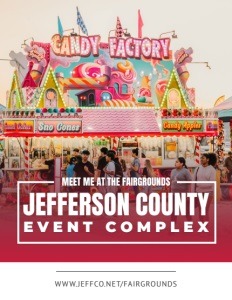
Click The Cover To View Or Download The Brochure
AT A GLANCE
Who: Jefferson County Event Complex
What: A dynamic fair and events center, and a community hub.
Where: Madras, Oregon
Website: www.jeffco.net/fairgrounds
PREFERRED VENDORS/PARTNERS

Columbia Bank: www.columbiabank.com
Committed to the communities we call home. At Columbia Bank, we believe banking is better when it starts with a real connection. Our local bankers take the time to understand what matters to you, offering guidance that’s personal, flexible and easy to access. We’re proud to support our neighbors and to help our communities thrive, one relationship at a time.