The Fair Beyond the Midway
A Year-Round Tourism Engine for Community and Growth
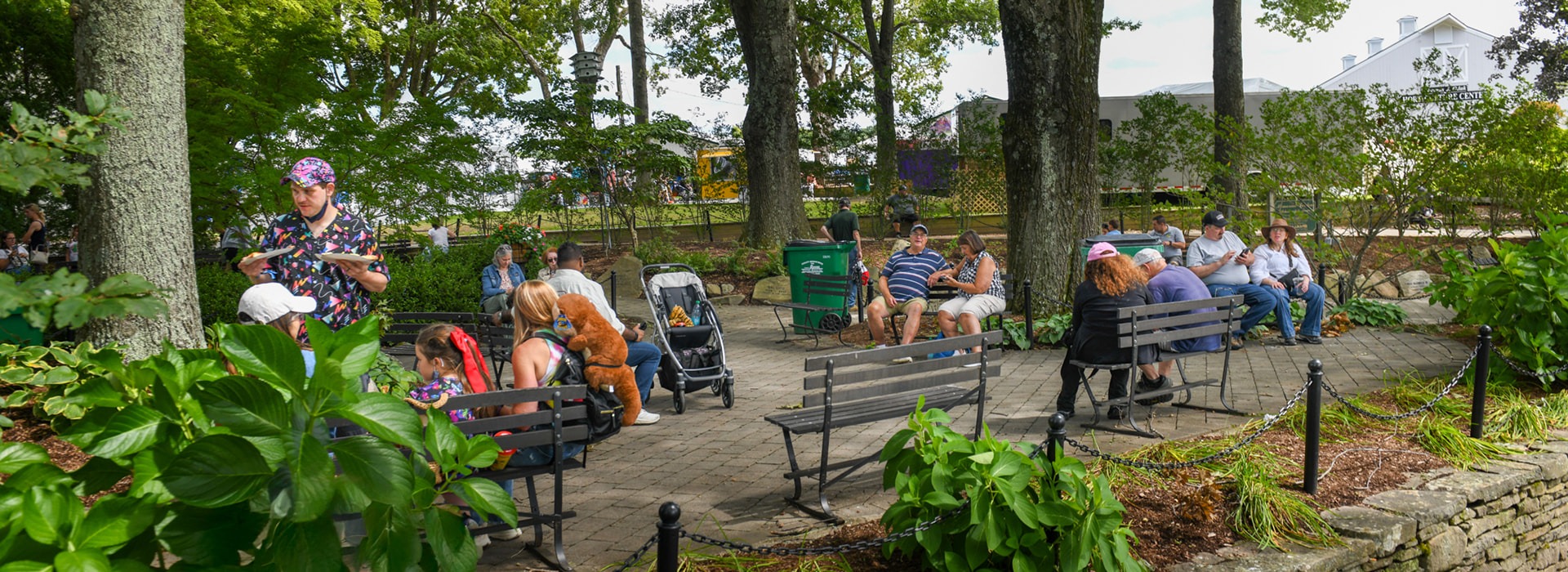
The Dutchess County Fair & Fairgrounds in Rhinebeck, New York, operates as a place where agriculture, tourism, and community life intersect daily. While many people associate the site with the annual county fair, the reality is far broader. Throughout the year, the fairgrounds functions as a working event campus that supports local organizations, attracts regional and international visitors, and continues to evolve alongside the industries and communities it serves.
Spanning 147 acres, the property balances long-standing agricultural tradition with modern event management, strategic reinvestment, and a clear focus on the future. Leadership sees the fairgrounds not only as a venue, but as a steward of history and an economic driver that helps shape the Hudson Valley’s identity.
Tourism Gateway for the Region
Andy Imperati, President and CEO, explains that the fairgrounds include more than 40 buildings and host a wide variety of events throughout the year.
“We are a 147-acre facility with more than 40 buildings on site,” A. Imperati says. “Obviously, we produce the county fair each year, but we also host off-season events ranging from car shows and craft fairs to concerts and antique shows.”
“We feel it’s necessary to support organizations in our community,” A. Imperati explains. “If there’s an event that helps the hospital, autism organizations, or local groups, we try very hard to be part of that.” That relationship is particularly important given the fairgrounds’ location within the Village of Rhinebeck. As the largest landowner in the village, the organization takes its role seriously.
“We’re very cognizant of how events affect our neighbors,” A. Imperati says. “At the same time, the businesses in town benefit when people come here and then explore the area.”
Local restaurants, retailers, and service businesses often see increased activity during event weekends, reinforcing the fairgrounds’ role as an economic catalyst for the community. Leadership notes that visitors often discover Rhinebeck for the first time at an event, then return later for shopping, dining, or weekend trips. That repeat visitation has helped strengthen the town’s reputation as a destination, illustrating how the fairgrounds functions as both a venue and a gateway to the broader region.
A Legacy Rooted in Agricultural Stewardship
The Dutchess County Fair operates under the Dutchess County Agricultural Society, an organization with deep historical roots.
Ron Varricchio, Chairman of the Agricultural Society’s Budget and Finance Committee, explains the long-standing connection. “The Dutchess County Agricultural Society is really the sponsor of the fair,” Varricchio says. “We’ve had fairs almost every year since 1841, with only a few interruptions because of wars or the pandemic.”
That continuity speaks to the enduring role fairs play in connecting agriculture with the public. Financial sustainability is achieved through careful management and strong community partnerships.
“In 2024, we raised about $75,000 in sponsorships,” Varricchio mentions. “Those relationships with local businesses are very important to us.”
A. Imperati adds that the organization operates independently as a 501(c)(3) nonprofit.
“We receive no tax dollars from the town or county,” A. Imperati explains. “Our approach is to be very careful with how we operate and reinvest back into the facility.”
Building in Long-Term Sustainability
Reinvestment is a central part of long-term planning at the fairgrounds. “We’re in the middle of a $2 million project for a new restroom facility,” A. Imperati explains. “It replaces an older building and brings us fully up to date with ADA requirements, family restrooms, and better amenities for exhibitors.”
Projects of this scale are typically funded through the organization’s reserves, reflecting a philosophy of continuous improvement. Vicki Imperati, Administrative Operations Manager, says accessibility is an ongoing process rather than a one-time project.
“We worked with an accessibility company that came in and inspected the entire facility,” V. Imperati says. “It’s not something you do once. Every year, there are new things to improve.”
Leadership’s goal is straightforward: ensure visitors can comfortably access and enjoy the grounds while maintaining high standards for safety and convenience. In addition to major capital projects, smaller upgrades occur continuously, including roof repairs, paving improvements, and infrastructure maintenance that often go unnoticed by guests but are critical to keeping operations running smoothly. This behind-the-scenes investment helps ensure that every event, regardless of size, is delivered to a consistently high standard.
Supporting Youth and Agriculture Education
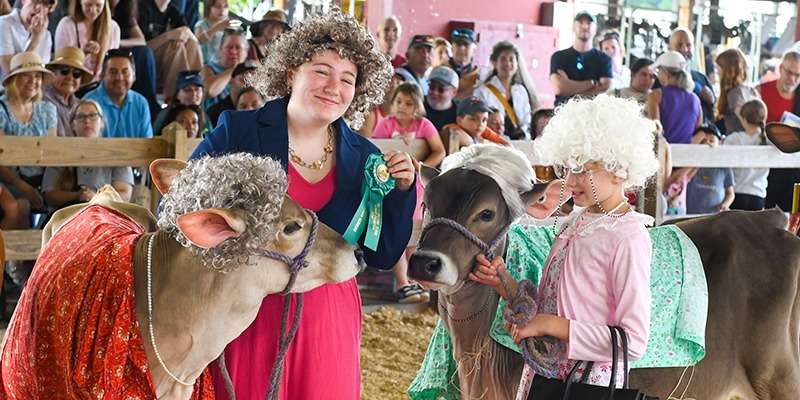
Education remains one of the strongest pillars of the fair’s mission. “4-H has been part of Dutchess County since the 1920s, and now we’re seeing FFA really grow here too,” A. Imperati says. “Those kids are the future of our fair.”
The fairgrounds support those programs through scholarships that help local youth pursue agricultural careers. “We give away about $25,000 in scholarships every year to help local youth continue their education in agriculture,” A. Imperati explains.
Varricchio emphasizes the significance of that investment. “That scholarship program is one of the most important things we do,” Varricchio says.
A. Imperati notes that agriculture remains New York State’s largest industry, even though common misconceptions focus primarily on New York City. Supporting young people entering the field helps ensure that agriculture continues to thrive. Leadership also views these programs as a way to maintain continuity within the fair, as many participants who grow up showing animals or competing in exhibitions eventually return as volunteers, exhibitors, or future leaders.
Turning Events into Economic Opportunity
In addition to its agricultural focus, the fairgrounds have become an important catalyst for tourism and the regional economy. “We try not to oversaturate the calendar,” V. Imperati says. “We want variety, so each event has room to succeed.”
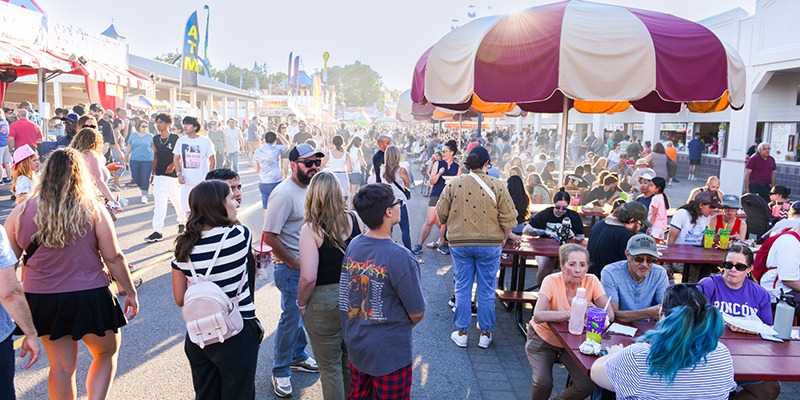
That strategy helps maintain strong attendance throughout the year while keeping programming fresh for visitors. “In 2024, we had more than 289,000 people visit in six days,” A. Imperati says. “About sixteen percent came from outside the county, and we generated around $2.8 million in sales tax revenue.”
One of the most notable events is the New York State Sheep and Wool Festival. “It’s become the largest sheep and wool festival in the United States,” V. Imperati explains. “We see visitors from Australia, New Zealand, England, Italy, Canada — it’s truly international.”
Other major events include a long-running antique auto show and swap meet, a large craft fair, and a New York State wine and food festival showcasing regional wineries and producers.
“Any time we can do an event that promotes agriculture, that’s a home run for us,” A. Imperati says.
Tradition Meets Technology
While tradition remains central to the fair’s identity, technology increasingly plays a role in operations and visitor engagement. “We’re constantly evolving with technology,” V. Imperati explains. “Our goal is to make things easy for visitors, especially when they’re buying tickets and entering the grounds.”
The fairgrounds have worked with ETIX for more than two decades, allowing ticketing systems to evolve alongside customer expectations. Infrastructure upgrades include expanded fiber connectivity and improved Wi-Fi coverage across the grounds. Many improvements are handled internally, with outside specialists brought in when needed.
“We added water bottle filling stations because people were stopping at barns and using hoses,” A. Imperati recalls. “It’s about paying attention to how guests actually use the space.”
Technology is also helping connect younger audiences with agriculture. “We now have VR goggles where kids can experience farming activities,” A. Imperati says. “That’s how this generation learns.”
Traditional categories such as baking, quilting, and livestock displays remain important, but newer interests like photography and robotics demonstrations have become increasingly popular, reflecting changing generations while maintaining strong community participation.
Collaborative Project Delivery
When major projects move forward, local collaboration remains a priority.
A. Imperati explains that leadership designed the new restroom facility internally based on operational experience, then partnered with A+ Construction Architecture for formal plans and Mid-Hudson Construction Management to oversee construction.
“Working with local contractors helps support the regional economy and ensures projects reflect what our community needs,” A. Imperati says.
Passing the Torch
“One of the biggest things we’re working on is succession planning,” A. Imperati explains. “We want depth in the organization, so the fair stays strong long after us.”
A key initiative is the Junior Fair Board, which includes young people ages 14 to 25 who are learning the business side of operating a fair. “The goal is to build future leaders and keep younger generations connected to what we do,” A. Imperati says.
Safety and security remain priorities. “Safety is something we’re constantly working on,” A. Imperati explains. “That includes physical safety on the grounds and cybersecurity as more systems move online.”
Continuing a Living Tradition
The Dutchess County Fair & Fairgrounds continues to evolve without losing sight of its purpose. Leadership sees the facility as both a guardian of agricultural heritage and a forward-looking event destination that supports community life year-round.
A. Imperati explains that fairs have always been about bringing people together to showcase what they create, grow, and value. Today, that spirit remains, even as the displays expand to include robotics, digital technology, and new forms of participation.
“Whether someone comes here for agriculture, education, entertainment, or simply to spend time with family, the goal is the same,” A. Imperati says. “We want people to feel connected to the community and to leave with a better understanding of what this fair and this region represent.”
Click The Cover To View Or Download The Brochure
AT A GLANCE
Who: Dutchess County Fair & Fairgrounds
What: A year-round event and agricultural venue that hosts the annual fair and supports community, tourism, and regional economic activity.
Where: Rhinebeck, New York, in the Hudson Valley region.
Website: www.dutchessfair.com
PREFERRED VENDORS/PARTNERS

Integrated Event and Parking Services: www.integratedeventandparkingservices.com
INTEGRATED PARKING & TRAFFIC OPERATIONS FOR LARGE-SCALE EVENTS.
Integrated Event & Parking Services provides end-to-end parking and traffic operations for complex events and venues. From advance planning and coordination with venue teams and local agencies to trained on-site staff and real-time traffic oversight, each operation is executed with a focus on safety, control, and efficiency. The team specializes in high-volume event environments where precision, accountability, and disciplined execution are essential.

Venue Smart: www.venuesmartllc.com
VenueSmart sets a higher standard for event operations. Our leadership brings experience from Disney, the Olympics, and the NFL, delivering disciplined, guest focused execution. From pre clean to post event restoration, plus waste, recycling, and sustainability support, we manage every detail so venues stay clean, safe, and ready for what’s next.

Williams Lumber: www.williamslumber.com
Williams Lumber and Home Centers, a third generation family business since 1946, proudly serves the Hudson Valley with seven convenient locations. Offering exceptional service, competitive pricing, and a vast selection—from lumber and hardscaping to Marvin Windows and Benjamin Moore paints—Williams, an Ace Hardware partner, helps you NAIL IT RIGHT THE FIRST TIME.