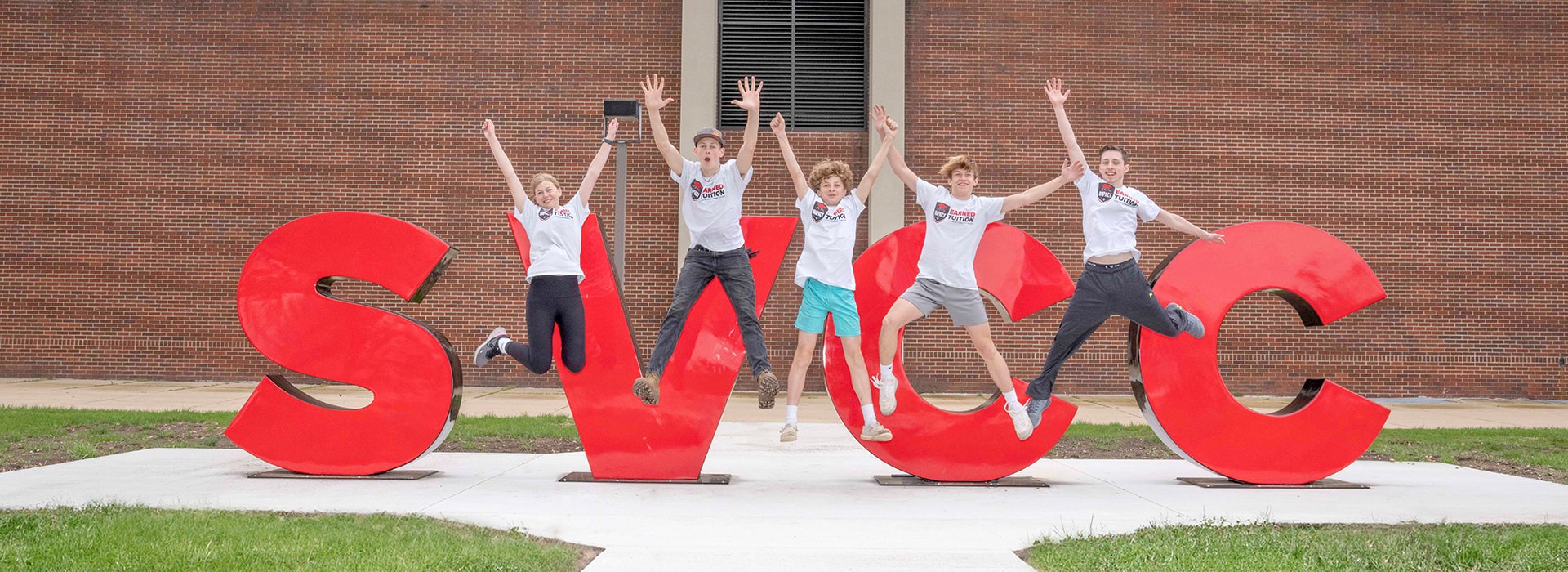
“An Academic, Intellectual and Economic Hub”
An Earned-Promise Model Powering Education, Workforce, and Community Renewal Across North Central Illinois
In north central Illinois, Sauk Valley Community College (SVCC) has long been the region’s academic anchor—and increasingly, its economic engine. Serving a six-county district without a resident four-year university, SVCC operates as a comprehensive community college with a mandate that extends well beyond traditional instruction.
From adult education and corporate training to business partnerships through the Small Business Development Center, the college has become, in President Dr. David Hellmich’s words, “the academic, intellectual, and economic-development hub for this region of the state.”
That role is not theoretical. It is structural. “We’re essentially the only game in town,” Hellmich says, referencing the way Illinois community college districts are organized. Over the college’s 65-year history, generations of residents have either attended Sauk or know someone who has—and that deep familiarity has created a rare alignment between institutional mission and community expectation.
“I’ve never been in a place that takes mission, vision, and values as seriously as we do here,” he adds, noting that the college’s ethical values statement begins with respect for “the worth and dignity of all people,” and extends into stewardship, accountability, and responsible use of resources.
Today, that foundation is being amplified by a program that has begun to change the educational landscape of the Sauk Valley in real time: the Impact Program.
A Pipeline Built Early—and Built Together
For SVCC, collaboration with K–12 is not a marketing tactic; it is a core operating strategy. Vice President of Advancement Dr. Lori Cortez explains that the college works closely with all 18 public school districts within its service area, as well as private schools and homeschool networks.
Those relationships include superintendents, principals, counselors, and faculty, and are designed to support students long before they make final postsecondary decisions.
In fact, recruitment for the Impact Program begins earlier than most communities would expect. Cortez says SVCC starts in middle school—and reaches even younger learners through early engagement that helps normalize college as a natural next step. The goal is to make workforce readiness and career exploration part of the conversation well before students reach high school course selection.
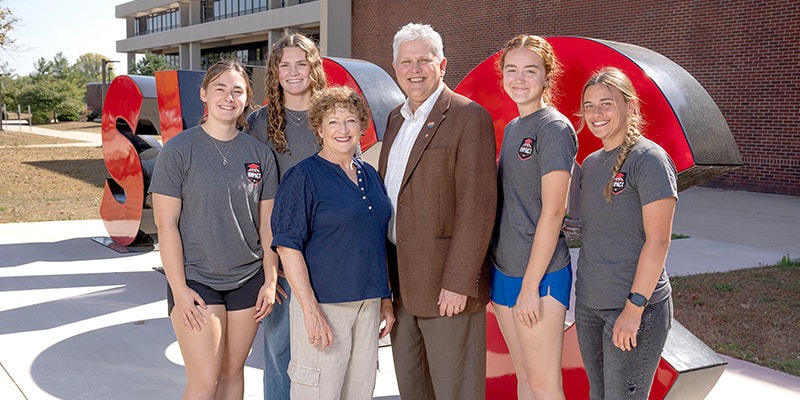
That early outreach matters in a region where postsecondary participation remains a persistent challenge. Cortez notes that only about half of local high school graduates go on to any college or university—well below Illinois’ broader participation levels. SVCC saw both the opportunity and the responsibility to change that trajectory, not through messaging alone, but through a model that removed barriers while preserving personal accountability.
The Impact Program: “Earned” Tuition That Builds Soft Skills and Strengthens Nonprofits
Impact was conceived in 2016 and has since become SVCC’s defining strategic priority. At its core, the program is an earned-promise model: students volunteer in the community in exchange for tuition and fees at Sauk Valley Community College. Importantly, the program is not limited by GPA thresholds or academic track. Students earn their support through service—regardless of major—while simultaneously building employability skills that local employers consistently say are in short supply.
The decision to design Impact as “earned” rather than “free” proved to be catalytic.
“When we were developing the program, we heard something very clear,” Hellmich explains.
“Our community does not want free. They want it earned.” That pivot—service in exchange for tuition—changed the narrative, accelerated buy-in, and ultimately built a model that benefits not only students, but also the nonprofit organizations that support the region’s quality of life.
The results are striking. Cortez reports that Impact students have already volunteered 100,000 hours in local charities—while still in high school. At minimum wage equivalency, she estimates that equates to roughly $1.5 million in labor value returned to the nonprofit sector in just three years.
The ripple effect is strategic: nonprofits gain capacity; students develop workplace discipline and interpersonal skills early; and the community gains young people who are more connected, more confident, and more likely to stay—or return—because they have invested in the places they call home.
As of the interview, SVCC reports 1,887 Impact students in the pipeline. Just as significant, the college has made rapid progress toward permanently endowing the program, with fundraising momentum approaching the $10 million target—already surpassing $8 million.
Hellmich, a veteran of five community colleges, calls Impact “the most remarkable program I have ever been associated with,” and describes it as “the most important educational workforce development initiative in the Sauk Valley since the founding of Sauk Valley Community College.”
Dual Credit, Transfer Pathways, and Career Technical Education
Impact is the headline—but SVCC’s broader operating model is equally disciplined. Approximately 20% of the college’s student body is dual-enrolled, strengthening the bridge between high school completion and postsecondary credential attainment. At the same time, the college serves two distinct but equally important outcomes.
Roughly half of SVCC students pursue transfer pathways toward a four-year degree. The other half enter career technical education programs built for immediate workforce entry through short-term credentialing and two-year degrees. Cortez emphasizes that those career-focused programs are not designed in isolation. Every single CTE program at SVCC is guided by an employer advisory council composed of local industry partners who provide input on curriculum, skills priorities, and workforce demands.
From SVCC’s perspective, advisory councils are not an add-on—they are a governance mechanism. “We do not make curriculum decisions without the input of our employers,” Cortez says. Those councils span agriculture, healthcare, manufacturing, welding, business and accounting, and other high-demand sectors. When employers need upskilling for current staff or talent pipelines for new hires, SVCC is positioned as the region’s primary workforce training center—supported by economic impact research that recognizes the college’s unique role.
Agriculture is a strong example. During a state budget crisis, SVCC expanded its agriculture program under Hellmich’s leadership because, as Cortez notes, agriculture remains the backbone of the local economy. Curriculum was shaped directly by the needs of large-scale and small-scale operators to ensure graduates could step into roles with relevant, current skills. The same employer-informed approach guides SVCC’s expanding healthcare offerings, including established programs such as nursing and phlebotomy, as well as newer initiatives like sonography.
Manufacturing stands as another major pillar, reflecting both regional demand and the long-term value of precision skills. Business and accounting round out the core, supported by local financial institutions looking for reliable employees with applied competencies and strong professional habits.
Community Collaboration That Extends Beyond the Classroom
SVCC’s workforce alignment is strengthened through deep engagement with chambers of commerce, economic development organizations, and community leadership initiatives. College leaders serve on chamber boards, and SVCC regularly hosts multi-chamber business events—among the most widely attended in the area.
More than a decade ago, the college also helped create a leadership development platform where none existed. Working with the region’s three largest chambers, SVCC launched the Sauk Valley Community Leadership Program, now approaching its 10th cohort. The program serves employers who want to invest in rising leaders, as well as residents who want to increase civic involvement through volunteering and board service. Over time, the initiative has strengthened the talent bench across local institutions—from chambers and service clubs to school boards and nonprofit leadership.
Technology That Mirrors Industry—and Resources That Make It Possible
SVCC’s commitment to technology is driven by a practical understanding: workforce readiness requires access to tools that reflect modern industry environments. Hellmich points to the college’s advanced simulation technology in nursing as one example—equipment so current that local healthcare providers bring their own staff to the college for training.
What makes this possible, he notes, is a funding structure uncommon in many community college environments. SVCC benefits from strong local tax support, allowing the college to invest in technology at a level Hellmich says he has not experienced elsewhere. Faculty requests for updated technology are regularly funded, creating a feedback loop where instruction stays aligned to evolving standards and employer expectations.
This is particularly meaningful at a time when state support for community colleges has diminished. Hellmich cites the original funding model—one-third tuition, one-third local support, one-third state support—and contrasts it with today’s reality, where state funding may represent closer to 12%. In that environment, local commitment becomes a strategic advantage, enabling SVCC to remain competitive and current.
Wraparound Services: TRIO, Financial Aid, Food Security, and Mental Health
SVCC’s performance is built not only on programming but also on student supports designed to reduce attrition and improve outcomes. Cortez—who previously led SVCC’s TRIO program—describes TRIO Student Support Services as a comprehensive, high-touch model that provides intensive advising, coaching, study skills training, leadership development, and practical supports such as textbook lending and access to essential technology like laptops and calculators.
TRIO also broadens student opportunity through transfer exposure, including organized campus visits to universities where students meet admissions and financial aid teams and build familiarity with transfer pathways. Complementing this is a strong tutoring program, a library with access to international databases, and an on-campus food pantry providing food and toiletries with no questions asked—an acknowledgment that academic performance is inseparable from basic stability.
Financial aid support is treated as a guided process, not a transaction. Hellmich describes one-on-one advising designed to help students understand what they need, secure resources responsibly, and avoid over-borrowing. He notes that SVCC’s default rate is exceptionally low—an outcome he attributes to proactive advising and sustained student engagement.
Mental health services are also embedded into SVCC’s wraparound model. The college employs two full-time mental health professionals whose schedules remain in high demand, and SVCC provides additional online resources to ensure students can access support beyond in-person availability.
Looking Ahead: Scaling Impact, Launching a New Strategic Plan, and Welcoming New Leadership
As SVCC looks into 2026 and the first half of 2027, the college’s priorities center on scaling Impact and ensuring institutional readiness for the first full-district cohort. A pilot cohort has already launched in select communities, and SVCC is preparing infrastructure, staffing, and processes to deliver on the promise at scale.
In parallel, the college is finalizing a new strategic plan that will continue to place the Impact Program at its core—reflecting SVCC’s belief that student success and regional workforce readiness are inseparable goals.
This planning unfolds amid a leadership transition. Hellmich will retire in May, passing the presidency to Dr. Jon Mandrell, SVCC’s Vice President of Academics and Student Services. Mandrell’s story is deeply tied to the institution: he has longstanding personal and professional roots at SVCC, and leadership credits him with strengthening employer advisory council alignment and ensuring the college remains responsive to regional workforce needs.

For SVCC, the next chapter is not a reinvention—it is an acceleration. With a proven workforce development model, a community-first earned scholarship framework, and deep collaborative ties across education and industry, Sauk Valley Community College is positioning itself to do what it has done for decades—only at a broader scale: build opportunity, strengthen the local economy, and create a region where students can learn, earn, and thrive without having to leave home to do it.
Click The Cover To View Or Download The Brochure
AT A GLANCE
Who: Sauk Valley Community College
What: A top-rated community college that prepares students for both the workforce and further academic achievements
Where: Dixon, Illinois, USA
Website: www.svcc.edu
PREFERRED VENDORS/PARTNERS
GrowSpan Greenhouse Structures: www.growspan.com
GrowSpan Greenhouse Structures manufactures engineered commercial greenhouses. GrowSpan’s Greenhouse Specialists can tailor greenhouses to even the most specific growing requirements, and with custom environmental control solutions, businesses and schools anywhere can grow and profit year-round.